Info
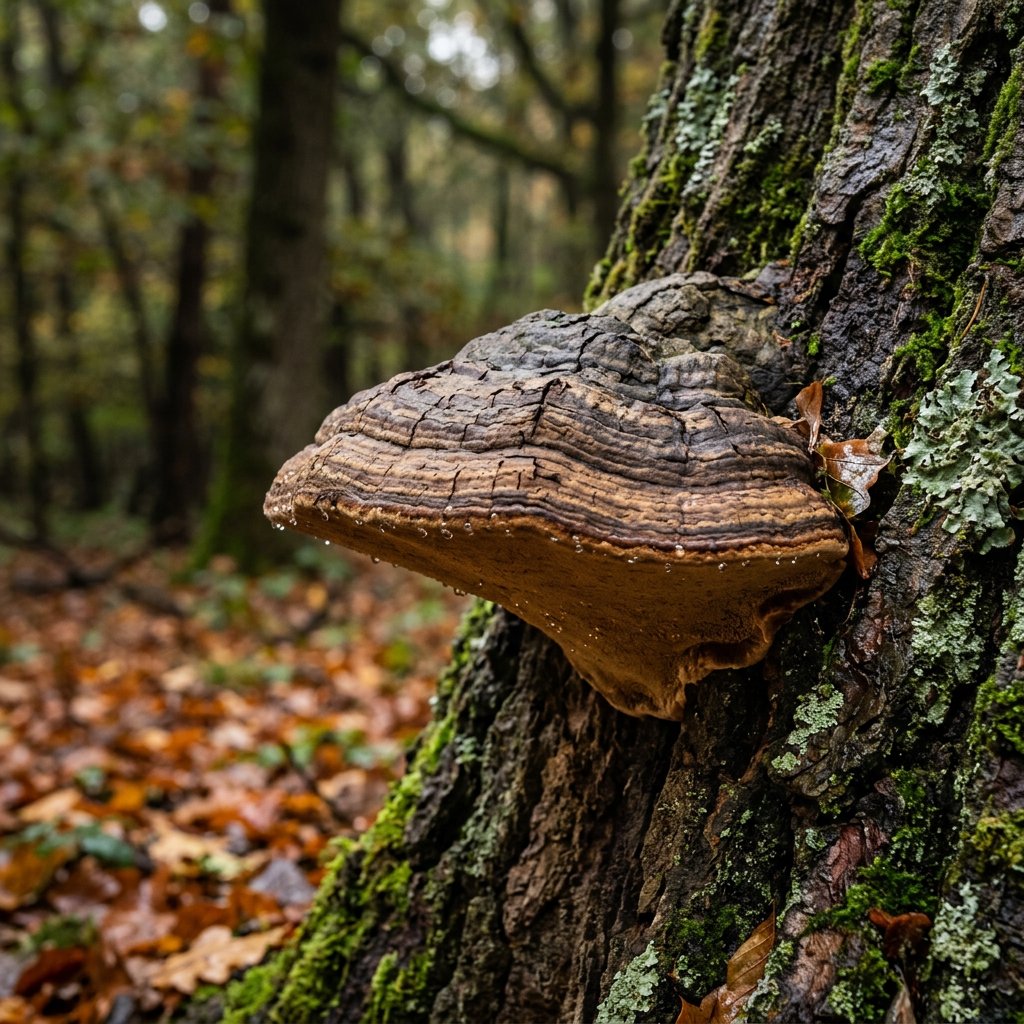
Known as the "Robust Bracket" or the "Oak Polypore," Fomitiporia robusta is a true veteran of the forest. This perennial fungus doesn't just sprout and vanish; it clings to the sides of ancient hardwood trees for decades, slowly building a woody, hoof-shaped fortress. In European folklore, these sturdy brackets were often seen as the "steps" used by forest spirits to climb high into the canopy.
🔍 How to Identify
- 🪵 The Body: It typically grows in a distinct "hoof" shape (ungulate) or a thick shelf. The surface is incredibly hard and woody, often becoming cracked and rugged with age.
- 🎨 The Colors: While the top is usually a dull grayish-brown, the active growing edge (the margin) is often a beautiful, velvety tawny or golden-yellow color.
- 🕳️ The Pores: Instead of gills, the underside features tiny, circular pores. These are cinnamon-brown and feel as solid as the wood the mushroom grows on.
🌲 Habitat & Ecology
- 🌳 Oak Specialist: This fungus is most commonly found on living Oak trees, though it occasionally visits Chestnut or Beech. It is a "heart rot" fungus, meaning it slowly breaks down the inner wood of the tree while the tree continues to grow.
- ⏳ A Long Life: Unlike soft mushrooms that rot in days, this species is perennial. Each year, it grows a new layer of tubes over the old ones, creating internal layers that can be counted much like the rings of a tree.
⚠️ Safety & Toxicity
- 🚫 WARNING: Non-Edible. Fomitiporia robusta is not a culinary mushroom. Its texture is similar to a block of solid wood, making it impossible to chew or digest.
- 🧪 Chemical Defense: While not known to be "deadly" like certain agarics, it contains tough lignin and compounds that can cause severe gastric distress if ingested. Always leave bracket fungi on their trees, as they play a vital role in the ecosystem.
✨ Fun Fact
Because it is so incredibly dense and slow-growing, a single specimen of the Robust Bracket can live for over 30 years, surviving through harsh winters and summer droughts that would wither almost any other fungus!
More Details