Info
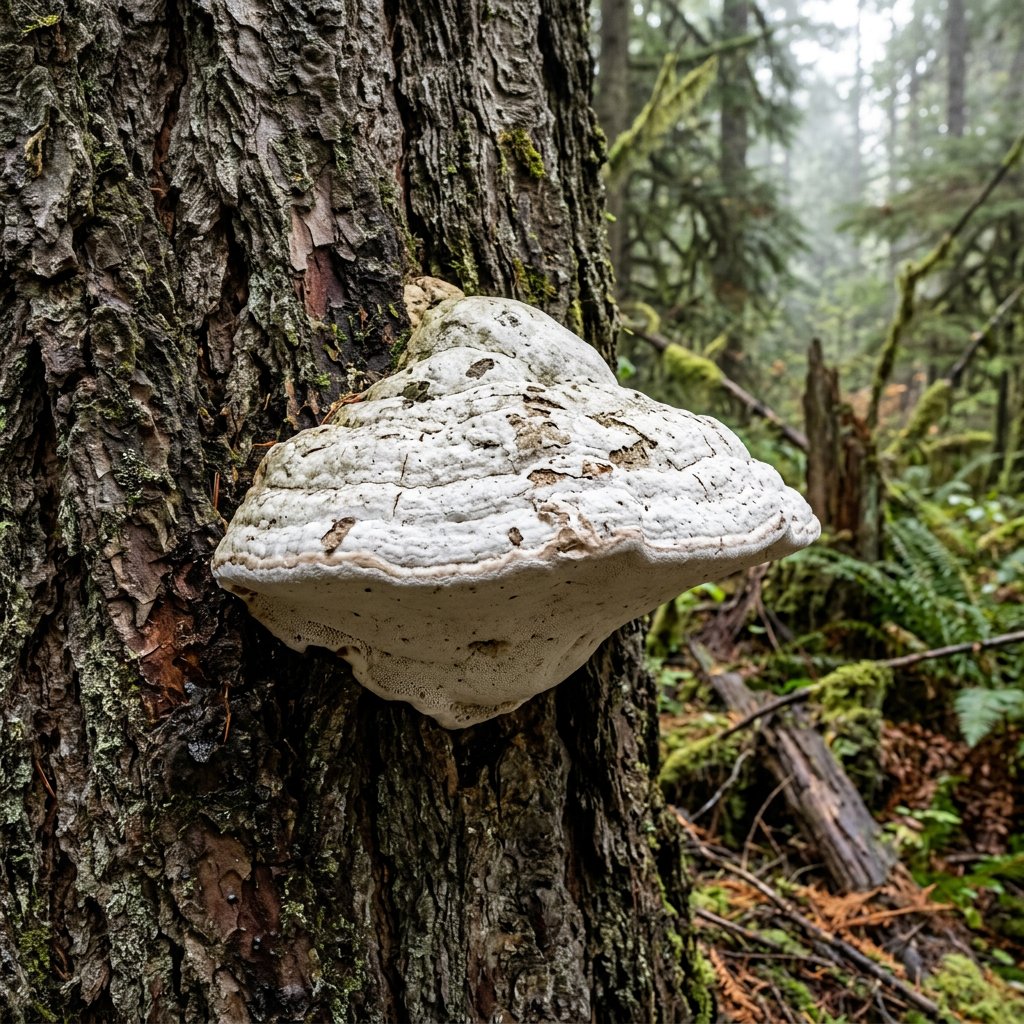
Known as the "Elixir of Life" or the "Agarikon," this ancient mushroom looks more like a weathered piece of stone or a giant beehive than a traditional toadstool. It is a rare inhabitant of the world's oldest forests, often found dangling from the trunks of ancient Larch trees like a ghostly pillar of wood. In ancient Greece, it was so highly prized for its medicinal properties that it was dubbed the "universal remedy" for all ailments.
🔍 How to Identify
- 🏛️ The Columnar Shape: Unlike flat shelf fungi, the Agarikon grows into a thick, elongated column or a massive "hoof" shape that can reach over two feet in length.
- 🧱 Chalky Texture: The surface is often cracked and resembles old, dried plaster or chalk. If you touch it, it feels woody and solid rather than fleshy.
- ⚪ Zoned Coloring: Its exterior ranges from a chalky white to a yellowish-gray, often featuring distinct horizontal "growth rings" that mark its many years of life.
🌲 Habitat & Ecology
- 🏔️ Old-Growth Specialist: This fungus is a sentinel of the ancient forest. It is found almost exclusively in undisturbed, old-growth coniferous forests, primarily growing on Larch, Douglas-fir, and Spruce trees.
- ⏳ Long-Lived Resident: The Agarikon is one of the longest-living fungi in the world. A single specimen can live for 70 to 100 years, slowly absorbing the essence of its host tree while hanging high above the forest floor.
⚠️ Safety & Toxicity
- 🚫 WARNING: While not categorized as a "deadly" poisonous mushroom, the Agarikon is completely inedible due to its extremely bitter taste and woody, cork-like consistency.
- 🤢 Digestive Risk: Ingesting large amounts of the raw fungus can lead to severe purgative effects, including vomiting and gastrointestinal distress.
- 🛑 Professional Use Only: Although it is studied for its potent anti-viral and anti-bacterial properties, these extracts must be prepared in a laboratory. Never attempt to use wild-foraged Agarikon for self-medication.
✨ Fun Fact
Indigenous peoples of the Pacific Northwest regarded the Agarikon as a powerful spirit. They frequently carved the mushroom into "Grave Guardians"—shamanic figures placed at burial sites to protect the spirits of the departed from evil forces.
More Details