Info
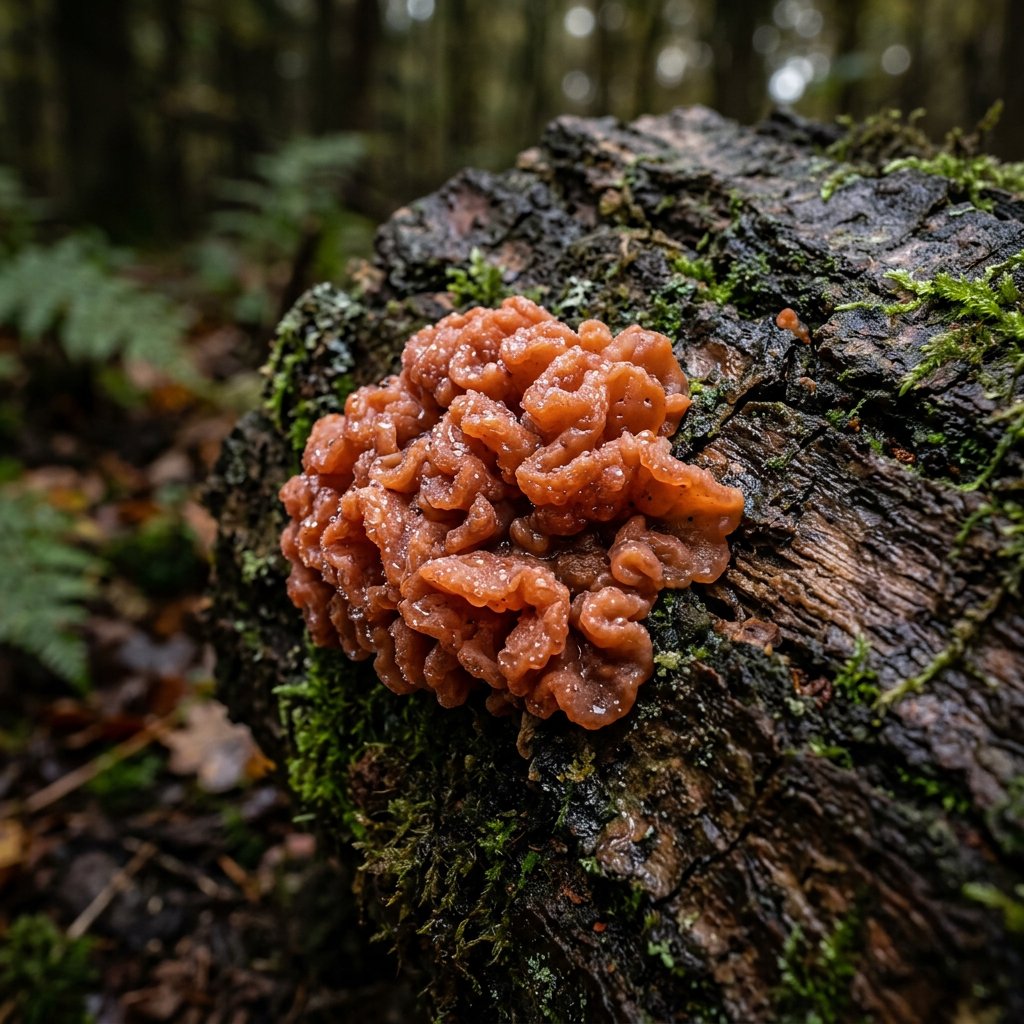
Often called the Orange Slime Mold, Fusicolla merismoides is a fascinating "bleeding" fungus that looks more like spilled apricot jam than a traditional mushroom. Despite its common name, it isn't a true slime mold but a specialized fungus that thrives in the sugary, fermented sap leaking from wounded trees. In some regions, these bright orange patches were historically viewed with curiosity, appearing as if the tree itself were weeping colorful tears.
🔍 How to Identify
- 🧠 Shape & Texture: It appears as a gelatinous, waxy, or brain-like mass. It lacks a traditional cap, gills, or stem, looking more like a glossy puddle clinging to bark.
- 🟠 Color: Vivid orange to salmon-pink. The color is most intense when wet and may fade to a duller reddish-brown as it dries out.
- 💧 Surface: Extremely slimy and wet to the touch. It often looks like it is actively oozing or "flowing" down the trunk of a tree.
🌲 Habitat & Ecology
- 🌳 The Sap Specialist: You will almost exclusively find this fungus on the "flux" (leaking sap) of deciduous trees like Birch, Maple, Elm, and Beech. It literally lives within the stream of nutrients escaping from a tree wound.
- 🦠 Microbial Community: It rarely grows alone; it is usually part of a complex "slime flux" ecosystem consisting of yeasts, bacteria, and other fungi all feasting on the fermented sugars of the tree.
⚠️ Safety & Toxicity
- 🚫 WARNING: Not for consumption. This is not a culinary mushroom. Its gelatinous form and the environment it grows in make it entirely unsuitable for the plate.
- 🧪 Status: While not known to be "poisonous" in the sense of containing specific toxins like a Death Cap, the fermented sap and bacterial colonies it grows alongside can cause severe stomach upset or infection if ingested. It is best enjoyed as a visual curiosity only.
✨ Fun Fact
- ✨ The Forest Chemist: Fusicolla merismoides is a master of fermentation! The "slime flux" it inhabits often smells like fermenting beer or vinegar because the fungus and its bacterial roommates are busy breaking down tree sugars into alcohol and acids.
More Details







