Info
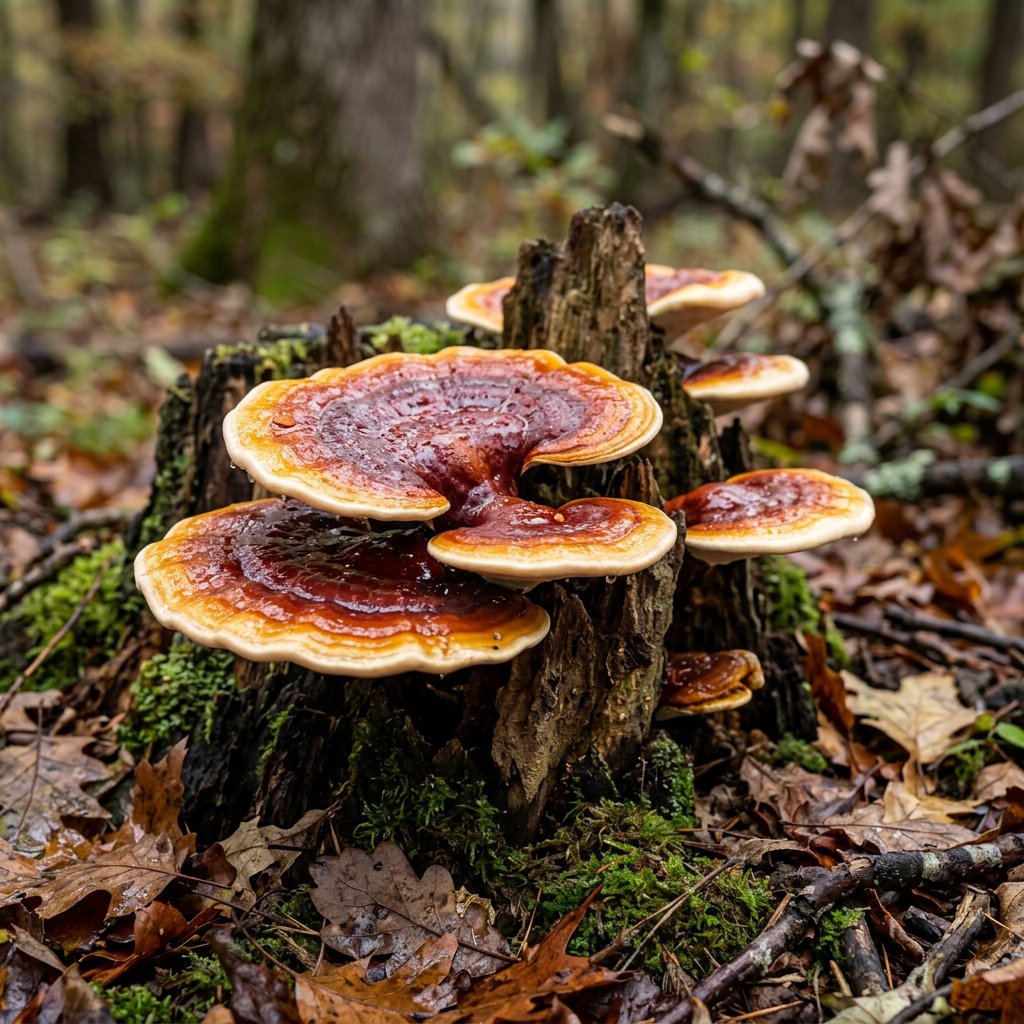
Known as the "Mushroom of Immortality" in China (Lingzhi) and "Reishi" in Japan, Ganoderma lucidum is perhaps the most famous medicinal fungus in history. For over 2,000 years, it has been depicted in royal art and folklore as a symbol of health and longevity. Its striking, high-gloss finish makes it look as though it has been freshly painted with a deep red lacquer.
🔍 How to Identify
- 🍄 The Cap: Kidney or fan-shaped with a distinct "varnished" appearance. Colors range from deep rust-red to mahogany, often fading to a bright white or yellow at the outer growing edge.
- 🕳️ The Underside: Unlike common mushrooms, it has no gills. Instead, the underside is covered in tiny white pores that turn brown when bruised or aged.
- 🪵 The Stem: Usually grows laterally (from the side), looking like a sturdy, dark, polished branch connecting the cap to its wooden host.
🌲 Habitat & Ecology
- 🌳 The Host: It is a wood-decaying fungus typically found at the base or on the stumps of deciduous trees, particularly oaks and maples.
- 🍂 The Role: It acts as a "white rot" fungus, breaking down the tough lignin in dead wood and recycling nutrients back into the forest floor.
- 🌤️ Seasonality: While it grows during the warmer months, the woody brackets are incredibly durable and can often be found persisting through the winter.
⚠️ Safety & Toxicity
- 🛑 WARNING: While not considered poisonous, Reishi is not a culinary mushroom. It is extremely tough, woody, and bitter. It is traditionally consumed only as a finely ground powder, tea, or extract.
- 💊 Medical Interactions: Because it may lower blood pressure or thin the blood, individuals on medication or those scheduled for surgery should consult a professional before use.
- 🕵️ Look-alikes: Always cross-reference with local guides to ensure you haven't found a different polypore, though the high-gloss "lacquer" of G. lucidum is a very strong diagnostic feature.
✨ Fun Fact
In ancient China, Reishi was so rare and highly valued that it was reserved almost exclusively for emperors and the nobility. Finding one in the wild was considered an omen of great luck and divine favor!
More Details
| Hymenium Type | Pores |
| Stipe Character | Bare Stipe |
| Spore Print Color | Brown |
| Mushroom Cap Shape | Offset Mushroom Cap |
| Mushroom Ecological Type | Saprobiont Or Parasitism |







