Info
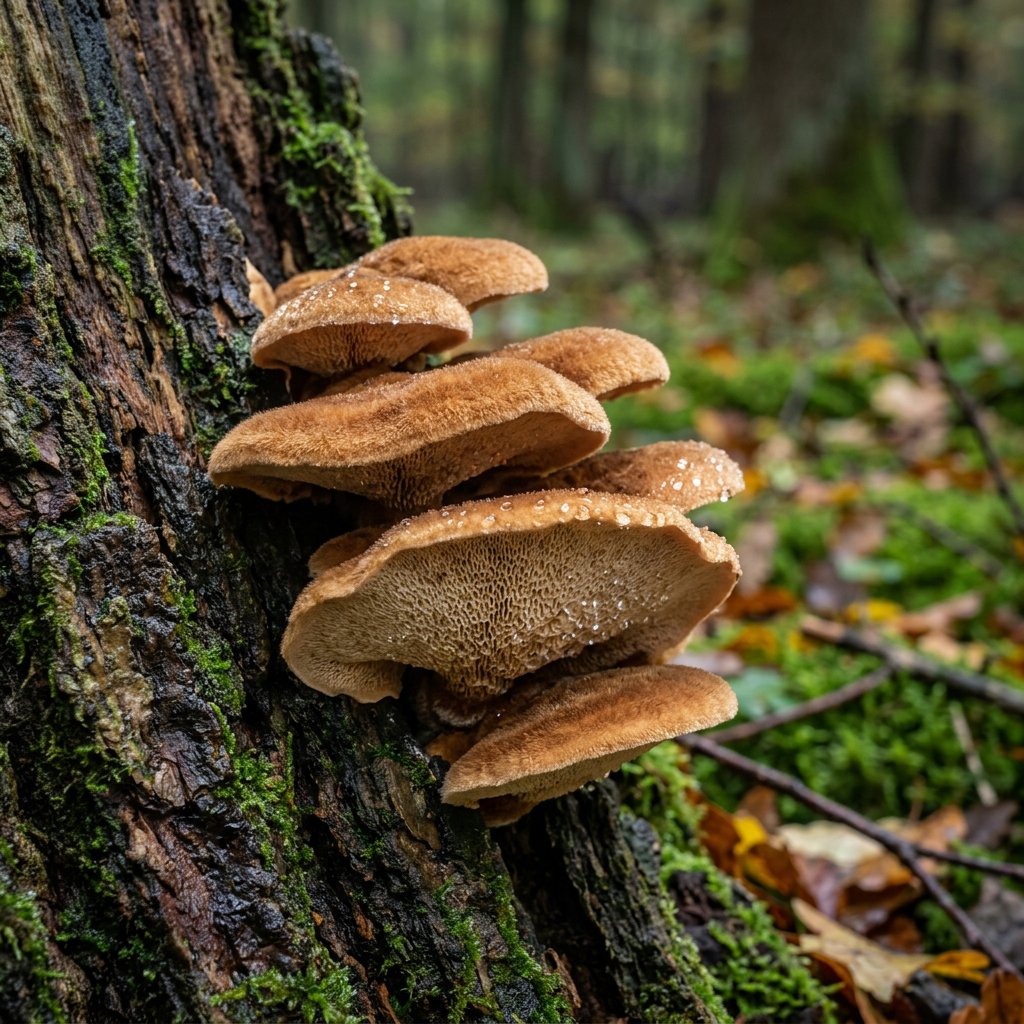
Often blending into the autumnal colors of the forest floor, the Cinnamon Bracket (Hapalopilus rutilans) is a modest-looking fungus with a secret hidden in its chemistry. While it lacks the flashy spots of a fairy-tale toadstool, it has long been a favorite of natural dyers for its ability to produce rich violets. However, its unassuming, "biscuit-like" appearance hides a dangerous neurotoxin that every forager should know.
🔍 How to Identify
- 🎨 The Cinnamon Palette: The entire mushroom is a consistent cinnamon-orange to brownish-ochre. Unlike many other shelf fungi, it usually lacks distinct concentric zones of different colors.
- 🧽 The Spongy Texture: While many bracket mushrooms are hard and woody, this species is remarkably soft, watery, and slightly "felty" when fresh, becoming brittle and corky as it dries.
- 🕳️ Angular Pores: The underside features a fine layer of tiny, angular pores (not gills) that are the same cinnamon-orange color as the rest of the body.
- 📏 Kidney Shape: The cap is typically fan-shaped or kidney-shaped, often appearing thick and "puffy" at the base where it attaches to the wood.
🌲 Habitat & Ecology
- 🌳 Hardwood Specialist: You will most often find this species growing on the fallen branches or decaying logs of broadleaf trees, with a strong preference for Oak, Birch, and Beech.
- 🍂 Seasonal Decomposer: As a saprobic fungus, it plays a vital role in recycling nutrients back into the soil. It is most commonly spotted in late summer and throughout the autumn months in temperate forests.
⚠️ Safety & Toxicity
- 🚨 WARNING: DANGEROUSLY TOXIC: Do not be fooled by its soft texture or pleasant color. This mushroom contains high concentrations of polyporic acid, which is a potent neurotoxin.
- 💜 The Purple Symptom: Ingestion causes severe kidney dysfunction and central nervous system failure. A unique and frightening diagnostic sign of poisoning from this mushroom is that the victim's urine often turns bright violet or purple.
- 🐾 Pet Safety: Because it grows on low-hanging logs and branches, it is within reach of dogs. It should be considered lethal if consumed by pets.
✨ Fun Fact
- 🧪 The Color-Change Trick: Foragers and mycologists identify this mushroom using a "chemical flash." If you place a single drop of household ammonia or KOH on the flesh, it will instantly turn a brilliant, vivid royal purple. This reaction is so strong that the mushroom is frequently used by artisans to dye wool and silk!
More Details







