Info
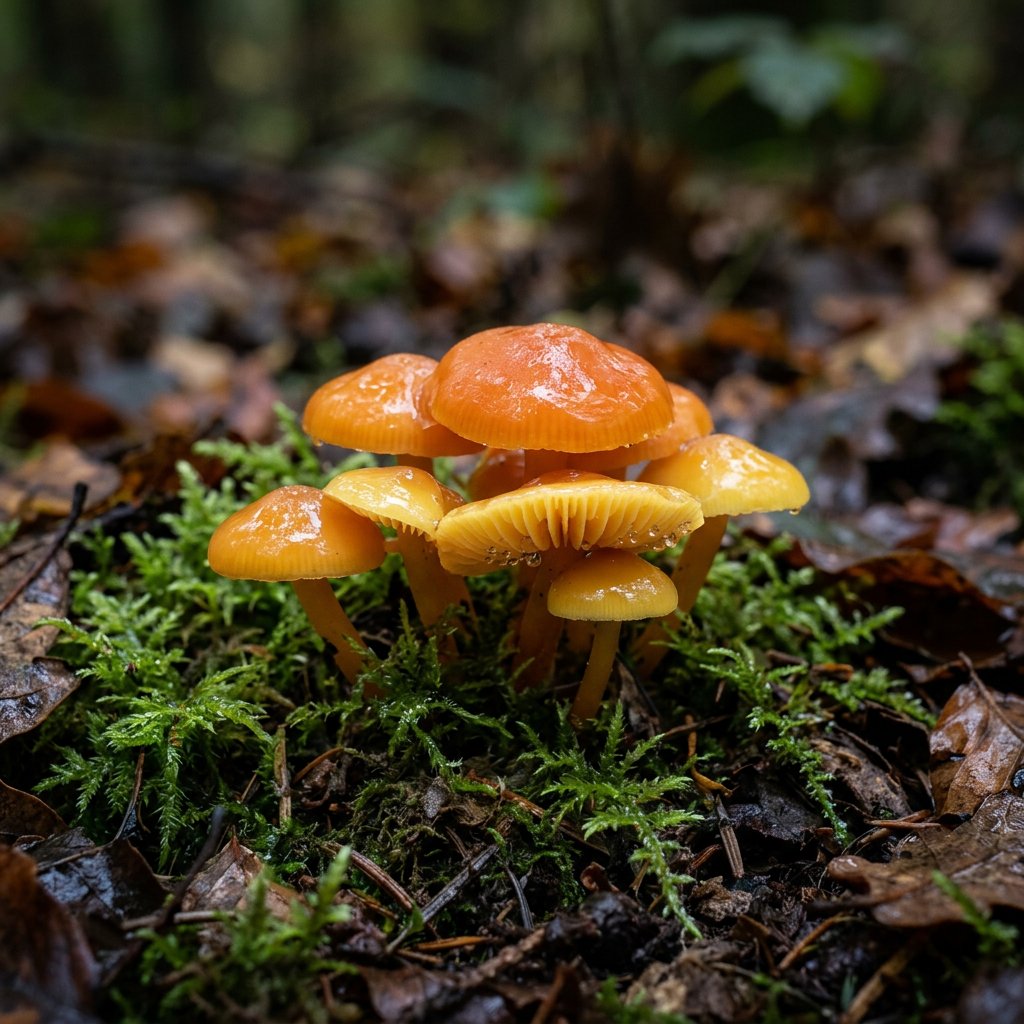
Commonly known as the Butter Waxcap, this tiny, vibrant fungus looks like a drop of melted butter or a piece of waxy candy dropped in the grass. These mushrooms are the "jewels of the meadow," often appearing in late autumn when the surrounding landscape begins to fade into browns and greys. They belong to a group of fungi that are highly sensitive to modern agriculture, making them a special find for any nature enthusiast.
🔍 How to Identify
- 🧈 The Cap: Small and convex, usually reaching only 1 to 4 cm. It has a smooth, waxy texture and is a brilliant "butter" yellow, though it can sometimes lean toward a warm orange.
- 🕯️ The Gills: The gills underneath are pale yellow and are broadly attached to the stem, often slightly running down it (decurrent). They have a distinctively thick, waxy feel when crushed between fingers.
- 📏 The Stem: The stalk is slender, brittle, and typically the same color as the cap. It often becomes hollow as the mushroom matures and lacks any ring or veil.
🌲 Habitat & Ecology
- 🌿 Ancient Grasslands: You won't find these in a freshly fertilized garden. They prefer "unimproved" grasslands—lawns, meadows, and churchyards that haven't been treated with chemicals for decades.
- 🟢 Moss Lovers: They are frequently found peeking through thick carpets of moss. While they were once thought to live off decaying matter, scientists now believe they may have a complex, mysterious relationship with the roots of mosses.
⚠️ Safety & Toxicity
- 🚨 WARNING: While the Butter Waxcap is generally considered non-toxic, never consume any wild mushroom based on app identification alone. Many yellow mushrooms are look-alikes, and some can cause severe gastric distress.
- 🧤 Handling: They are safe to touch, but they are very delicate. Their brittle nature means they break easily, so handle them with care if you are inspecting the gills.
- 🐾 Pets & Kids: While not known to be deadly, ingestion can cause stomach upset in curious pets or toddlers. It is best to admire them where they grow.
✨ Fun Fact
Waxcaps like Hygrocybe ceracea are used by conservationists as "biological indicators." If you find them on your property, it is a sign that your soil is healthy, ancient, and has escaped the heavy hand of industrial fertilizers!
More Details