Info
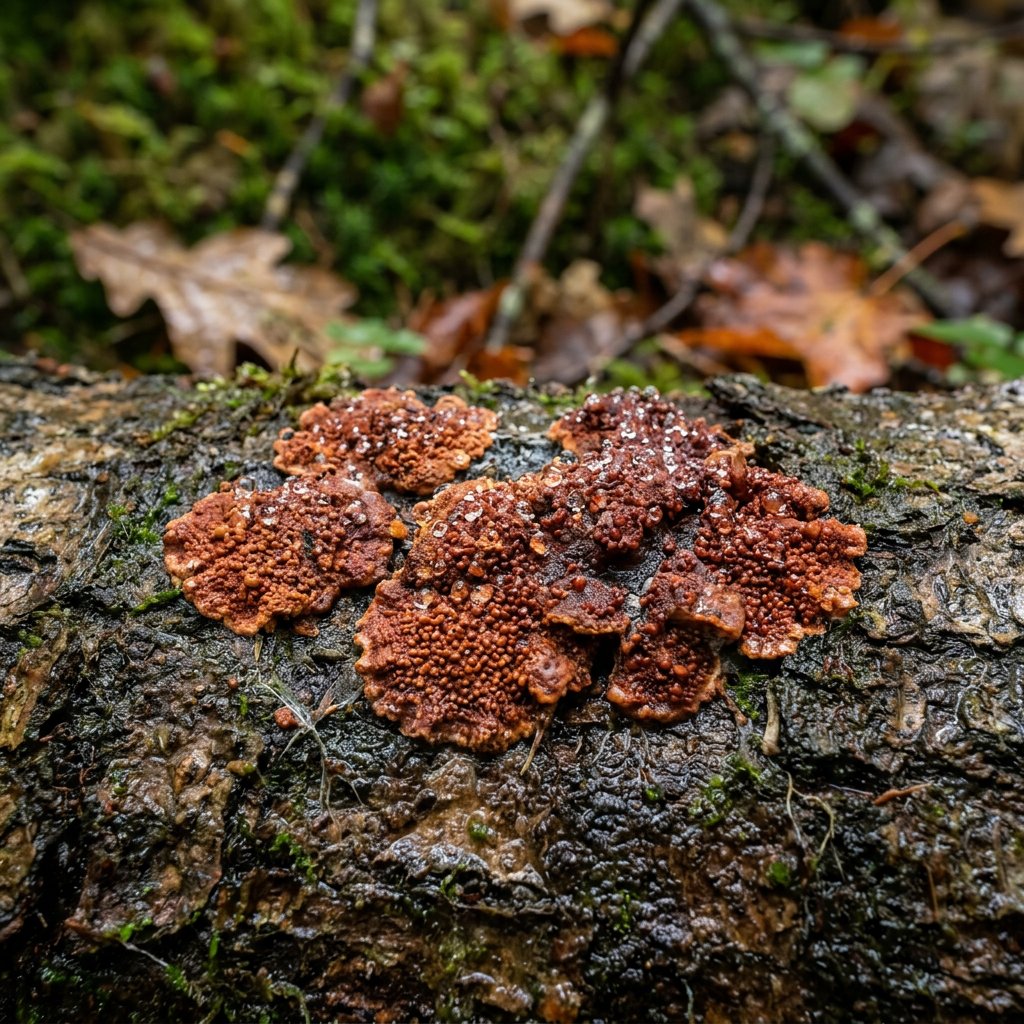
Often called the Rusty Crust, Hypoxylon rubiginosum is a master of disguise in the forest. Rather than the classic "umbrella" shape most people expect from a mushroom, it appears as a vibrant, brick-red splash of color against the dark bark of decaying logs. It is a vital member of the forest's "cleanup crew," working tirelessly to break down hardwood and recycle nutrients into the soil.
🔍 How to Identify
- 🎨 Appearance: It forms flat, crust-like patches (resupinate) that cling tightly to the wood, often appearing as though the log has been painted with rusty or copper-toned pigments.
- 🌋 Surface Texture: The surface is covered in tiny, pimple-like bumps called perithecia. These are the reproductive structures where the spores are housed.
- 🌑 Color Change: While it starts as a bright, rusty red or purplish-brown, the fungus eventually turns a dark, charcoal black as it ages and dries out.
🌲 Habitat & Ecology
- 🪵 Substrate Preferences: This fungus is almost exclusively found on the dead or decaying wood of deciduous trees. It has a particular affinity for Ash (Fraxinus), though it frequently appears on Beech and Hazel as well.
- ♻️ The White Rotter: It is a saprobic fungus, meaning it feeds on dead organic matter. It causes "white rot" by breaking down lignin, the tough substance that gives wood its structural strength, leaving the wood soft and spongy.
⚠️ Safety & Toxicity
- 🚫 Status: WARNING: NOT EDIBLE.
- 🧱 Details: The Rusty Crust is hard, corky, and carbonaceous (charcoal-like) in texture. It is not considered a food source for humans and possesses no culinary value. While not famously "poisonous" in the way a Death Cap is, it is entirely indigestible and should never be consumed.
✨ Fun Fact
Unlike many mushrooms that sprout and wither within a few days, the Rusty Crust is incredibly persistent. Its hard, woody structure allows it to survive through multiple seasons, meaning you can find the same patch on a log throughout the entire year, even in the dead of winter!
More Details







