Info
Known as the Torn Fibrecap, this unassuming little mushroom is a master of disguise among the "Little Brown Mushrooms" (LBMs). While it may look like a weathered scrap of wood or a stray leaf on the forest floor, it hides a potent and dangerous chemical secret. It is a common find for foragers, though usually one to be avoided at all costs.
🔍 How to Identify
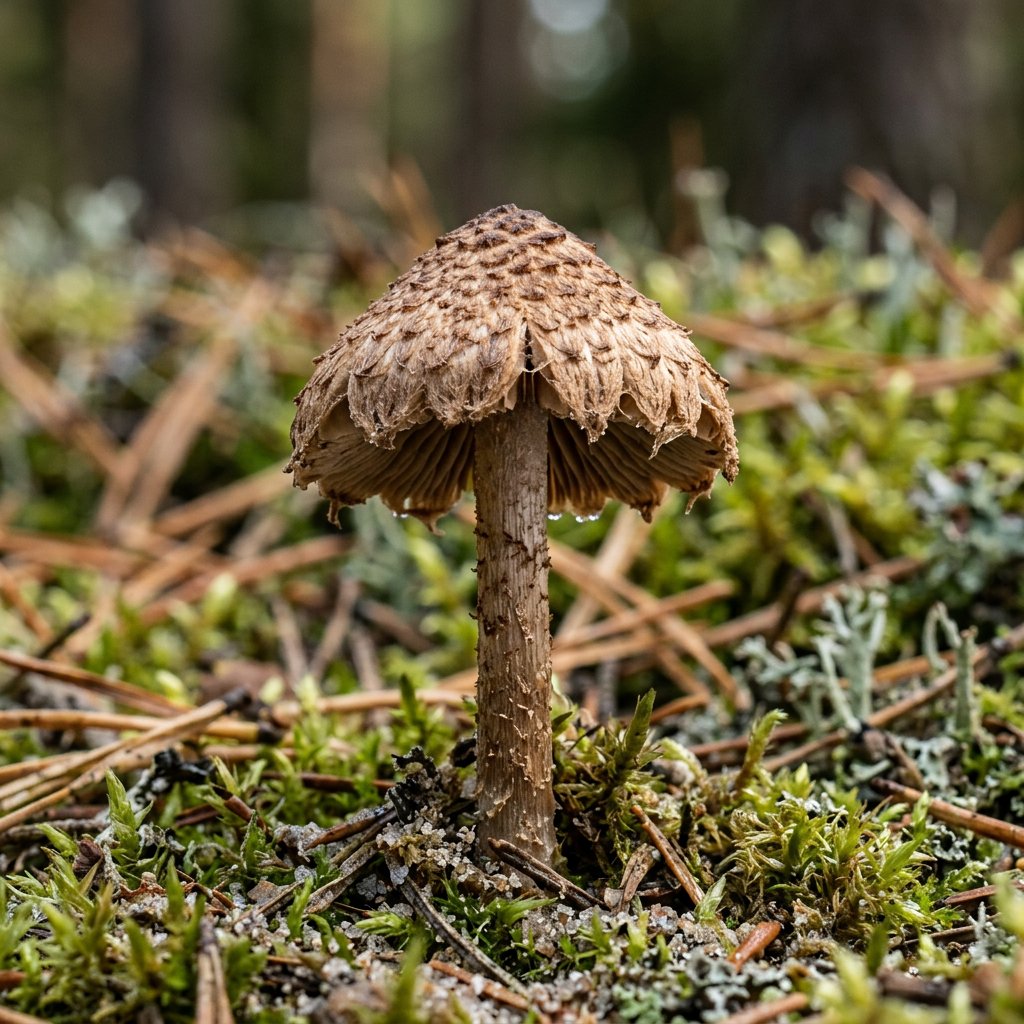
- 🧢 The Cap: True to its name, the cap has a "torn" or fibrous texture. It starts bell-shaped and flattens with age, usually featuring a small central bump (umbo) and covered in fine, radiating brown scales.
- 🧶 The Gills: The gills are crowded and attached to the stem. They begin as a pale grayish-white but mature into a dull, clay-like brown as the spores develop.
- 🪵 The Stem: The stalk is slender, solid, and brownish. It lacks a ring (annulus) but is covered in tiny brownish fibrils that give it a slightly "shaggy" look similar to the cap.
🌲 Habitat & Ecology
- 🏖️ Sandy Specialist: Unlike many mushrooms that crave rich compost, Inocybe lacera thrives in poor, sandy, or gravelly soils. You will often find it popping up along the edges of woodland paths, in sand dunes, or on disturbed roadsides.
- 🤝 Mycorrhizal Partner: It forms a vital symbiotic relationship with various trees, particularly pines and birches. It helps the trees "mine" minerals from poor soil in exchange for life-sustaining sugars.
⚠️ Safety & Toxicity
- 🚨 WARNING: Highly Toxic. This species contains high levels of muscarine, a toxin that attacks the nervous system. It should never be consumed.
- 🤢 The Symptoms: Ingestion triggers "PSL syndrome"—Perspiration, Salivation, and Lachrymation (tearing). Within 30 minutes, an individual may experience profuse sweating, blurred vision, and stomach cramps.
- 🐾 Pet Safety: Because they grow near common walking paths, they pose a significant risk to dogs who might forage while on a hike. Seek immediate veterinary care if ingestion is suspected.
✨ Fun Fact
🧪 The Muscarine Paradox: Even though the famous red-and-white "Alice in Wonderland" mushroom (Amanita muscaria) is the namesake for the toxin muscarine, species in the Inocybe genus actually contain much higher and more dangerous concentrations of it!
More Details
| Hymenium Type | Lamella |
| Stipe Character | Bare Stipe |
| Spore Print Color | Brown |
| Mushroom Cap Shape | Convex Mushroom Cap |
| Hymenium Attachment | Adnexed Hymenium Attachment |
| Mushroom Ecological Type | Mycorrhiza |







