Info
Known as "The Deceiver," the Laccaria laccata is a mischievous little mushroom that has frustrated mushroom hunters for centuries. It earned its nickname because it is a true chameleon of the forest floor, changing its color, shape, and size so drastically based on moisture and age that it rarely looks the same twice. Despite its confusing nature, it is one of the most common and widespread fungi you'll encounter in the wild.
🔍 How to Identify
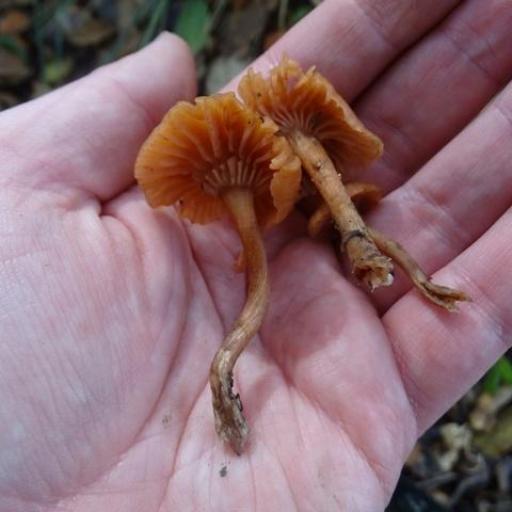
- 🍄 The Cap: Usually 2–6 cm wide, starting out convex and often developing a central dip or wavy edges. Its color is the "trick"—it is a deep reddish-brown when moist but fades to a pale, buff-tan when dry.
- 💗 The Gills: Look underneath for thick, widely spaced gills that are flesh-colored or pinkish. Unlike many other mushrooms, these gills are "adnate," meaning they are broadly attached to the stem.
- 🥢 The Stem: The stalk is notably tough, fibrous, and often twisted. It usually matches the color of the cap and is surprisingly springy to the touch.
🌲 Habitat & Ecology
- 🤝 The Great Partner: This mushroom is mycorrhizal, meaning it forms a beneficial partnership with tree roots. It isn't picky, either—you can find it nestled under both broadleaf trees like Oaks and conifers like Pines.
- 🌿 Widespread Wanderer: Because it is so adaptable, it pops up in various environments, from deep ancient woodlands to mossy heaths and even suburban parklands, usually appearing from early summer through the first frosts of winter.
⚠️ Safety & Toxicity
- 🛑 WARNING: While Laccaria laccata is technically considered edible, it is not recommended for beginners.
- 🎭 The Danger of Mimicry: Because it is a "Little Brown Mushroom" (LBM), it can be easily confused with highly toxic or even deadly species, such as the Deadly Galerina or certain Inocybe (Fiberhead) species.
- 🧪 Check the Gills: The best way to distinguish it from toxic lookalikes is its thick, pinkish, distant gills; however, you should never consume any wild mushroom unless identified by a professional.
✨ Fun Fact
The specific epithet laccata comes from the word "lac," referring to a resinous substance or varnish. This describes the mushroom's slightly waxy, "lacquered" appearance when it is fresh and damp in the morning dew!
More Details
| Hymenium Type | Lamella |
| Stipe Character | Bare Stipe |
| Spore Print Color | White |
| Mushroom Cap Shape | Convex Mushroom Cap |
| Hymenium Attachment | Adnate Hymenium Attachment |
| Mushroom Ecological Type | Mycorrhiza |







