Info
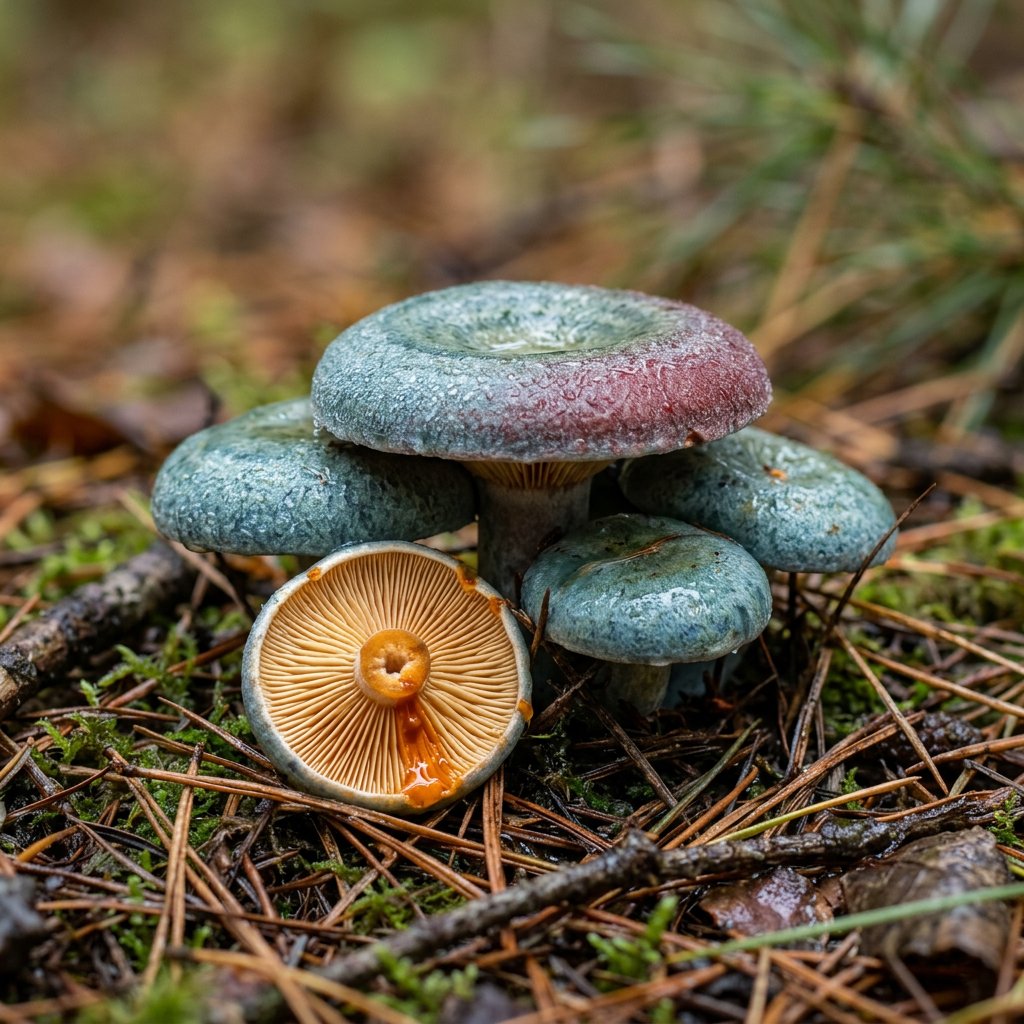
Known as the Silver-Blue Milky, Lactarius paradoxus is a mushroom that loves to play tricks on foragers. While its cap wears a shimmering, icy blue coat that mimics the famous Indigo Milk Cap, it earns its "paradox" name by revealing surprisingly warm, brownish gills underneath. It is a common treasure for those walking through the pine-scented forests of the southeastern United States, often hiding under a layer of fallen needles.
🔍 How to Identify
- 🍄 The Cap: A beautiful silvery-blue or grayish-blue, often decorated with faint concentric circles (zonate). It has a slightly sticky or "tacky" texture when the air is humid.
- 🧬 The Milk: When the gills are sliced, they "bleed" a pale blue liquid (latex). This milk is the signature of the genus, but in this species, the blue liquid slowly stains the flesh a muddy green or brown over time.
- 🎨 The Gills: This is the paradox! Unlike its entirely blue relatives, this mushroom’s gills are pale brown, pinkish-buff, or dull ochre, creating a sharp color contrast with the blue cap.
🌲 Habitat & Ecology
- 🤝 Pine Partners: It forms a symbiotic "mycorrhizal" relationship with pine trees (especially Loblolly Pine) and occasionally oaks. It helps the tree roots absorb water and minerals while the tree feeds the mushroom sugars.
- 🍂 Coastal Specialist: You are most likely to find it in the sandy soils of the Gulf Coast and Atlantic coastal plains, popping up in large groups after heavy summer or autumn rains.
⚠️ Safety & Toxicity
- 🚨 WARNING: Never consume any wild mushroom unless you are 100% certain of its identity. Many "Milky" mushrooms look identical to the untrained eye, and some can cause severe gastric distress.
- 🍴 Status: While considered edible, it is often described as "mediocre" in flavor. It lacks the rich nuttiness of other wild mushrooms and must be thoroughly cooked, as raw specimens can cause an upset stomach in sensitive individuals.
✨ Fun Fact
The species name paradoxus comes from the Latin word for "strange" or "unexpected." Mycologists chose this because they found it deeply confusing that a mushroom could bleed blue milk but have tan-colored gills—a combination that broke the "rules" of mushroom color patterns known at the time!
More Details