Info
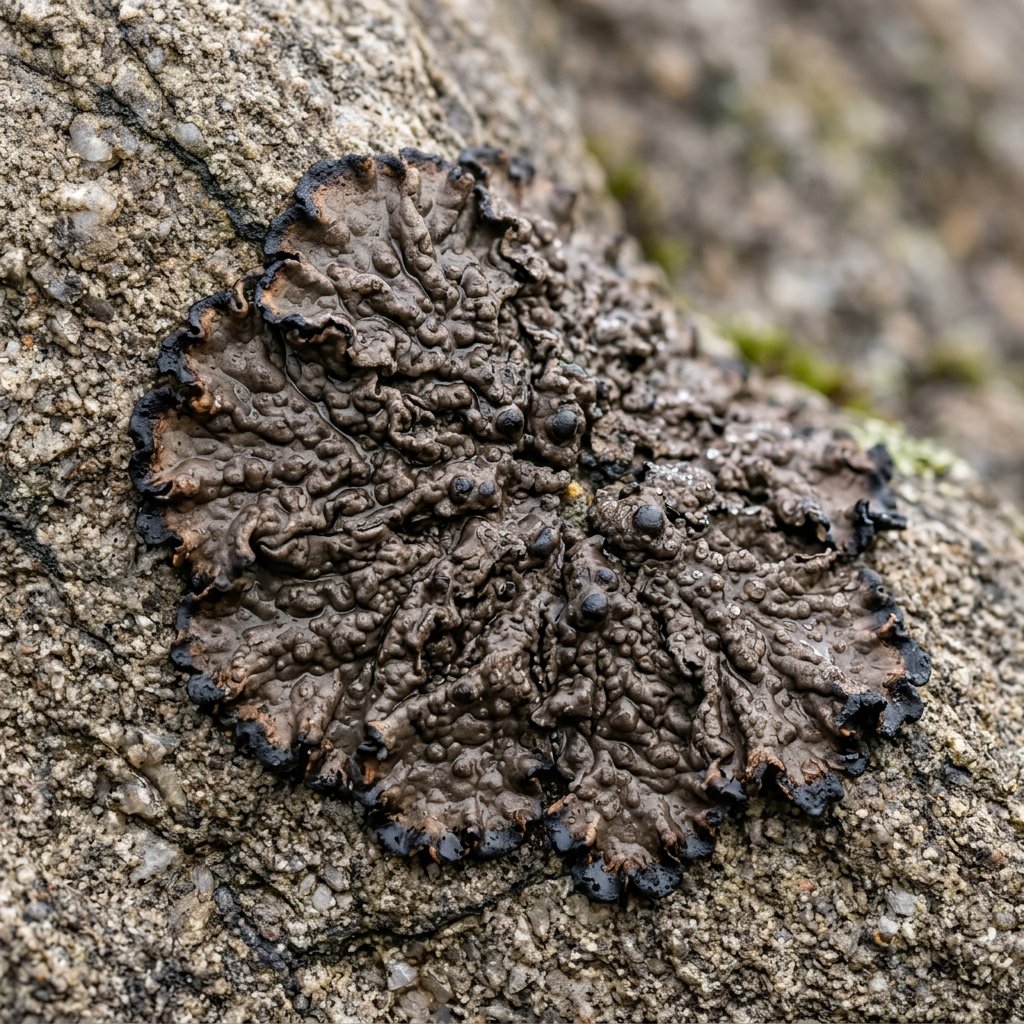
Often referred to as the Common Toadskin or Blistered Rock Tripe, Lasallia papulosa is a fascinating macrolichen that looks more like a piece of weathered dragon skin than a typical forest growth. While technically a symbiotic partnership between a fungus and an alga, it is frequently sought out by mushroom hunters for its unique, prehistoric appearance on sun-drenched cliffs. In folklore, these "rock tripes" were known as the last resort for starving explorers, though their bumpy texture makes them look far from appetizing.
🔍 How to Identify
- 🦎 The "Toadskin" Surface: The upper side is covered in prominent, rounded blisters (pustules) that give it a warty, toad-like texture.
- 🔘 Umbilicate Shape: It grows as a single, leathery leaf (thallus) attached to the rock at one central point, similar to a belly button.
- 🎨 Color Shifting: When bone-dry, it appears ashy gray or light brown and brittle; however, after a rain, it instantly transforms into a flexible, vibrant olive green.
- 🕳️ Pitted Underside: If you flip an edge over, the underside features deep pits that correspond directly to the blisters on the top.
🌲 Habitat & Ecology
- 🪨 Rock Lovers: You won’t find these in soil; they grow exclusively on acidic rocks like granite and sandstone, often in areas with full sun exposure.
- ☀️ Survival Experts: This species is a "resurrection" organism. It can survive total dehydration for months, shutting down its metabolism until the next rainfall brings it back to life.
- 🏔️ Pioneer Species: They play a vital role in nature by slowly breaking down solid rock into soil through the release of lichen acids, paving the way for mosses and ferns.
⚠️ Safety & Toxicity
- ⚠️ WARNING: While members of the Lasallia and Umbilicaria families are historically known as "survival foods," they should never be eaten raw.
- 🤢 Digestive Issues: They contain lichen acids that can cause severe stomach cramps and bitterness. To make them edible, they must be washed thoroughly and boiled multiple times to neutralize the acids.
- 🐾 Pet Safety: Generally not of interest to pets due to their dry, leathery texture and attachment to high rocks, but they are not considered a toxic threat in the garden.
✨ Fun Fact
George Washington’s troops reportedly ate "Rock Tripe" soup during the brutal winter at Valley Forge to stave off starvation—though records suggest they found the slimy, gritty texture quite unpleasant!
More Details