Info
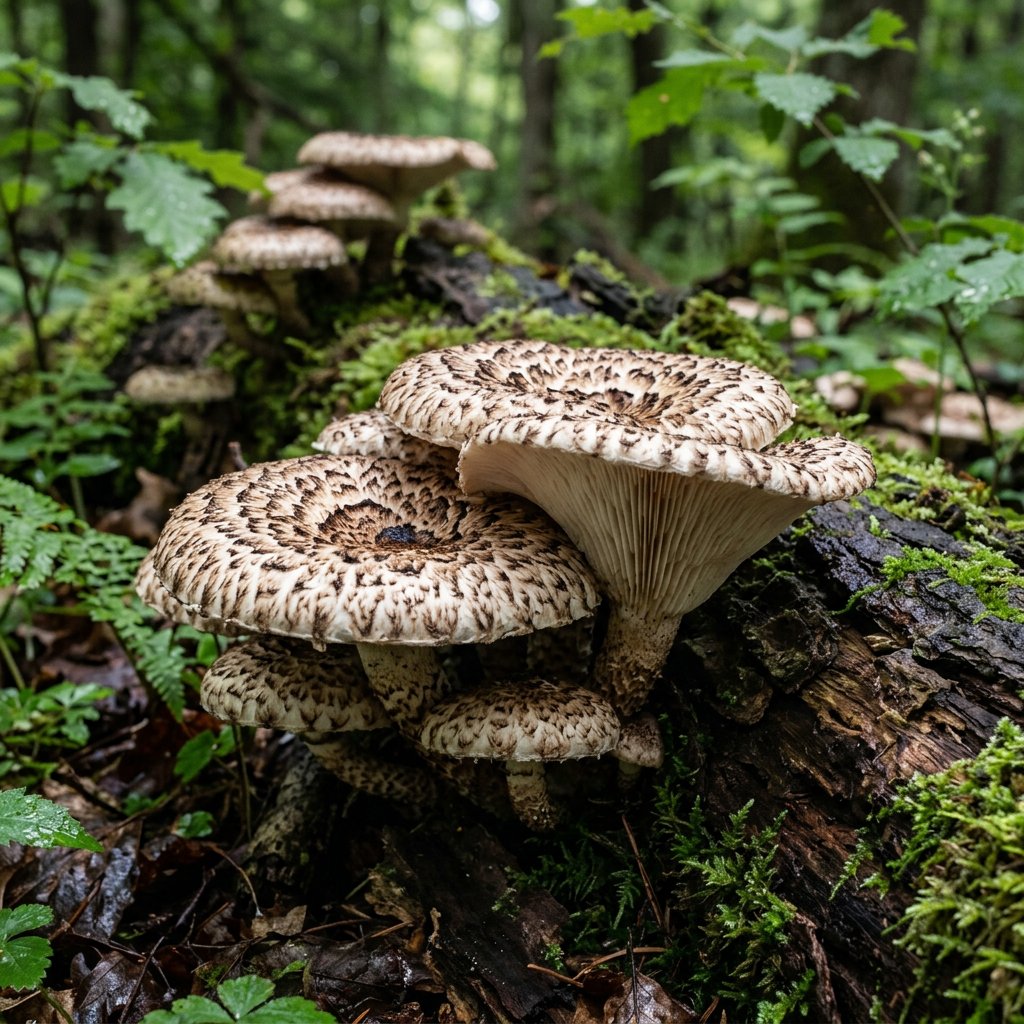
Often called the Tiger Sawgill, this striking mushroom looks like it was hand-painted with delicate leopard or tiger spots. It is a tough, wood-decaying fungus that acts as one of nature’s primary recyclers, breaking down fallen logs near riverbanks and damp woodlands. While it looks like a typical "gilled" mushroom, it is a fascinating rebel of the fungal world, closely related to woody shelf fungi despite its delicate appearance.
🔍 How to Identify
- 🐯 The Cap: A creamy white or tan surface densely covered in dark brown to blackish hairy scales. As it ages, the center often dips, forming a funnel or "vase" shape.
- 🪚 The Gills: The white gills run significantly down the stem (decurrent). If you look closely at the edges, they are jagged or "saw-toothed," which is where the name "Sawgill" comes from.
- 🪵 The Stem: Very tough, fibrous, and often slightly off-center. It usually features the same dark, scaly pattern as the cap, tapering down to where it grips the wood.
🌲 Habitat & Ecology
- 💧 Water Lovers: This species has a particular affinity for hardwood logs (especially Willow, Poplar, and Birch) located in damp areas like floodplains, marshes, or near streams.
- 🍂 White Rot Specialist: It is a "saprobic" fungus, meaning it eats dead matter. It produces "white rot," breaking down the tough lignin in wood and returning vital nutrients to the forest soil.
⚠️ Safety & Toxicity
- ❗ WARNING: Never consume wild mushrooms unless identified by a professional. Many "little brown mushrooms" or white-gilled fungi can be look-alikes for toxic species.
- 👅 Palatability: While not considered poisonous to humans, the Tiger Sawgill is generally listed as inedible. This isn't due to toxins, but because the flesh is incredibly tough, leathery, and cork-like—making it about as pleasant to eat as a piece of cardboard.
- 🐾 Pets: Keep curious dogs away; while not known for high toxicity, the tough fibers can cause significant digestive blockages or stomach upset in small animals.
✨ Fun Fact
Despite having gills like a common button mushroom, genetic testing reveals that Lentinus tigrinus is actually a member of the Polypore family. It is more closely related to the hard, woody "bracket fungi" you see growing on the sides of trees than it is to the mushrooms you find in a grocery store!
More Details







