Info
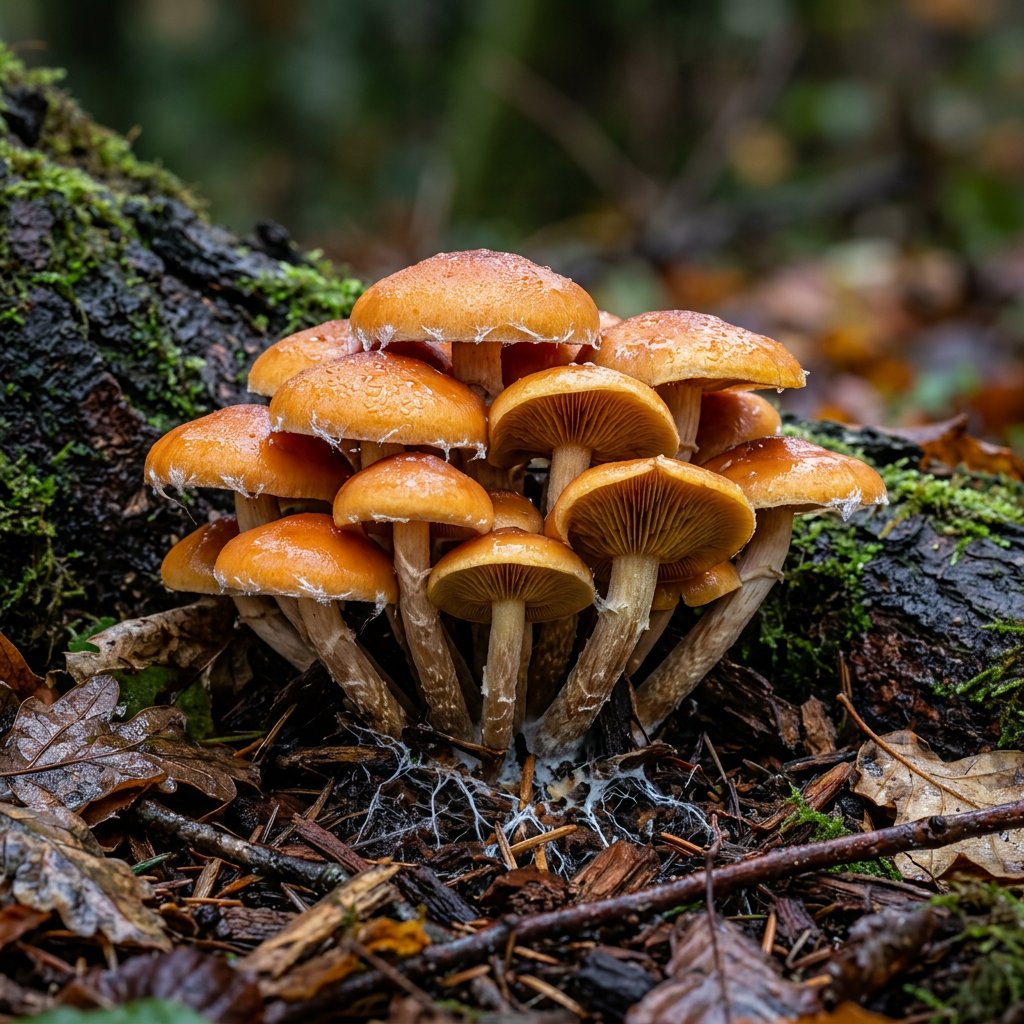
Often referred to as the Mulch Mauler or the Wood-chip Roundhead, Leratiomyces percevalii is a common sight in modern suburban landscapes. This mushroom has successfully "hitchhiked" around the globe, following the human habit of decorating gardens with wood chips and mulch. While it may look humble, it is a master of urban survival, turning garden waste into rich soil.
🔍 How to Identify
- 🍄 The Cap: Typically 3–8 cm wide, the cap is smooth and slightly sticky (viscid) when moist. It ranges in color from a pale honey-yellow to a dull straw color, often fading as it dries.
- 🌑 The Gills: When young, the gills are whitish or pale grey, but they eventually turn a dark, smoky purplish-brown as the spores mature.
- 🥖 The Stem: The stalk is long, slender, and off-white. It often features a very thin, fragile ring (annulus) near the top, though this ring frequently falls off or shrivels away as the mushroom grows.
🌲 Habitat & Ecology
- 🪵 Mulch Specialist: This is a saprobic fungus, meaning it feeds on dead organic matter. It is almost exclusively found growing in clusters on wood chips, mulch, or soil heavily enriched with woody debris.
- 🏙️ Urban Opportunist: Because it loves processed wood, it is more common in city parks, garden beds, and office landscaping than in deep, untouched forests. It is often one of the first fungi to pop up after a fresh layer of mulch is laid down.
⚠️ Safety & Toxicity
- 🚫 Status: WARNING: INEDIBLE. While not generally considered "deadly" like some of its forest cousins, Leratiomyces percevalii is widely classified as inedible.
- 🤢 Details: It is reported to have a bitter, unpleasant taste and can cause significant gastrointestinal upset (nausea, vomiting, and cramps) if consumed. It should be kept away from curious toddlers and pets who might explore the garden with their mouths.
✨ Fun Fact
- 🚀 A Global Traveler: Scientists believe this mushroom has expanded its range across Europe and North America primarily through the horticultural trade. By living in bags of commercial mulch, it has "colonized" the world faster than almost any other fungus!
More Details







