Info
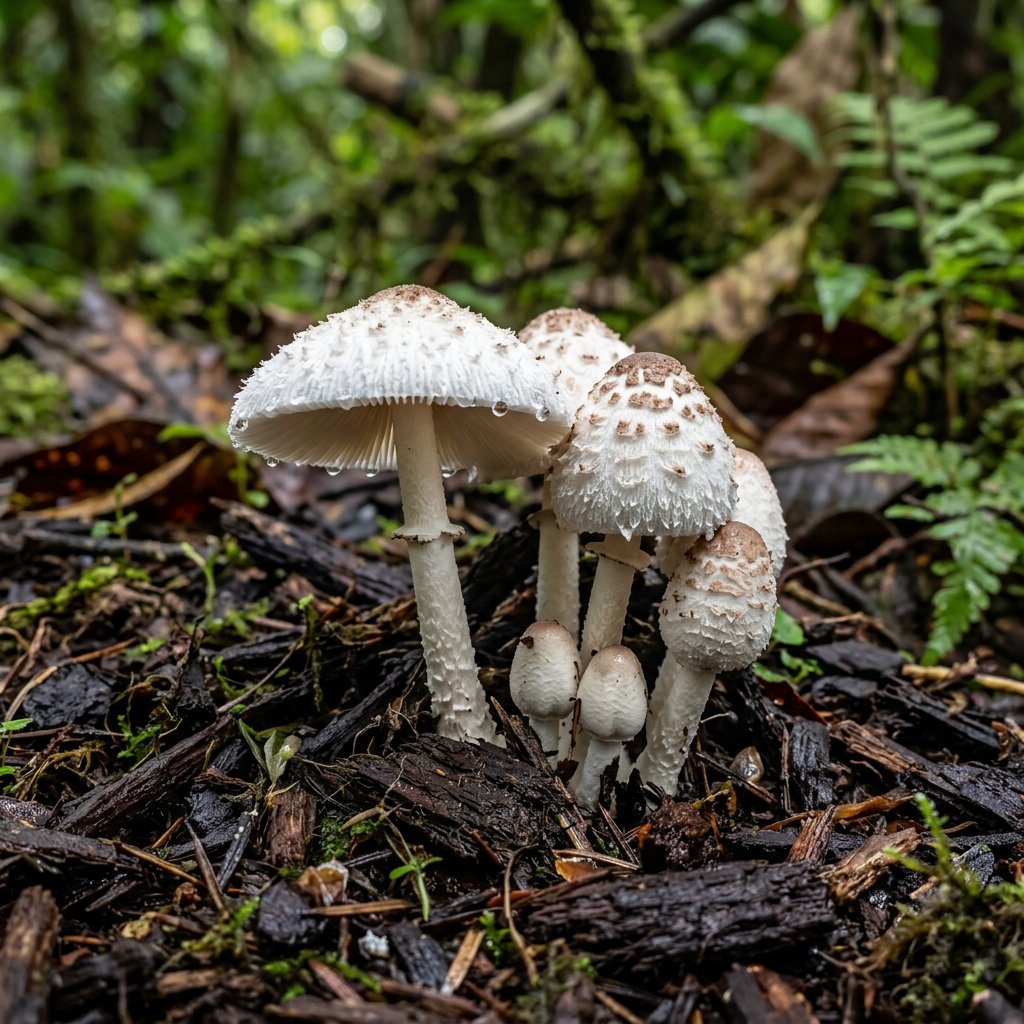
Known as the Onion-stalk Lepiota, this delicate white mushroom is a frequent "mystery guest" in garden mulch and greenhouses. It looks like a dainty, powdered umbrella left behind by a forest sprite. While it lacks the vibrant neon-yellow color of its famous cousin, the Flowerpot Parasol, its elegant form and scaly texture make it a fascinating find for any backyard explorer.
🔍 How to Identify
- 🍄 The Cap: Starts as a tiny white oval, maturing into a bell shape and eventually flattening out. The surface is dusted with fine, mealy scales that look like scattered breadcrumbs.
- 🧅 The Stem: The base is noticeably swollen, mimicking the shape of a spring onion or a flower bulb. This "club-footed" look is its most defining physical trait.
- ⚪ The Gills: Underneath, you will find very crowded, thin white gills that do not attach to the stem. As the mushroom ages, these remain white rather than turning brown.
🌲 Habitat & Ecology
- 🍂 The Decomposer: This mushroom is a "saprobe," meaning it survives by breaking down dead organic matter. You will most often find it in wood chips, rich garden compost, or heavily mulched flower beds.
- 🪴 Potted Plant Companion: It is a common inhabitant of indoor potting soil. If it pops up in your houseplant, don't worry—it isn't harming your plant; it is actually helping to break down nutrients in the soil to make them more accessible to the roots.
⚠️ Safety & Toxicity
- 🚫 WARNING: Strictly inedible. This mushroom should never be consumed. It is classified as toxic and is known to cause severe gastrointestinal upset.
- 🤢 Symptoms: Ingestion typically leads to intense nausea, vomiting, and stomach cramps. Because it looks somewhat similar to some edible "Parasol" mushrooms, it is a common cause of accidental poisoning.
- 🐾 Pets & Children: Because they often grow in household pots or accessible garden beds, keep a close eye on curious pets or toddlers who might be tempted by their "marshmallow-like" appearance.
✨ Fun Fact
The scientific name cepistipes is a literal Latin description of the mushroom's look: cepa means "onion" and stipes means "stalk" or "stem." It is the mushroom with the onion-shaped leg!
More Details







