Info
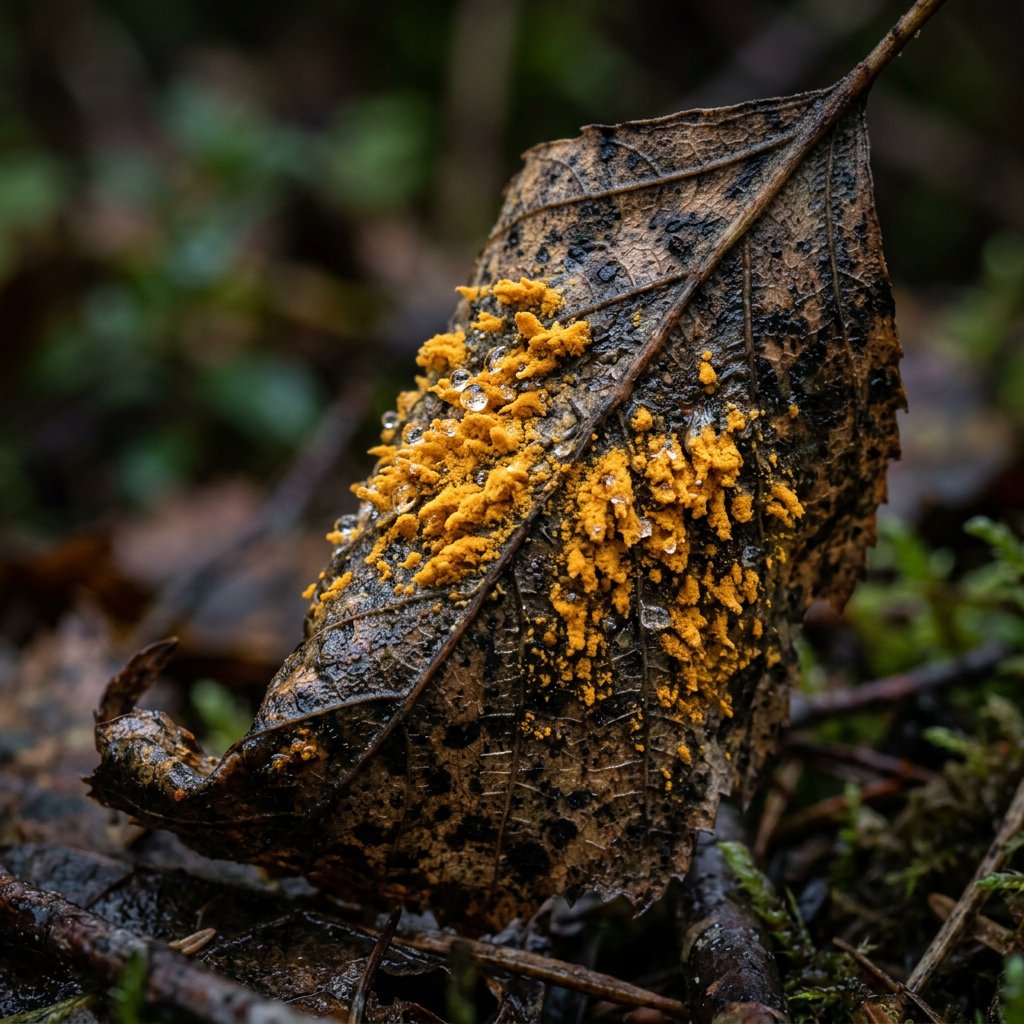
Often called Birch Leaf Rust, this fungus doesn't look like a typical mushroom. Instead, it creates a striking "golden shower" effect on foliage during late summer and autumn. It is a microscopic traveler with a complex life cycle, famously hitchhiking between birch trees and larch needles to survive the changing seasons.
🔍 How to Identify
- 🟡 Golden Pustules: Look for tiny, bright orange-to-yellow raised spots (called uredinia) clustered densely on the underside of birch leaves.
- 🍂 Top-Side Spotting: The upper surface of the leaf will often show pale, yellowish, or brown speckled patches that mirror the "rust" colonies underneath.
- 🌬️ Powdery Spores: If you gently brush an infected leaf, a fine, golden dust may coat your fingers—these are millions of spores ready to be carried by the wind.
🌲 Habitat & Ecology
- 🌳 Host Specificity: As the name suggests, it is primarily found on Birch trees (Betula species). It thrives in damp, temperate forests, parks, and domestic gardens where birch is present.
- 🌲 The Larch Connection: This fungus is "heteroecious," meaning it often requires two different host plants to complete its life cycle. It frequently spends its early spring phase on the needles of Larch trees (Larix) before migrating back to the birch.
- 💧 Moisture Lover: You will notice it most prominently during wet summers, as high humidity and frequent rain help the spores germinate and spread rapidly across the canopy.
⚠️ Safety & Toxicity
- 🚫 WARNING: While it does not produce a "fruiting body" like a traditional capped mushroom, this is a fungal pathogen and is strictly inedible.
- 🌿 Plant Health: It is not toxic to humans or pets to touch, but a heavy infestation can cause "premature defoliation," meaning the tree drops its leaves early. This can weaken young trees, though established birches usually tolerate it well.
✨ Fun Fact
In years with particularly heavy outbreaks, Birch Rust can be so widespread that it actually changes the landscape's color, making entire forests appear to turn "autumn gold" weeks before the temperature even begins to drop!
More Details







