Info
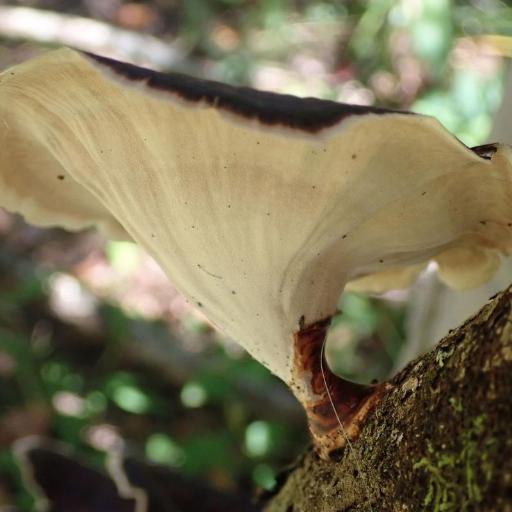
Often called the Yellow-foot Polypore, this fungus looks like a tiny, perfectly crafted satellite dish emerging from fallen branches. Found primarily in the tropical regions of Africa, Asia, and the Pacific, it is a master of symmetry and subtle color. Because it is incredibly tough and leathery, it can persist in the wild for a long time, looking like a piece of polished wood jewelry tucked away on the forest floor.
🔍 How to Identify
- 🍄 The Cap: Distinctly funnel-shaped (infundibuliform) with elegant, concentric rings of color ranging from chocolate brown to golden yellow and cream.
- 🕳️ The Pores: The underside is covered in "micropores"—holes so small they are almost invisible to the naked eye—giving the bottom a smooth, suede-like white or cream texture.
- 🦶 The Foot: It features a very distinct, short, and sturdy central stalk that ends in a slightly swollen, yellowish-orange "foot" where it attaches to the wood.
🌲 Habitat & Ecology
- 🍂 Woodland Recycler: This mushroom is saprobic, meaning it feeds on dead wood. You’ll usually find it growing in clusters on fallen hardwood branches or decaying logs in humid, tropical forests.
- 🌧️ Weather Resistant: Unlike fleshy mushrooms that melt away after a few days, Microporus xanthopus is tough and leathery. It can survive dry spells by becoming brittle, then "waking up" and continuing to drop spores when the rains return.
⚠️ Safety & Toxicity
- 🚫 Status: INEDIBLE. While not known to contain deadly toxins, this mushroom is not food.
- 👅 Texture: It is far too tough and woody to be chewed or digested. In the world of foraging, it is considered "corky" or "leathery."
- 🐾 Pets: Generally ignored by animals due to its hardness, but it should not be ingested by curious pets as it may cause digestive blockages.
✨ Fun Fact
In some indigenous cultures in Papua New Guinea and parts of Africa, these mushrooms are so durable and beautiful that they have been used as traditional decorative ornaments or even "flowers" that never wither.
More Details







