Info
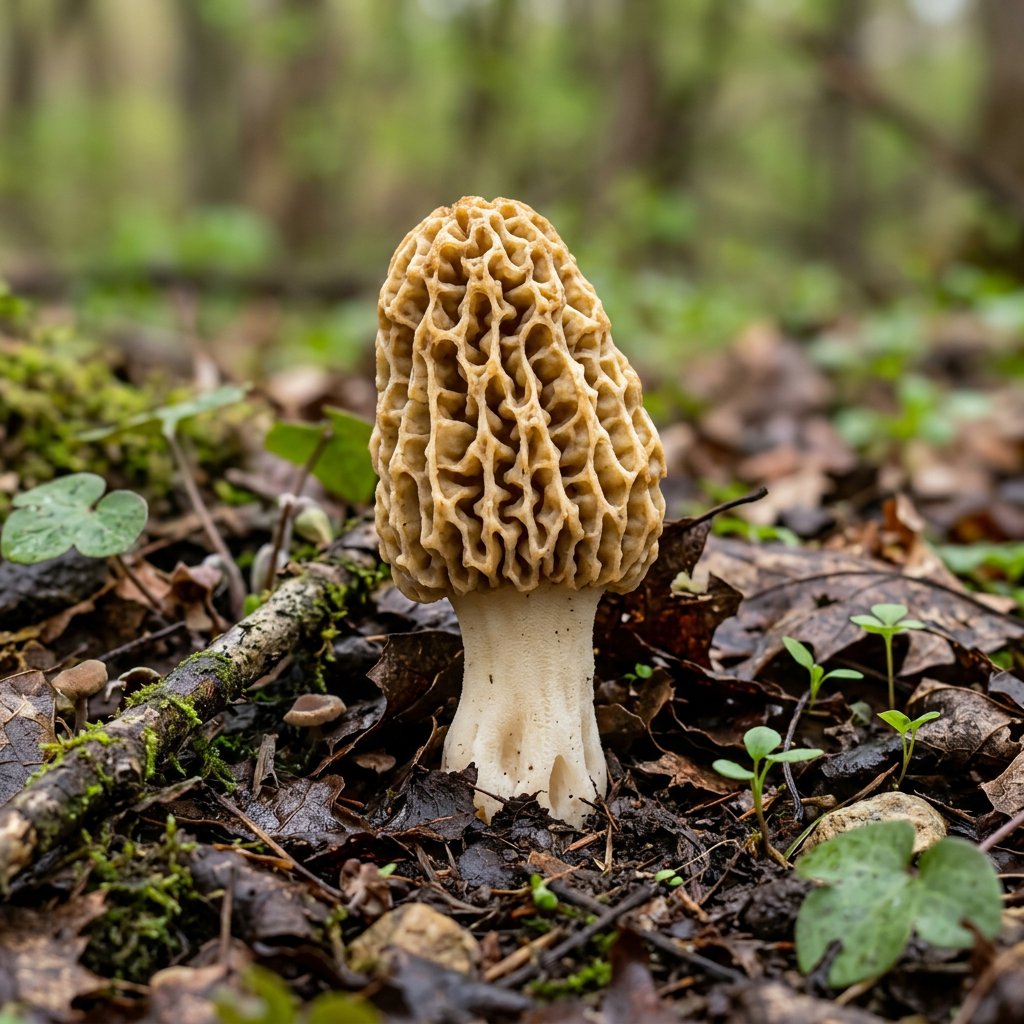
Often called the "King of Mushrooms" in North America, Morchella americana is the holy grail for spring foragers. Known affectionately as "Yellow Morels" or "Sponge Mushrooms," their arrival signals the end of winter and the start of an intense woodland treasure hunt. They are as famous for their rich, nutty flavor as they are for their uncanny ability to hide in plain sight among the brown leaves of the forest floor.
🔍 How to Identify
- 🧠 The Cap: Features a distinct honeycomb-like surface with irregular pits and ridges. The color ranges from greyish-yellow to a rich honey-tan as they mature.
- 🦴 Hollow Body: This is the ultimate test—if you slice a true morel lengthwise, the entire mushroom (both the cap and the stem) is a single, continuous hollow chamber.
- 🤝 Fused Attachment: The bottom of the pitted cap is fused directly to the pale, slightly granular stem, rather than hanging over it like an umbrella.
🌲 Habitat & Ecology
- 🌳 The Tree Connection: These mushrooms have a complex relationship with specific trees. You’ll most likely find them near Ash, Elm, Sycamore, and occasionally in old, dying apple orchards.
- 🌦️ Spring Fever: They are highly sensitive to temperature and moisture. They typically emerge when the soil reaches about 50°F (10°C), often right after the first warm spring rains when the "mayapples" begin to bloom.
⚠️ Safety & Toxicity
- 🛑 WARNING: Never consume Morchella americana raw. They contain small amounts of hydrazine toxins that can cause severe stomach upset unless they are thoroughly cooked.
- 🧐 The Imposter: Watch out for "False Morels" (Gyromitra species). These look-alikes have "brain-like" lobes rather than pits, and their stems are stuffed with cottony fibers or are solid, rather than being completely hollow.
- 🐕 Pets & Kids: Keep curious pets away from raw wild mushrooms, as ingestion can lead to vomiting, lethargy, or more severe neurological symptoms depending on the amount consumed.
✨ Fun Fact
Morel foraging is so competitive that "Morel madness" is a real phenomenon! Foragers are notoriously secretive about their "honey holes"—the specific spots where they find mushrooms—often refusing to share the location even with their closest friends or family members.
More Details







