Info
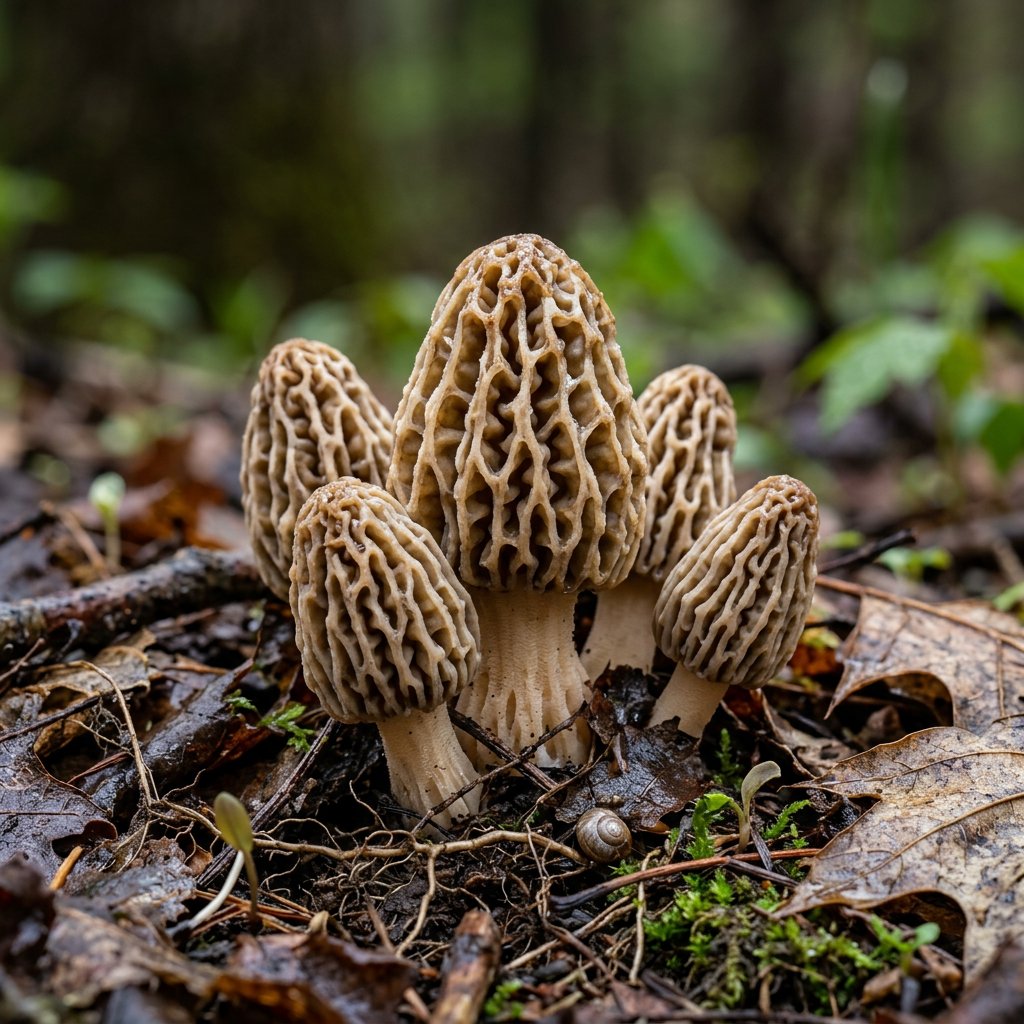
Known affectionately as the Small Yellow Morel or the Dainty Morel, this elusive fungus is the miniature treasure of the spring forest. While most mushroom hunters are busy looking for their larger cousins, the Morchella diminutiva hides in plain sight, blending perfectly with fallen leaves. In foraging circles, finding a patch of these is like discovering a hidden stash of woodland "forest gold."
🔍 How to Identify
- 🍄 The Honeycomb Cap: The cap is conical or slightly egg-shaped, featuring deep, irregular pits separated by pale ridges. It starts out grayish and matures into a warm, honey-yellow hue.
- 🦴 Hollow Core: If you slice the mushroom vertically from top to bottom, the entire structure is completely hollow. This is a primary feature that distinguishes "True Morels" from dangerous lookalikes.
- 🔗 The Stem Connection: The base of the cap is fused directly to the stem. Unlike some other fungi, there is no "skirt" or overhang where the cap meets the stalk.
🌲 Habitat & Ecology
- 🌳 Hardwood Companions: This species is highly selective about its neighbors. It is almost always found in deciduous forests, specifically forming relationships with Tulip Poplar, Ash, and Hickory trees.
- 🍂 Master of Disguise: Due to its small size—often no taller than a thumb—it requires a "morel eye" to spot. It thrives in moist soil during the peak of spring, usually appearing just as the forest canopy begins to leaf out.
⚠️ Safety & Toxicity
- 🚨 WARNING: Never eat this mushroom raw. All true morels contain small amounts of hydrazine toxins that are destroyed by heat. Always cook them thoroughly before consumption.
- 🚫 The False Morel Trap: Beginners must beware of Gyromitra species (False Morels). While Morchella diminutiva is hollow inside, False Morels are typically stuffed with a cottony, fleshy substance and have "brain-like" folds rather than distinct pits and ridges.
- 🐾 Pets: Keep curious dogs away from raw wild mushrooms, as they can cause significant gastrointestinal distress or worse.
✨ Fun Fact
The specific epithet diminutiva is Latin for "very small." Despite their tiny stature, many gourmet chefs believe these "mini-morels" have a more intense, concentrated nutty flavor than the larger species, making them a highly prized find for the dinner table!
More Details







