Info
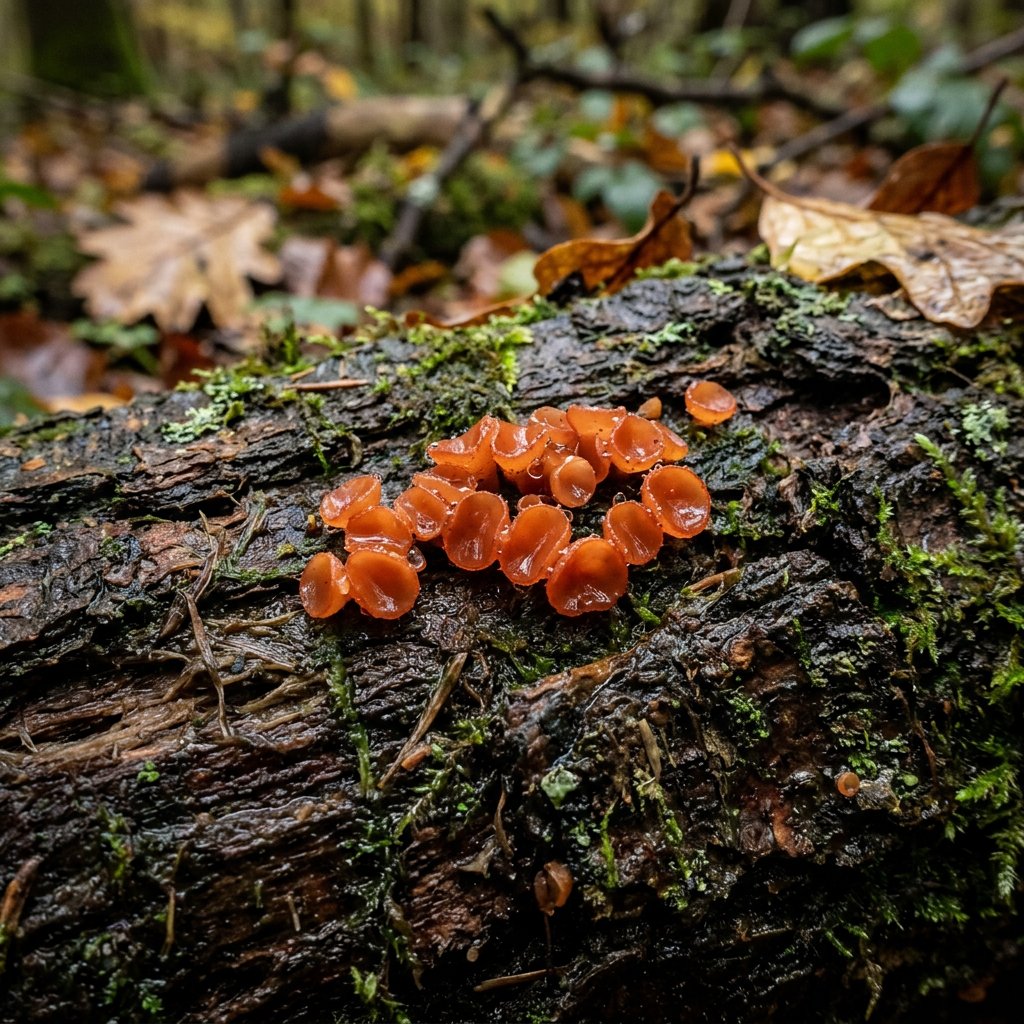
Commonly known as the Yellow Cup Fungus, Nectria peziza looks like a cluster of tiny, glowing amber gems scattered across decaying wood. These minuscule fungi are often overlooked by the casual hiker, but to the keen observer, they represent a miniature world of golden beauty. In the damp undergrowth of a forest, they appear like microscopic bowls set out for a woodland feast.
🔍 How to Identify
- 🟡 The Body: These fungi take the shape of tiny cups or saucers, measuring only 1 to 4 millimeters in diameter. As they age, they often flatten out or become slightly distorted.
- 🎨 Color Palette: They are typically a vivid yellow to orangey-yellow. When dry, they may turn a darker, duller orange or reddish-brown and shrivel significantly.
- Smooth Texture: The inner surface (where the spores are produced) is smooth, while the outer edge might appear slightly fuzzy or downy under a magnifying glass.
🌲 Habitat & Ecology
- 🪵 The Foundation: You will almost always find these growing on very rotten, barkless wood of deciduous trees like Beech, Oak, or Elder. They are saprobic, meaning they play the vital role of recycling dead organic matter back into the soil.
- 🍄 Fungal Neighbors: Interestingly, they are sometimes found growing near or even on the old, decaying fruiting bodies of other "bracket" fungi (polypores), acting as a secondary decomposer.
- 💧 Moisture Lovers: They are most prominent after heavy rains in late summer and autumn. When the air is dry, they shrink into tiny, inconspicuous orange dots to conserve water.
⚠️ Safety & Toxicity
- 🚫 Status: NOT EDIBLE.
- ❗ WARNING: While not specifically listed as a deadly species, Nectria peziza is far too small to be considered food, and its chemical properties are not well-studied for human consumption. Many fungi in the Nectriaceae family are considered inedible or potentially toxic.
- 🐾 Pet Safety: Because of their bright color, they might attract curious pets. While not known to be highly toxic, ingestion should be avoided as it may cause gastrointestinal upset.
✨ Fun Fact
These fungi are masters of transformation! When they dry out, they collapse and look like tiny, wrinkled orange grains of sand. However, as soon as they are hit by a drop of rain, they "reanimate," swelling back into their perfect cup shapes in a matter of minutes.
More Details