Info
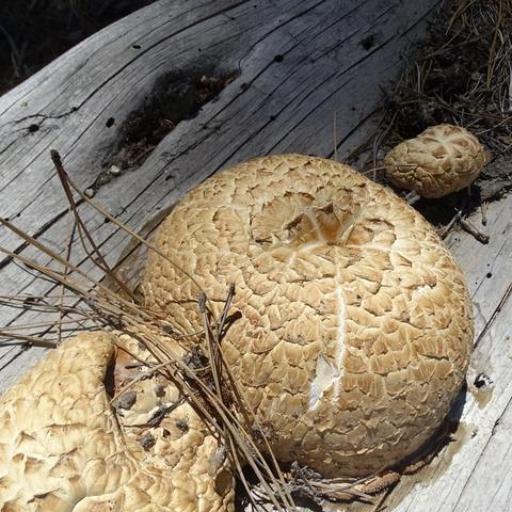
Known as the "Giant Sawgill," this mushroom is a heavyweight champion of the Western North American forests. Often found emerging from sun-bleached pine stumps, it looks like a rugged, sun-scorched loaf of sourdough bread. In the world of foraging, it is a prized find for those who appreciate fungi with a "meaty" texture and the stamina to grow in dry, mountain conditions.
🔍 How to Identify
- 🍄 The Cap: Massive and incredibly fleshy, reaching up to 30 cm across. It starts convex but flattens with age, developing a tan to cinnamon-brown surface covered in distinct, brownish scales.
- 🪚 The Gills: True to its name, the gills have "serrated" or jagged edges, resembling the teeth of a saw. They are creamy white and slightly decurrent, meaning they begin to run down the stem.
- 🪵 The Stem: Exceptionally thick, solid, and tough. The stem is often off-center and tapers toward the base, anchoring the heavy cap firmly into the decaying wood.
🌲 Habitat & Ecology
- 🏔️ The Conifer Specialist: You will most likely find the Giant Sawgill in high-elevation forests, specifically growing on the stumps, logs, and roots of Ponderosa or Jeffrey pines. It plays a vital role as a decomposer, breaking down tough resinous wood.
- ☀️ Drought Resistance: Unlike many delicate mushrooms that wither in the heat, this species is dense and moisture-retentive. It can persist for weeks in the mountain sun, slowly toughening until it feels almost like cork.
⚠️ Safety & Toxicity
- 🛑 WARNING: While Neolentinus ponderosus is considered edible, never consume any wild mushroom unless you have 100% certainty of its identity confirmed by a local expert.
- 🍳 Preparation is Key: If eaten, only young, tender specimens should be used. As they age, they become incredibly "woody" and difficult to digest. Some individuals may experience mild stomach upset if the mushroom is not cooked thoroughly.
- 🐾 Pet Safety: While not toxic to the touch, the dense fibers can cause intestinal blockages if ingested by curious dogs.
✨ Fun Fact
The "Sawgill" doesn't just look tough; it’s a survivor! Even after the mushroom has dried out in the wild, it can sometimes "revive" and continue to drop spores after a fresh rain, a testament to its hardy, mountain-dwelling nature.
More Details