Info
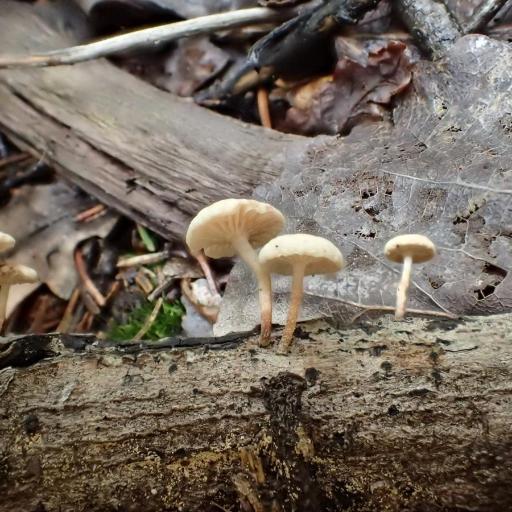
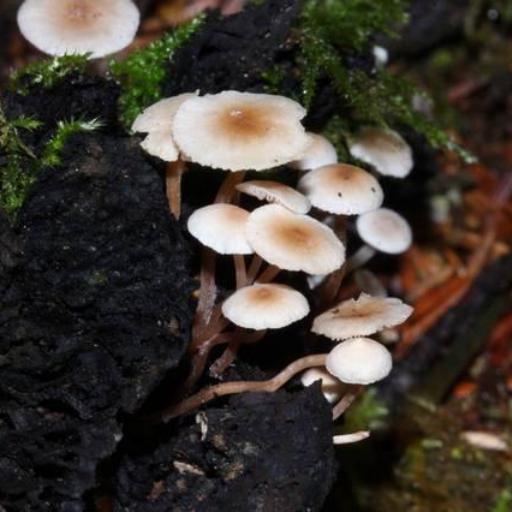
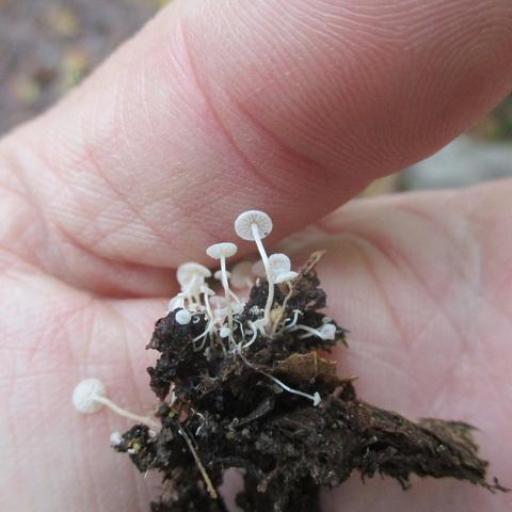
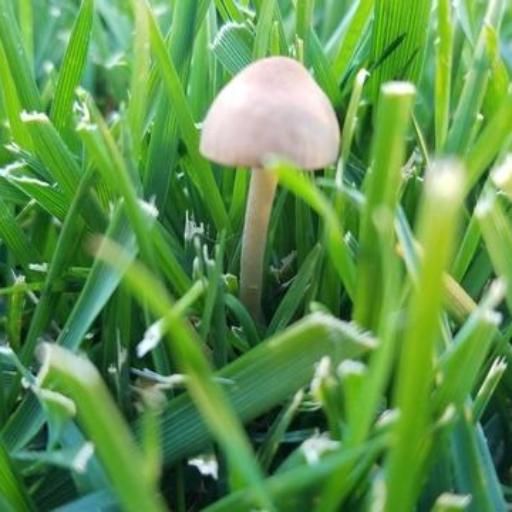
Often hiding in plain sight on manicured lawns or compost heaps, Panaeolus cinctulus—better known as the Banded Mottlegill—is a widespread "little brown mushroom" (LBM) with a subtle, mysterious beauty. While it lacks the flashy colors of a fairy tale toadstool, its characteristic "halo" or dark band around the cap edge makes it a fascinating find for urban foragers and backyard mycologists.
🔍 How to Identify
- 🍄 The Cap: Measuring 1.5 to 5 cm, the cap is convex to bell-shaped and changes color as it dries (hygrophanous). It features a distinct, darker reddish-brown band around the margin that gives the species its name.
- 🖤 The Gills: The gills are closely spaced and develop a "mottled" appearance—patchy shades of grey and black—as the spores mature.
- 📏 The Stem: Long, slender, and hollow, the stem is typically reddish-brown but often appears dusted with a fine white powder (pruinose) near the top.
- 🏴 The Spore Print: A critical identification feature; this mushroom leaves a jet-black spore print, which distinguishes it from many look-alikes.
🌲 Habitat & Ecology
- 🐎 Nitrogen Lovers: This species thrives in nutrient-rich environments. You are most likely to find them growing in tufts on horse manure, compost piles, or lawns that have been heavily treated with commercial fertilizers.
- 🌍 Global Resident: The Banded Mottlegill is one of the most widely distributed psilocybin-containing mushrooms in the world, appearing across North America, Europe, and Asia wherever human landscaping provides its preferred "fast food" (nitrogen).
⚠️ Safety & Toxicity
- 🛑 WARNING: Panaeolus cinctulus is a psychoactive mushroom containing psilocybin. Ingestion causes hallucinations, altered perception, and potentially intense anxiety or physical discomfort.
- ⚖️ Legal Status: In many regions, the possession or cultivation of this species is illegal.
- ☠️ Fatal Look-alikes: This mushroom is notoriously difficult for beginners to distinguish from the toxic Galerina marginata or the common Panaeolus foenisecii (Mower's Mushroom). Consumption of the wrong "little brown mushroom" can lead to severe organ failure or death.
✨ Fun Fact
- 🎨 The Spore Signature: Mycologists often use the "black spore test" to identify this species. While its twin, the Mower's Mushroom, leaves a dark brown print, the Banded Mottlegill leaves a print as dark as India ink, a trait that earned it a reputation as one of the most "active" mushrooms found in common suburban areas.
More Details
| Hymenium Type | Lamella |
| Stipe Character | Bare Stipe |
| Spore Print Color | Black |
| Mushroom Cap Shape | Campanulate Mushroom Cap |
| Hymenium Attachment | Adnate Hymenium Attachment |
| Mushroom Ecological Type | Saprobiont |