Info
Often called the "Blue Mold" or "Green Mold," Penicillium is the invisible architect of our modern world. While it doesn’t grow a traditional umbrella-shaped mushroom cap, this fungus is a titan of the microbial forest, famously known as the source of the world’s first antibiotic. From ripening gourmet cheeses like Roquefort to saving millions of lives, it is a fungus that bridges the gap between the kitchen and the laboratory.
🔍 How to Identify
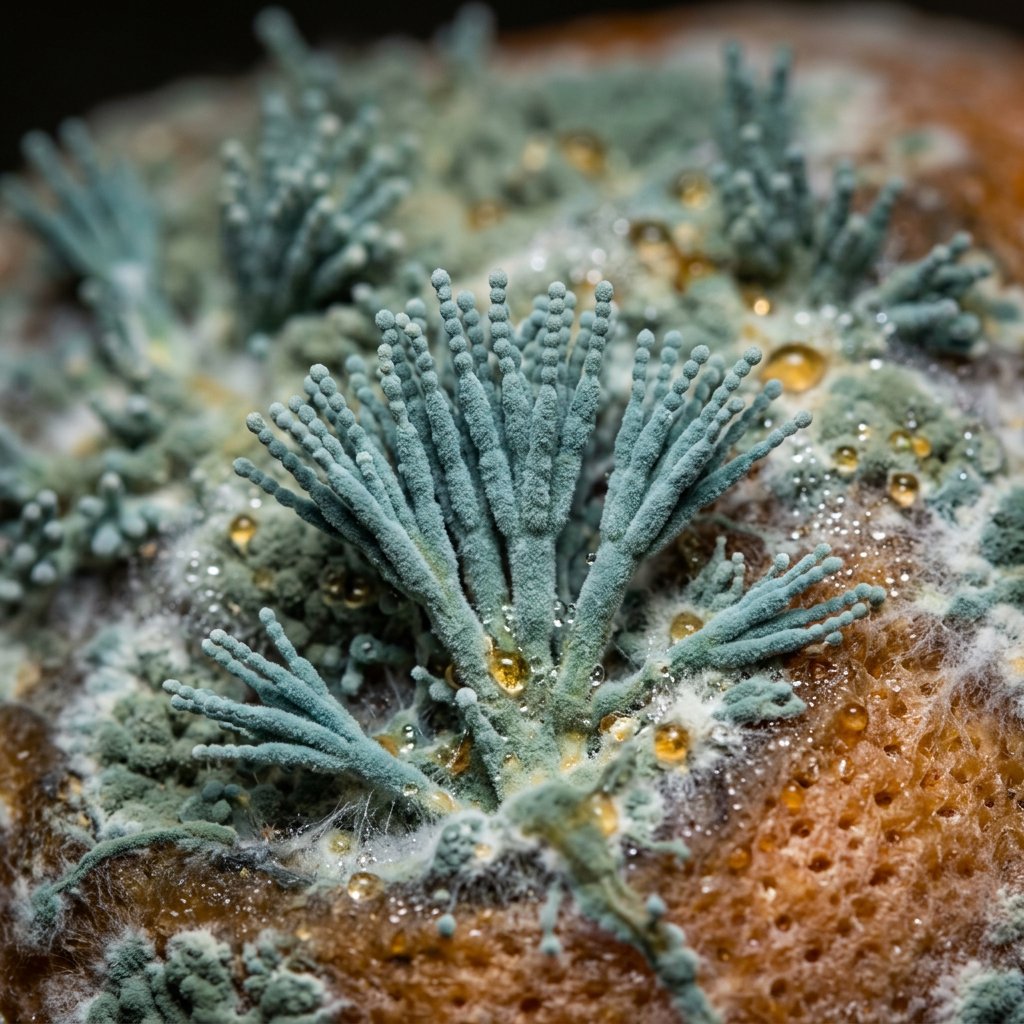
- 🎨 Color Palette: It typically appears as patches of dusty sage green, teal, or blue-gray, often fringed with a distinct white border of new growth.
- ☁️ Texture: Unlike slimy molds, Penicillium has a dry, velvety, or "suede-like" surface caused by millions of tiny spores.
- 🖌️ Microscopic Form: If viewed under a lens, its spore-bearing structures look like tiny, branched paintbrushes or "brooms."
🌲 Habitat & Ecology
- 🍎 The Kitchen Scavenger: In the home, it is a specialist in decomposing organic matter, frequently appearing on citrus fruits, bread, and damp wallpaper.
- 🌬️ Invisible Resident: Its spores are omnipresent in the air and soil, acting as nature’s recycler by breaking down complex plant materials.
- 🧀 The Flavor Maker: Specific "domesticated" species are used intentionally in caves and factories to create the blue veins in Gorgonzola and the white rinds on Brie.
⚠️ Safety & Toxicity
- 🚨 WARNING: Never consume food that has "wild" mold growing on it. While some species are used in cheese, household strains can produce harmful mycotoxins.
- 🤧 Respiratory Irritant: Inhaling large amounts of spores can trigger allergic reactions, hay fever, or asthma attacks in sensitive individuals.
- 🐾 Pet Safety: Moldy food scraps containing Penicillium can be toxic to dogs, causing tremors or seizures if ingested.
✨ Fun Fact
The name Penicillium comes from the Latin word "penicillum," meaning "painter's brush," because the fungal filaments look exactly like the brushes used by ancient Roman artists!
More Details







