Info
Often called the "Cypress Tip Blight," Pestalotiopsis funerea is less of a fairytale toadstool and more of a microscopic opportunistic artist. It is a common fungus that primarily targets conifers, turning lush green hedges into a canvas of grayish-brown needles. While it is often blamed for killing trees, it usually acts as a "vulture," appearing only after the plant has been stressed by drought, frost, or poor pruning.
🔍 How to Identify
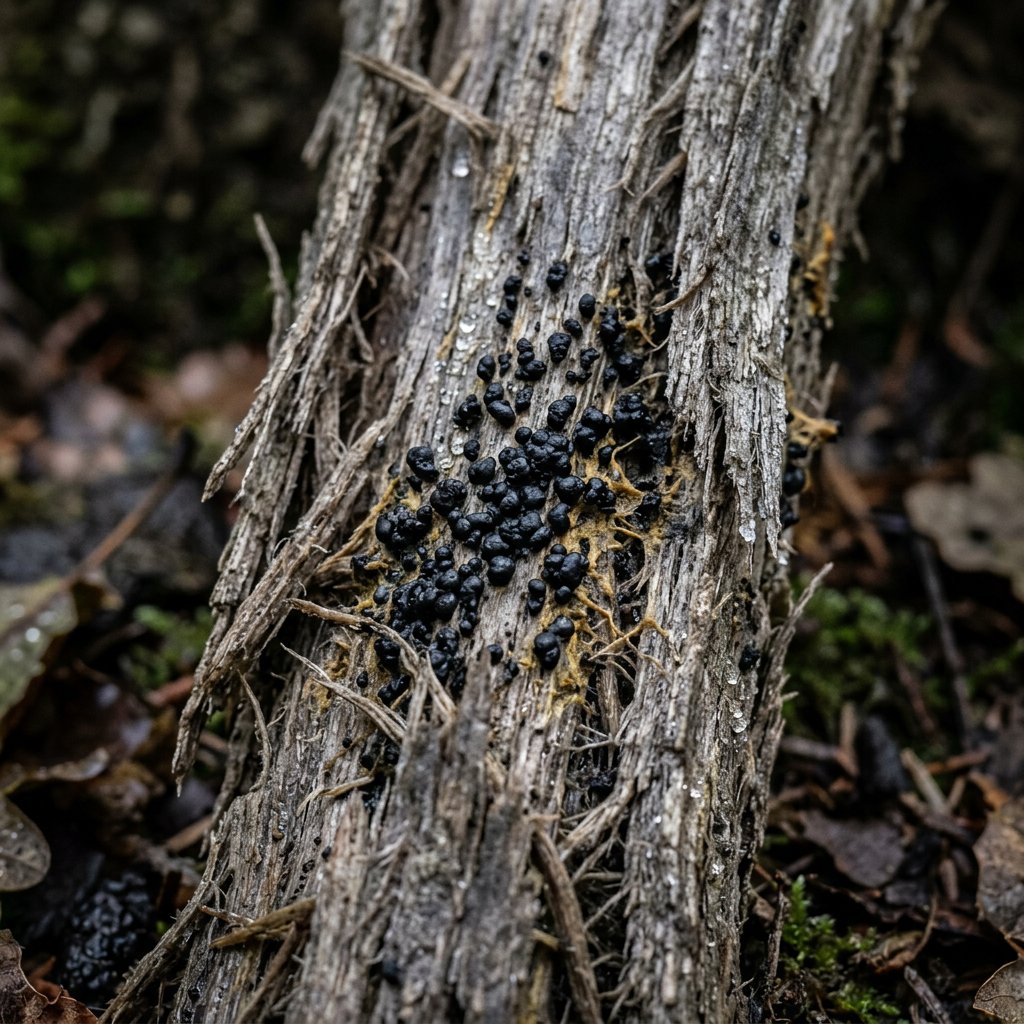
- ⚫ Fruiting Bodies: You won't find a cap or gills; instead, look for tiny, black, soot-like dots (acervuli) erupting from the surface of dead foliage.
- 🍂 Leaf Discoloration: The infection typically starts at the tips of needles or scales, progressing from a faded yellow to a distinct, dry brown or silvery gray.
- 🔬 Spore Shape: Under a magnifying glass, the spores look like tiny dark spindles with clear, hair-like "tails" at the ends that help them hitch a ride on water droplets.
🌲 Habitat & Ecology
- 🌲 The Conifer Connection: This fungus is most at home on members of the Cypress family, including Junipers, Arborvitae, and Leyland Cypresses. It thrives in humid environments where moisture lingers on the leaves.
- ✂️ The Pruning Wound: It is a "wound parasite," meaning it frequently enters the plant through jagged cuts made by dull garden shears or cracks caused by heavy winter snow.
⚠️ Safety & Toxicity
- 🚫 WARNING: Not Edible. As a micro-fungus that produces no fleshy mushroom body, there is nothing to harvest or eat.
- 🧤 Garden Hygiene: While it isn't dangerous to humans or pets, the spores are incredibly "sticky." If you touch infected branches, ensure you sanitize your gloves and tools with rubbing alcohol to avoid spreading the "blight" to the rest of your garden.
✨ Fun Fact
While some Pestalotiopsis species cause plant diseases, their relatives are scientific superstars; certain species in this genus have been discovered to "eat" polyurethane plastic, offering a potential biological solution to our global plastic waste crisis!
More Details