Info
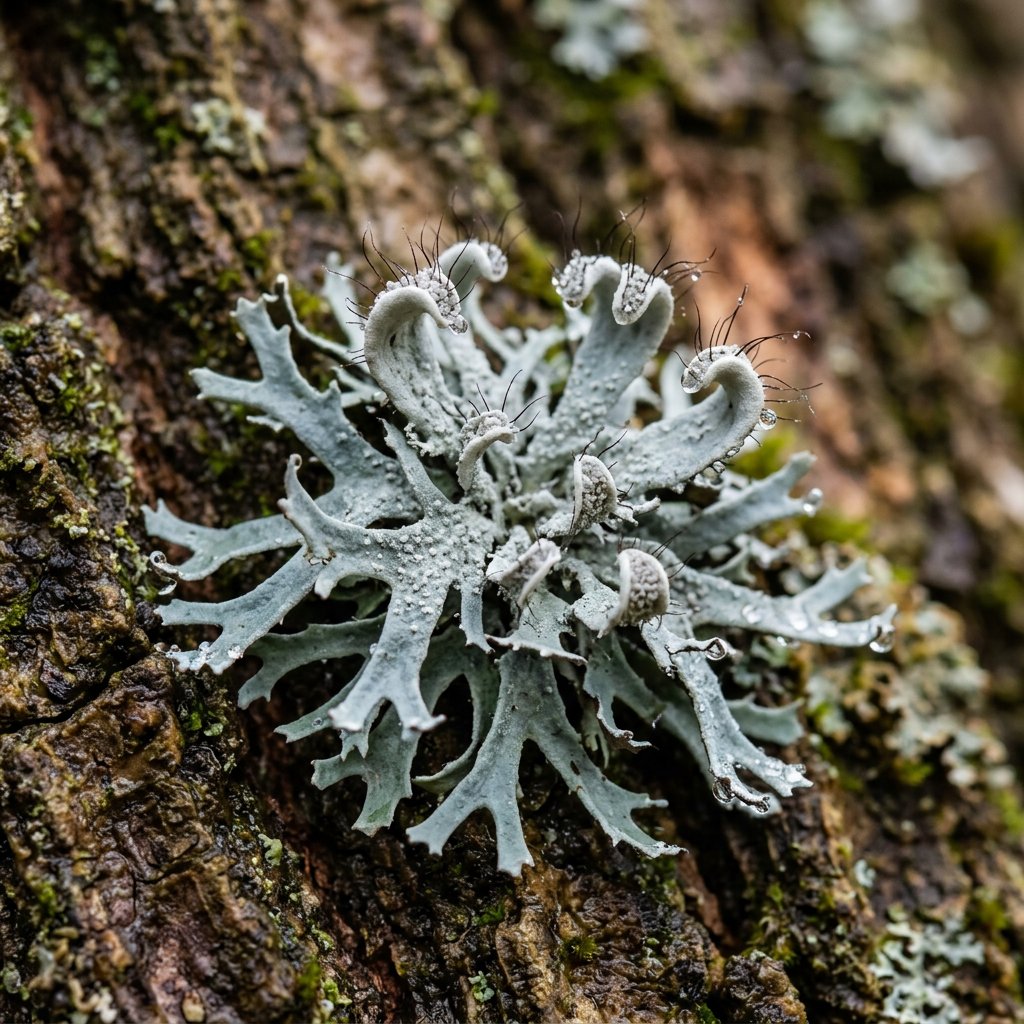
Commonly known as the Hooded Rosette Lichen, this tiny marvel looks like a miniature frosted coral reef clinging to bark and stone. While it is biologically classified as a fungus, it actually lives in a lifelong partnership with algae, allowing it to "eat" sunlight. In folklore, lichens are often called the "skin of the earth," acting as a protective layer for the trees and rocks they inhabit.
🔍 How to Identify
- 🐚 The "Hoods": Its most defining feature is the inflated, helmet-shaped tips at the ends of its pale grey lobes.
- 👁️ The Eyelashes: If you look closely, you’ll see long, stiff, dark-tipped hairs (cilia) poking out from the edges, giving the lichen a whiskered appearance.
- ❄️ Color & Texture: It typically appears as a pale silver-grey or whitish-green rosette. When wet, it may turn a slightly more vibrant seafoam green as the algae inside becomes active.
🌲 Habitat & Ecology
- 🐦 Nitrogen Lover: This species is "nitrophilous," meaning it loves nitrogen. You will often find it thriving on trees where birds frequently perch, as it snacks on the nutrients provided by bird droppings.
- 🏢 Urban Survivor: Unlike many sensitive lichens, the Hooded Rosette is quite hardy. It is a common sight in urban gardens, on concrete walls, and even on old wooden fences or gravestones.
- ☁️ Air Quality Indicator: While it is more pollution-tolerant than some of its cousins, its presence still provides clues about the local environment, specifically indicating higher levels of ammonia or dust in the air.
⚠️ Safety & Toxicity
- ✅ Status: Non-Toxic. The Hooded Rosette Lichen is not known to be poisonous to humans, cats, or dogs.
- 🔍 Lookalikes: Be careful not to confuse it with other "Rosette" lichens. While most are harmless, it is always best to avoid consuming any wild lichen, as they can absorb and concentrate heavy metals or pollutants from the surrounding air.
✨ Fun Fact
Lichens like Physcia adscendens are masters of "anhydrobiosis." They can dry out until they are as brittle as a cracker, effectively stopping time for themselves. The moment a drop of rain hits them, they rehydrate and return to life in just a matter of minutes!
More Details







