Info
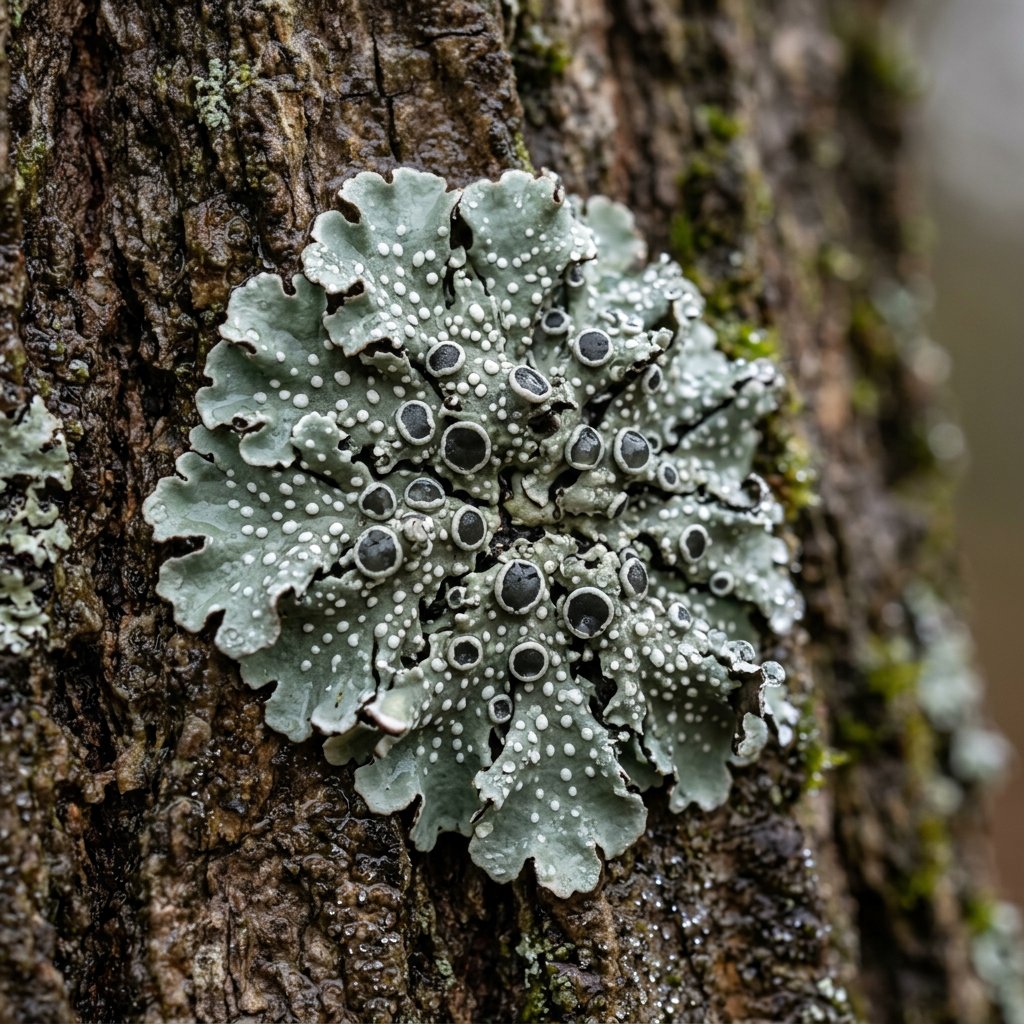
Often called the Hoary Rosette Lichen, this species looks like a tiny, frosted galaxy clinging to the bark of a tree. While it is technically a fungus, it is actually a biological "team" known as a lichen—a partnership between a fungus and algae working together to survive. Its elegant, pale-grey rosettes and "frosted" fruiting bodies make it a favorite for nature photographers and forest hikers alike.
🔍 How to Identify
- ❄️ The "Hoary" Coating: The name "hoary" comes from the white, powdery dusting (called pruina) that covers its surface, making it look like it’s been lightly dusted with flour or frost.
- 🌸 Rosette Shape: It grows in distinct circular patches or "rosettes" that can reach up to 10cm in diameter, often with narrow, radiating lobes that overlap like petals.
- 🍳 Apothecia (Fruiting Bodies): Look for small, cup-like structures in the center. In Physcia aipolia, these "jam tarts" are usually dark (black or dark brown) but are heavily coated in that same white frost, giving them a blue-grey appearance.
🌲 Habitat & Ecology
- 🌳 The Tree Hugger: You’ll almost always find this lichen on the bark of deciduous trees with "sweet" (neutral) bark, such as Ash, Poplar, or Maple. It rarely grows on rocks or acidic conifers.
- ☀️ Sun Seeker: Unlike many mosses that prefer the deep shade, the Hoary Rosette loves the light. It is commonly found on the sun-exposed trunks of lone trees in parks, orchards, or along the edges of forests.
⚠️ Safety & Toxicity
- 🟢 Status: Generally harmless.
- 🐾 Details: While not considered toxic to humans or pets, lichens like Physcia aipolia are not edible and offer no nutritional value. They are best left on the tree to serve as tiny habitats for microscopic invertebrates.
✨ Fun Fact
Lichens like the Hoary Rosette are incredible "bioindicators." Because they absorb everything from the air, they are highly sensitive to pollution. If you see plenty of Physcia aipolia in your neighborhood, it’s a great sign that your local air quality is relatively clean and healthy!
More Details







