Info
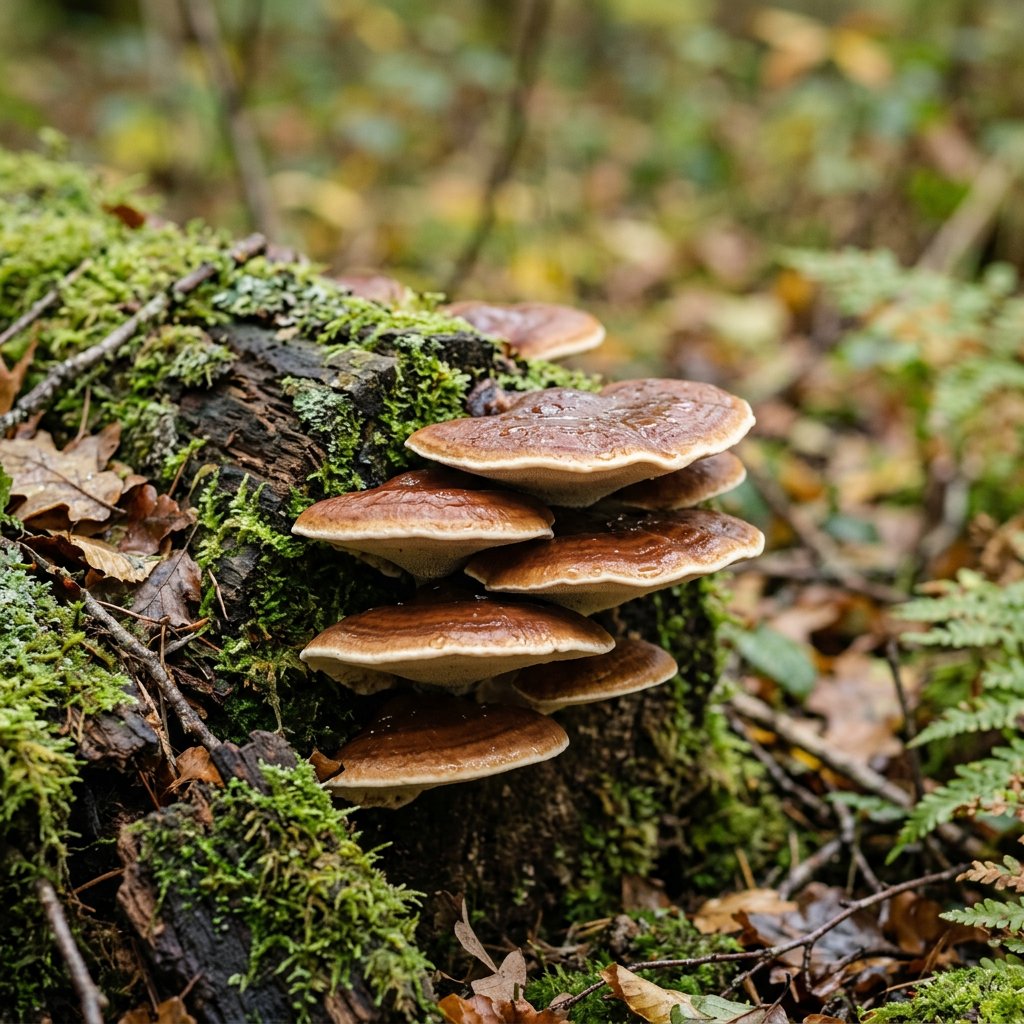
Often called the Black-footed Polypore or Bay Polypore, Picipes badius is like a piece of forest jewelry. With its deep, chestnut-colored cap and striking black "socks," it looks more like a piece of polished leather or dark wood than a typical mushroom. It is an elegant, vase-shaped fungus that often appears in clusters, adding a touch of sophisticated color to decaying logs after a heavy rain.
🔍 How to Identify
- 🎩 The Cap: Smooth, shiny, and circular to kidney-shaped. It ranges from a rich reddish-brown (bay) to a dark chocolate color, often becoming wavy or funnel-like as it matures.
- ❄️ The Underbelly: Instead of gills, it features a surface of incredibly tiny, creamy-white pores. These pores are "decurrent," meaning they run slightly down the top of the stem.
- 🧦 The "Black Foot": The most iconic feature is the stem. While the top is pale, the bottom half is covered in a dark, velvety black "boot" that gives the mushroom its common name.
🌲 Habitat & Ecology
- 🍂 The Wood Recycler: This mushroom is saprobic, meaning it feeds on dead wood. You’ll typically find it growing on the fallen logs or stumps of deciduous trees like Oak, Beech, or Ash.
- 💧 Resilient Texture: Unlike soft meadow mushrooms, the Black-footed Polypore is tough and leathery. It doesn't rot quickly and can persist in the woods for quite some time, even during dry spells, though it looks most vibrant when wet.
⚠️ Safety & Toxicity
- 🚫 Status: Generally considered Inedible.
- 🦷 The Texture Trap: While not known to be poisonous to humans, Picipes badius is far too tough and leathery to be eaten. Chewing it would be similar to chewing on a piece of damp cardboard or flexible wood.
- 🐾 Pet Safety: Because it is so fibrous, it can cause digestive blockages or stomach upset if swallowed by curious dogs.
✨ Fun Fact
The Black-footed Polypore is a favorite among nature photographers and crafters because it retains its deep colors and elegant shape remarkably well even after it has been dried out!
More Details







