Info
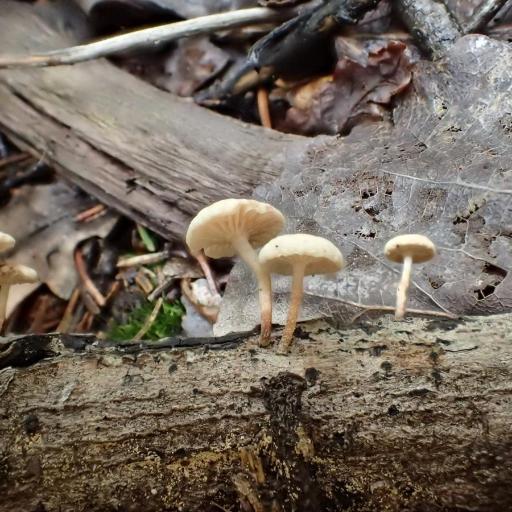
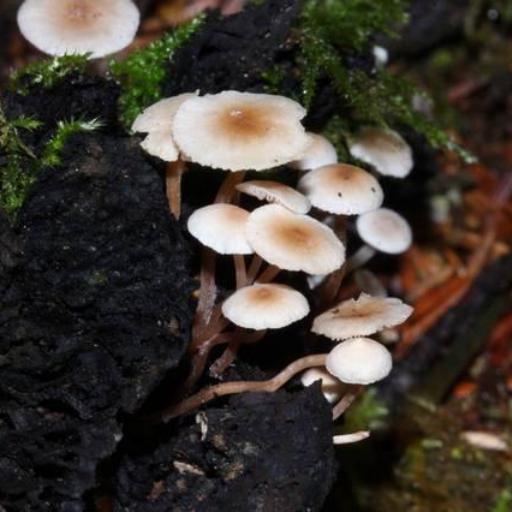
Commonly known as the Deer Shield or Fawn Mushroom, this hardy fungus is a familiar sight for foragers and hikers exploring temperate forests. Its name is a nod to its deer-brown cap and its tendency to pop up on decaying logs like a protective, woodland shield. As a tireless decomposer, it plays a vital role in the forest ecosystem, turning fallen giants back into nutrient-rich soil.
🔍 How to Identify
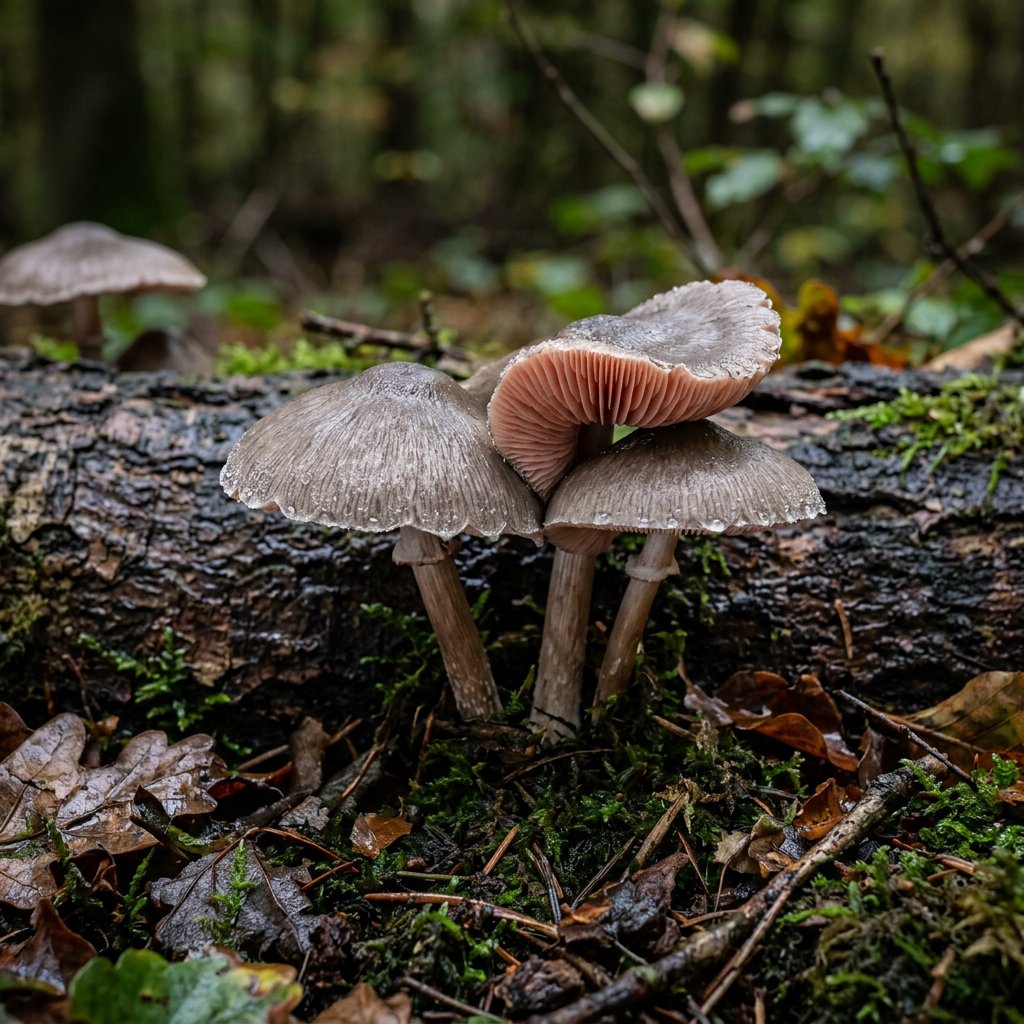
- 🍄 The Cap: Usually 5–15 cm wide, the cap is smooth, slightly greasy when moist, and ranges from a soft fawn-brown to a darker, sootier grey. It often features fine, dark streaks radiating from the center.
- 🎀 The Gills: A key identifying feature—the gills are "free," meaning they do not touch the stem. They start white but transition to a distinct salmon-pink color as the spores mature.
- 🪵 The Stem: The stalk is sturdy, pale, and solid, often covered in fine brownish fibers. Notably, it lacks both a ring (annulus) around the middle and a cup (volva) at the base.
🌲 Habitat & Ecology
- 🍂 The Wood Recycler: Unlike mushrooms that grow from the soil, the Deer Shield is almost always found growing directly on rotting wood, stumps, or even buried wood chips and sawdust.
- 🌦️ Resilient Growth: This species is a "long-season" mushroom. You can find it from late spring all the way through the first frosts of autumn, often appearing solo or in small, scattered groups after a heavy rain.
⚠️ Safety & Toxicity
- 🚨 WARNING: Never consume a wild mushroom unless you have identified it with 100% certainty alongside a professional.
- 🍽️ Edibility: The Deer Shield is considered edible but is rarely a favorite. Many foragers describe the taste as "earthy" or distinctly like radishes, which can be off-putting in a stew.
- 🚫 Lookalikes: It can be confused with certain toxic Entoloma species; however, Entolomas typically grow on the ground, whereas Pluteus cervinus insists on its woody "throne."
✨ Fun Fact
The "Deer" connection goes deeper than just the color! Under a microscope, the tiny cells on the gill edges (called cystidia) have little "horns" or hooks at the tips that look remarkably like miniature deer antlers.
More Details