Info
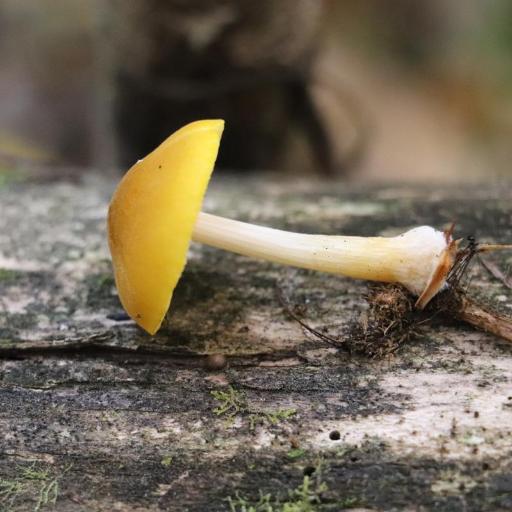
Often called the Yellow Shield, this delicate forest gem acts like a tiny sunbeam on the rotting logs of deciduous forests. Found emerging from decaying wood, its vibrant golden cap stands out brilliantly against dark, damp bark. While it doesn't have the magical reputation of "fairy tale" mushrooms, its translucent beauty makes it a prized find for nature photographers and woodland hikers.
🔍 How to Identify
- 🟡 The Cap: Usually 2–5 cm wide, it ranges from bright lemon yellow to a warm honey-brown. The center often features a distinctive network of fine wrinkles or "veins," especially as it matures.
- 🌸 The Gills: A key feature of the Pluteus family is that the gills are "free" (not attached to the stem). They start white and turn a soft salmon-pink as the spores mature.
- 🍦 The Stem: A slender, pale, and slightly translucent stalk. It lacks a ring (annulus) or a cup at the base (volva), giving it a very clean, minimalist silhouette.
🌲 Habitat & Ecology
- 🌳 Woodland Recycler: This is a saprobic species, meaning it performs the essential job of breaking down dead organic matter. You will almost always find it growing directly out of well-rotted stumps or fallen branches of broadleaf trees like Beech or Ash.
- 🌦️ Moisture Lover: It is most likely to pop up during the humid days of late summer and autumn. Because it grows on wood rather than in the soil, it can sometimes appear even during slightly drier spells if the log it inhabits has retained enough moisture.
⚠️ Safety & Toxicity
- 🛑 WARNING: The Yellow Shield is not considered edible. While it is not famously deadly, it lacks culinary value and is easily confused with other small, potentially toxic wood-rotting mushrooms.
- 🔬 Lookalike Risk: Many small yellow mushrooms look identical to the untrained eye. Some species in related families can cause severe gastrointestinal distress, so this mushroom should be admired with a camera, not a fork.
✨ Fun Fact
The genus name Pluteus is Latin for "shield" or "penthouse." Mycologists chose this name because the way the cap sits atop the slender stem reminded them of the protective shields used by ancient Roman soldiers during sieges!
More Details