Info
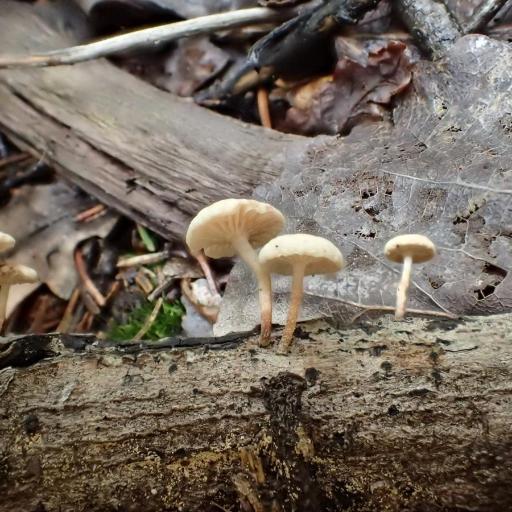
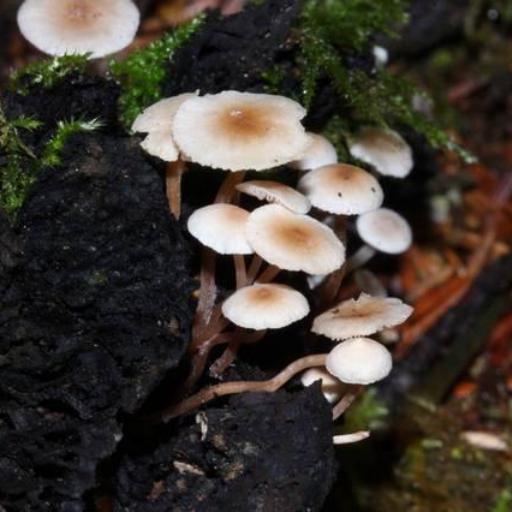
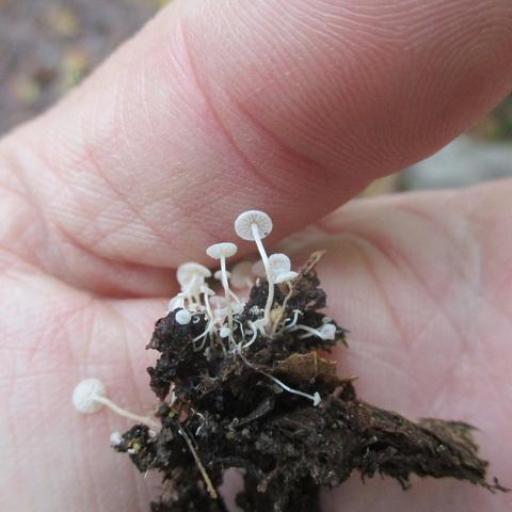
Often called the Pale Brittlestem, this delicate mushroom is a frequent visitor to suburban lawns and shaded gardens. It is one of the most common "yard mushrooms" in the world, appearing like tiny, ghostly umbrellas after a warm summer rain. Its name reflects its fragile nature—the slightest touch is often enough to snap its paper-thin stem.
🔍 How to Identify
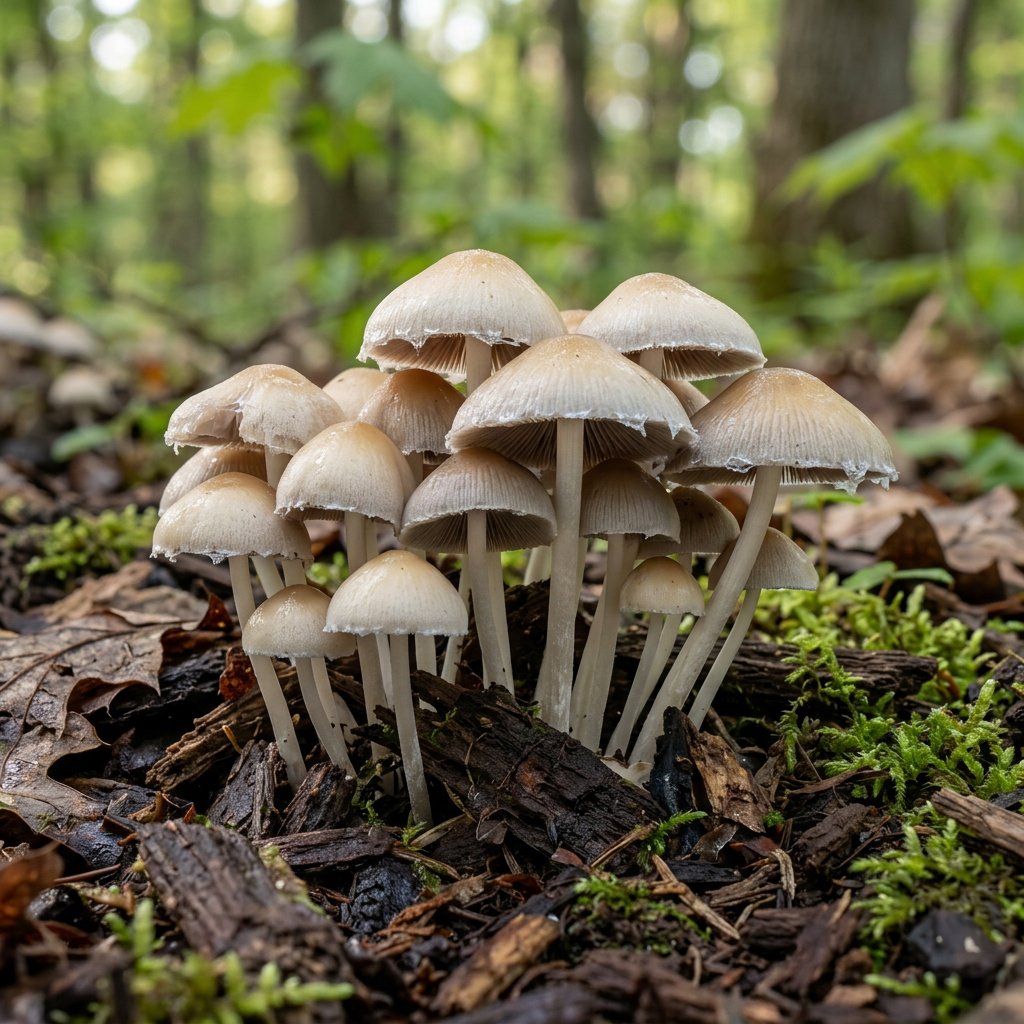
- 🍄 The Cap: Starts out honey-brown or "butterscotch" when moist, but quickly fades to a ghostly white or ivory as it dries. You may see tiny, fringe-like white scales hanging from the edge.
- 🌑 The Gills: Closely packed together, they start out white, then turn a soft pinkish-gray, and finally reach a dark purplish-brown as the spores mature.
- 🦴 The Stem: A tall, slender, and hollow white stalk. It lacks a permanent ring and is famously brittle; it will snap cleanly like a dry twig if bent.
🌲 Habitat & Ecology
- 🍂 The Master Recycler: This mushroom is saprobic, meaning it feeds on dead organic matter. It is particularly fond of buried wood, old tree stumps, and wood chips, helping to turn old debris back into nutrient-rich soil.
- 🏡 Garden Presence: Because it thrives on decaying roots underground, it often pops up in the middle of a lawn or garden bed where a tree was removed years ago, appearing in large, scattered groups rather than single specimens.
⚠️ Safety & Toxicity
- 🛑 WARNING: While many older textbooks list the Pale Brittlestem as edible, it is NOT recommended for consumption.
- 🎭 The Danger of Lookalikes: It belongs to a group of "Little Brown Mushrooms" (LBMs) that includes several toxic or even deadly species. Because it is so thin-fleshed and difficult to identify with 100% certainty without a microscope, it should be treated as a "look but don't touch" species.
- 🐕 Pet Safety: While not known to be deadly to dogs, ingestion can cause significant gastrointestinal distress. It's best to remove them from play areas if your pets are curious "grazers."
✨ Fun Fact
The Pale Brittlestem is "hygrophanous," which is a fancy scientific way of saying it is a color-shifter! As the mushroom loses moisture, its cells change shape and reflect light differently, causing it to transform from a dark tan to a bright white right before your eyes.
More Details