Info
Commonly known as the "Aztec Mushroom," this species is a sacred piece of history growing high in the mountains of Mexico. First documented by Western science in the 1950s, it was used for centuries by the Nahua people, who called it teonanácatl, meaning "flesh of the gods." It is famous for its intense blue-bruising reaction and its preference for cold, high-altitude pine forests.
🔍 How to Identify
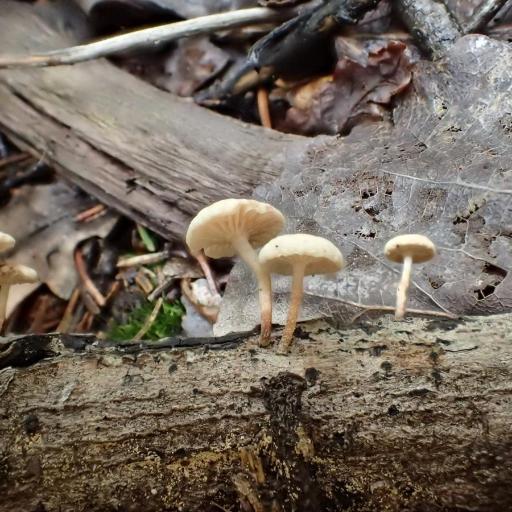
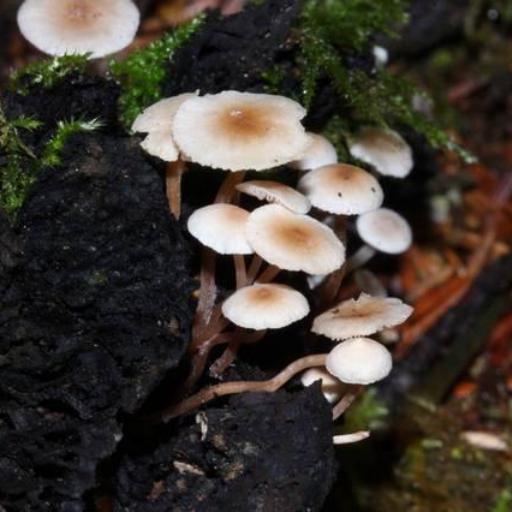
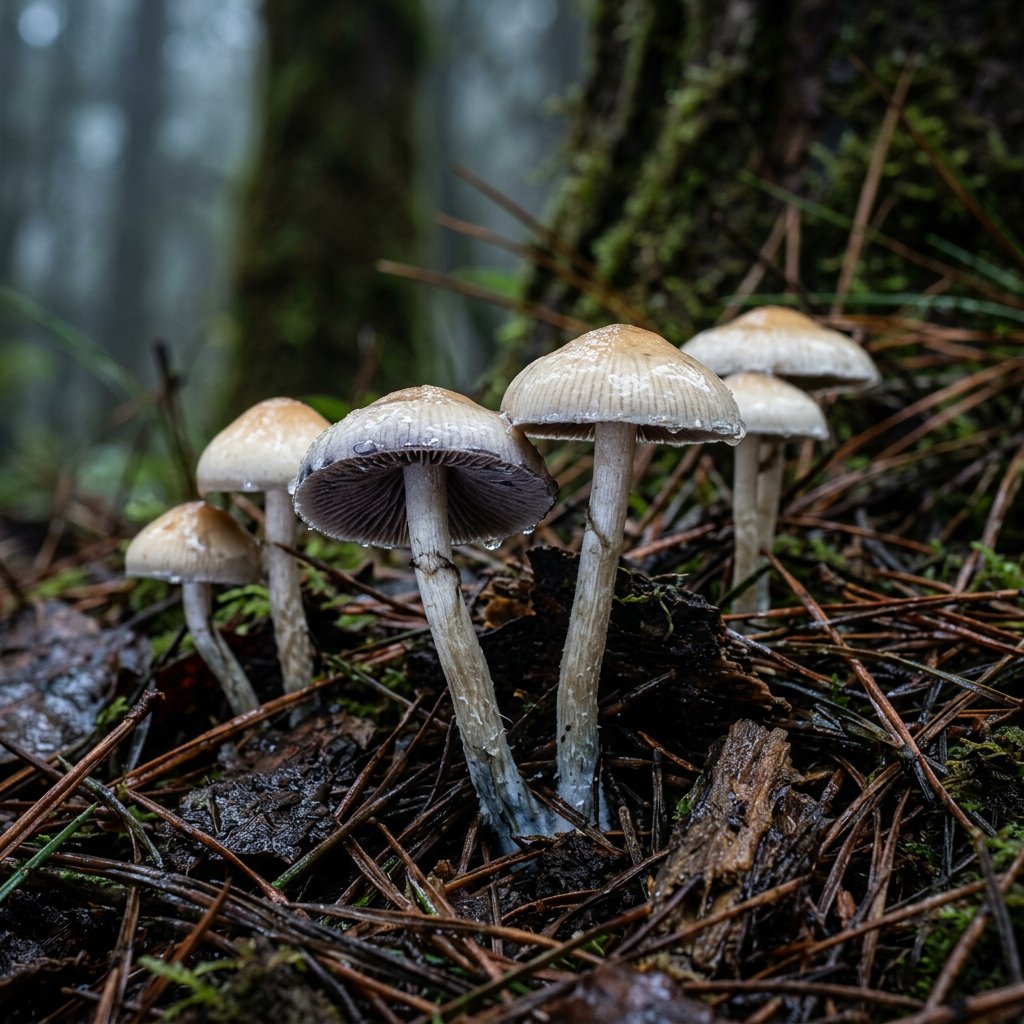
- 🍄 The Cap: Usually 1.5 to 3 cm wide, starting out convex and flattening with age. It is "hygrophanous," meaning it changes color drastically; it looks like dark chestnut brown when moist and fades to a pale brownish-grey as it dries.
- 🧬 The Gills: Underneath the cap, the gills are closely spaced. They start off light brown but turn a deep, purplish-black once the spores mature.
- 🧪 The Bruising: One of its most distinctive traits is that the white, fibrous stem and the edge of the cap will turn a vivid blue or blue-green when touched or damaged, indicating the presence of psilocybin.
🌲 Habitat & Ecology
- 🏔️ Mountain Highs: You won’t find this in your backyard lawn. It grows almost exclusively at high altitudes (usually between 3,200 and 4,000 meters) on the slopes of volcanoes like Popocatépetl in Mexico.
- 🌲 Pine Lovers: It has a "symbiotic" feel with the environment, typically growing in the woody debris and leaf litter of Hartweg's Pine (Pinus hartwegii) forests, often hiding under patches of grass or moss.
⚠️ Safety & Toxicity
- 🚨 WARNING: Psilocybe aztecorum is a potent hallucinogenic mushroom containing psilocybin and psilocin. Ingesting it causes intense alterations in perception and consciousness.
- 🚫 Legal Status: In many jurisdictions, including the United States and much of Europe, possession or cultivation of this mushroom is strictly illegal.
- 💀 Deadly Lookalikes: Foragers must be extremely cautious. It can be easily confused with the Galerina species, which are "Little Brown Mushrooms" (LBMs) that look similar but contain deadly amatoxins that cause liver failure.
✨ Fun Fact
The specific epithet "aztecorum" was given to honor the Aztec people, but the mushroom is actually most closely associated with the Highland Mazatec and Nahua cultures, who used it in religious ceremonies to communicate with spirits and heal the sick.
More Details
| Hymenium Type | Lamella |
| Stipe Character | Bare Stipe |
| Spore Print Color | Purple |
| Mushroom Cap Shape | Convex Mushroom Cap |
| Hymenium Attachment | Adnate Hymenium Attachment |
| Mushroom Ecological Type | Saprobiont |