Info
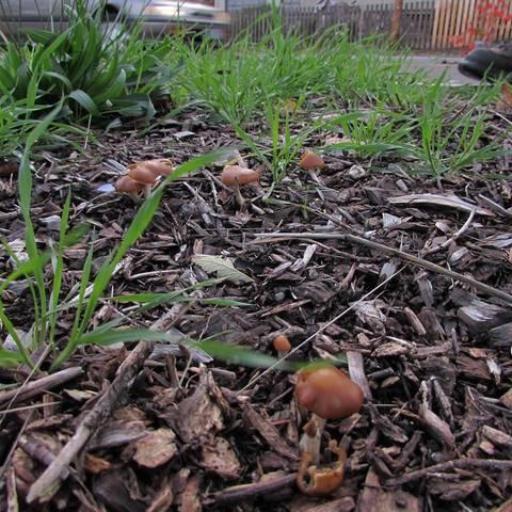
Known widely as the "Wavy Cap," Psilocybe cyanescens is a legendary find among mycologists and nature enthusiasts. This mushroom is famous for its distinct, undulating cap margins and its potent chemical profile. Often appearing in the crisp air of late autumn, it has earned a reputation for "following" human landscaping, turning garden mulch into its own personal playground.
🔍 How to Identify
- 🌊 The Wavy Cap: The most defining feature is the mature cap, which develops a distinctively ruffled or undulating edge. It is caramel-to-chestnut brown when moist, fading to a pale tan as it dries.
- 🌀 The Gills: The gills are crowded and attached to the stem. They start as a light brown but transition to a deep, smoky purple-brown as the spores mature.
- ❄️ The Stem (Stipe): The stem is typically a stark, silky white. A key identifying mark is that the stem—and often the cap edges—will stain a vivid "electric blue" when bruised or handled.
- 🔮 Spore Print: If you place the cap on a piece of paper, it will leave a dark, purplish-brown to almost black spore print.
🌲 Habitat & Ecology
- 🪵 Urban Forager: Unlike many wild mushrooms that hide deep in old-growth forests, Wavy Caps love human activity. They are most commonly found in "anthropogenic" (man-made) habitats, specifically in wood-chipped garden beds, mulch, and parks.
- 🍂 Seasonal Specialist: This species is a fan of the cold. It typically fruits from October to February in temperate climates, triggered by the first heavy rains and a significant drop in temperature.
⚠️ Safety & Toxicity
- 🚨 WARNING: Psilocybe cyanescens is a potent hallucinogenic mushroom containing psilocybin and psilocin. Ingesting this mushroom causes profound alterations in perception and is illegal in many parts of the world.
- 💀 The Deadly Lookalike: This is the most critical safety point: Wavy Caps look remarkably similar to the Deadly Galerina (Galerina marginata). The Galerina contains lethal amatoxins that cause liver failure. They often grow in the exact same wood-chip beds, making accidental ingestion extremely dangerous.
- 🐕 Pet Safety: These are highly toxic to dogs and cats. If a pet ingests them, it can lead to severe "Serotonin Syndrome," characterized by tremors, high heart rate, and seizures.
✨ Fun Fact
The specific epithet cyanescens comes from the Greek word kyanos, meaning "dark blue." This refers to the mushroom's magical-looking blue bruising, which is actually a complex chemical reaction where psilocybin molecules oxidize the moment they are exposed to the air!
More Details
| Hymenium Type | Lamella |
| Stipe Character | Bare Stipe |
| Spore Print Color | Blackish-Brown |
| Mushroom Cap Shape | Flat Mushroom Cap |
| Hymenium Attachment | Adnate Hymenium Attachment |
| Mushroom Ecological Type | Saprobiont |







