Info
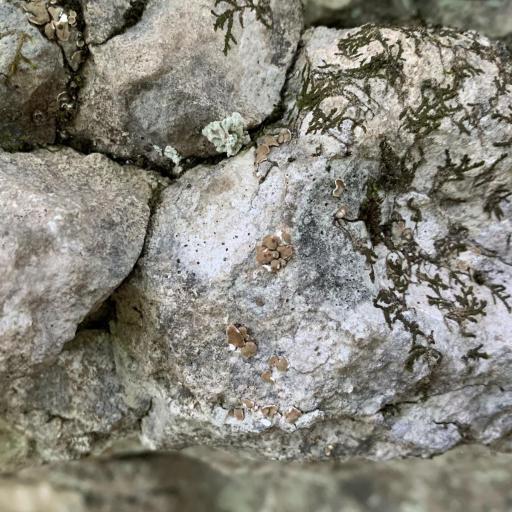
Often called the Scaly Speckleback, Psora pseudorussellii is a fascinating "lichenized" fungus that looks more like a collection of burnt cornflakes or tiny overlapping tiles than a traditional mushroom. While it belongs to the fungi kingdom, it lives in a complex partnership with algae, allowing it to "eat" sunlight while clinging to ancient rocks. In the wild, it creates beautiful, textured mosaics across limestone bluffs, looking like a miniature, copper-colored dragon’s skin.
🔍 How to Identify
- 🦎 The Scales (Squamules): Instead of a cap and stem, it grows in small, rounded scales called "squamules." These are usually 2–5mm wide and tightly overlap like shingles on a roof.
- 🎨 Color Palette: The scales are typically a rich reddish-brown or "copper-tan" color. When dry, they may look dusty or frosted with a white, powdery coating (pruina) along the edges.
- 🌑 The Underside: If you were to carefully peel one back, the underside is generally pale or white, contrasting sharply with the darker topside.
- 🍄 Fruiting Bodies: It occasionally produces "apothecia"—tiny, dark reddish-brown disks that sit on the surface of the scales to release spores.
🌲 Habitat & Ecology
- 🪨 Rock Dweller: This species is an "obligate calciphile," meaning it almost exclusively grows on calcareous rocks like limestone or dolomite. You won't find it on rotting wood or deep forest soil.
- ☀️ Sun Seeker: It thrives in open, sunny areas such as glades, rocky outcrops, and thin soil over rock. It is incredibly drought-tolerant, shriveling up when dry and "waking up" to photosynthesize the moment it rains.
- 🤝 The Symbiotic Bond: As a lichen, it is a master of survival. The fungal partner provides the structure and protection, while the internal algae provide the food through photosynthesis, allowing it to grow in places where most plants would wither.
⚠️ Safety & Toxicity
- 🚫 Status: NOT EDIBLE. While Psora pseudorussellii is not known to be deadly or highly toxic to the touch, it is tough, leathery, and completely unpalatable.
- 🧪 Bioaccumulator: Like many lichens, it can absorb and concentrate minerals and pollutants from the air and the rocks it grows on.
- 🐾 Pet Safety: It is generally safe if a pet brushes against it, but it should never be ingested as it can cause digestive upset.
✨ Fun Fact
The genus name Psora comes from the Greek word for "itch" or "scab," a reference to the way these lichens look like scaly skin patches on the surface of rocks. Despite the unappealing name, they are vital indicators of air quality and stable, ancient ecosystems!
More Details







