Info
The Russula maculata, commonly known as the Spotted Russula, is a vibrant but deceptive forest find. Known for its brilliant rosy hues that eventually become "bruised" with rusty stains, it looks like a piece of forest jewelry dropped among the fallen leaves. While it lacks the whimsical folklore of the Fly Agaric, its fiery, peppery taste has earned it a reputation as a "hot" trickster among woodland foragers.
🔍 How to Identify
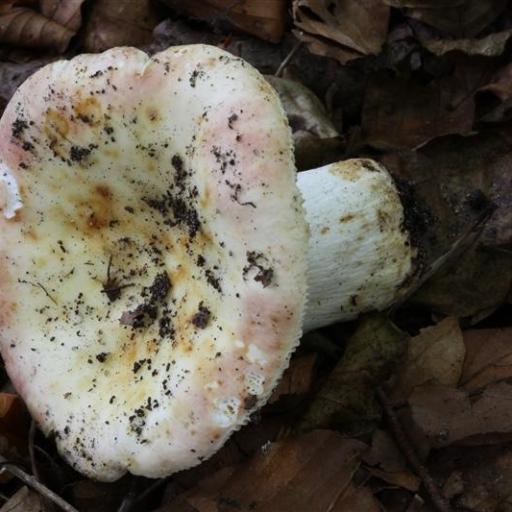
- 🍎 The Cap: Usually 5–10 cm wide, the surface is a mix of cherry red, pink, or orange-red. As it ages, it develops distinct rusty-brown spots (maculae) that give the species its name.
- 🍦 The Gills: Crowded and brittle, the gills start white but turn a pale ochre or cream as the spores mature. They do not produce "milk" when broken.
- 🥛 The Stem: The stem is stout, cylindrical, and white. Much like the cap, it often develops yellowish or rusty tints toward the base as it matures.
- 🧪 The Brittle Texture: Like all Russulas, the flesh is "crumbly" rather than fibrous. If you snap the stem, it should break cleanly like a piece of chalk.
🌲 Habitat & Ecology
- 🌳 Tree Partners: This fungus is mycorrhizal, meaning it lives in a symbiotic relationship with trees. It is most commonly found under broadleaf trees, particularly Beech and Oak, where it helps the tree absorb nutrients in exchange for sugars.
- 🍂 Season & Soil: It prefers calcareous (chalky) soils and typically emerges from mid-summer through late autumn. You will often find them peeking out from under heavy leaf litter after a warm rain.
⚠️ Safety & Toxicity
- 🚫 WARNING: Do not consume this mushroom. Russula maculata is classified as inedible and potentially toxic.
- 🤢 Symptoms: Consuming this mushroom can lead to moderate to severe gastrointestinal distress, including nausea, vomiting, and abdominal cramps.
- 👅 The Acrid Defense: The mushroom has an extremely acrid, "burning" taste. While some experienced foragers use a "nibble and spit" test to identify Russulas, beginners should avoid this, as the spice can be quite painful and irritating to the mouth.
✨ Fun Fact
🌶️ The Pepper Factor: The chemical compounds that make this mushroom taste like a raw chili pepper are a defense mechanism. This "hotness" ensures that most mammals and insects think twice before eating the whole mushroom, allowing the fungi to survive long enough to drop its spores!
More Details
| Hymenium Type | Lamella |
| Stipe Character | Bare Stipe |
| Spore Print Color | Ochre |
| Mushroom Cap Shape | Convex Mushroom Cap Or Flat Mushroom Cap |
| Hymenium Attachment | Sinuate Hymenium Attachment |
| Mushroom Ecological Type | Mycorrhiza |







