Info
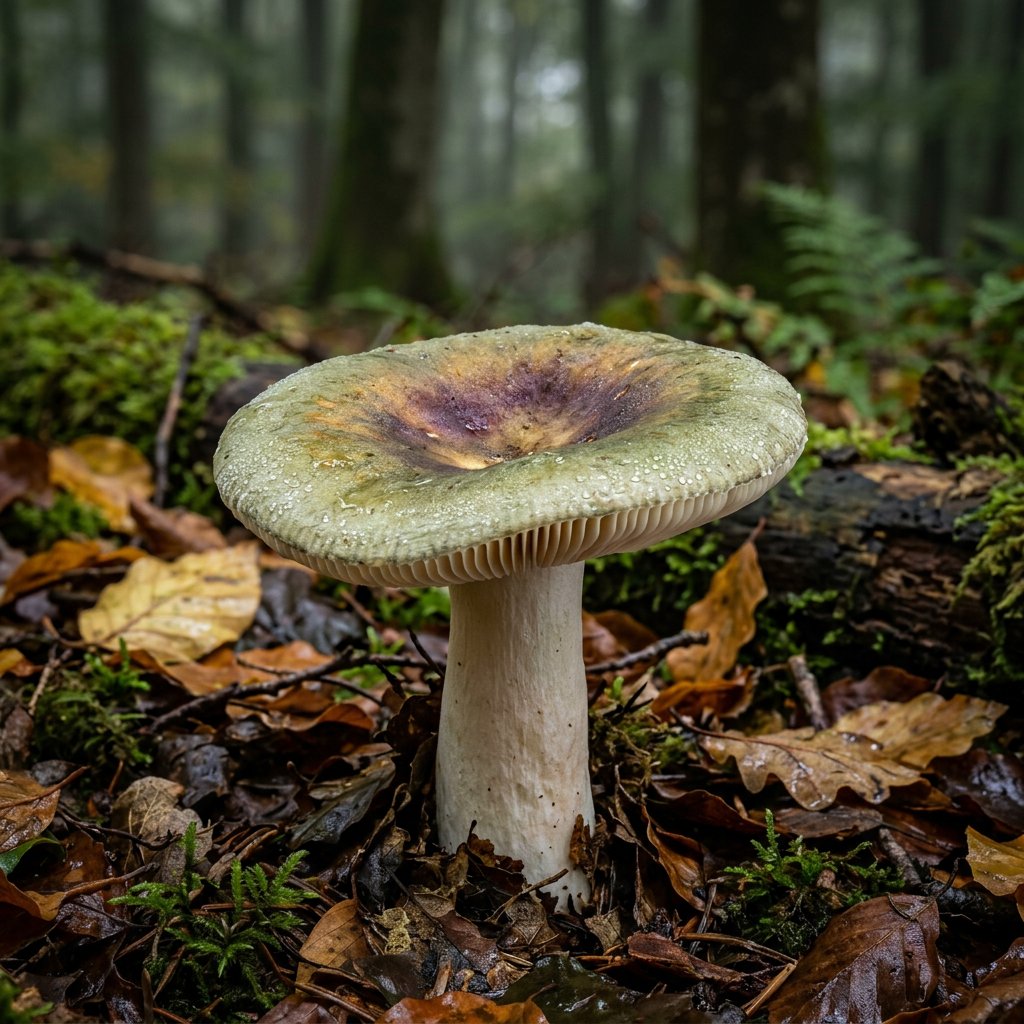
Known as the Olive Brittlegill, Russula olivacea is one of the more imposing members of its genus, often surprising foragers with its sheer size and "chameleon-like" colors. While its name suggests a green hue, this mushroom is a master of disguise, frequently appearing in shades of purple, bronze, or wine-red. In European folklore, it is often seen as a sign of a healthy, ancient forest, standing tall among the fallen leaves of summer and autumn.
🔍 How to Identify
- 🎨 The Cap: Large and fleshy (up to 20cm), the surface is matte and often develops fine, concentric cracks as it ages. The color is highly variable—ranging from olive-green to dull purple or brownish-red.
- 💛 The Gills: Unlike many other Russulas with white gills, these are distinctly creamy to deep ochre-yellow. They are brittle and "flake" away when touched, a signature trait of the Brittlegill family.
- 🌸 The Stem: Thick, sturdy, and white, but look closely at the top near the gills—it often features a delicate, rosy-pink or purplish flush that helps distinguish it from look-alikes.
🌲 Habitat & Ecology
- 🌳 Tree Partners: This mushroom is mycorrhizal, meaning it lives in a symbiotic "handshake" with trees. It specifically favors broadleaf forests, forming its strongest bonds with Beech and Oak trees.
- 🍂 Seasonality: You’ll typically spot them emerging from the leaf litter between July and October, especially after heavy summer rains when the forest floor is warm and damp.
⚠️ Safety & Toxicity
- 🚨 WARNING: Never consume this mushroom raw. While it is considered edible in some regions after thorough cooking, it is notorious for causing severe gastrointestinal distress (vomiting and cramps) if eaten undercooked or raw.
- 🧪 The Danger of Look-alikes: Many red-capped Russulas are "The Sickeners" (toxic). Because Russula olivacea can appear reddish-purple, it is easily confused with poisonous species. Identification requires expert knowledge and often chemical testing (such as the iron salt test) to be 100% certain.
✨ Fun Fact
The Russula olivacea is a favorite subject for mycologists because of its dramatic reaction to iron salts. When a crystal of iron sulfate is touched to its stem, the flesh turns a vivid orange-red—a "chemical fingerprint" that proves its identity!
More Details