Info
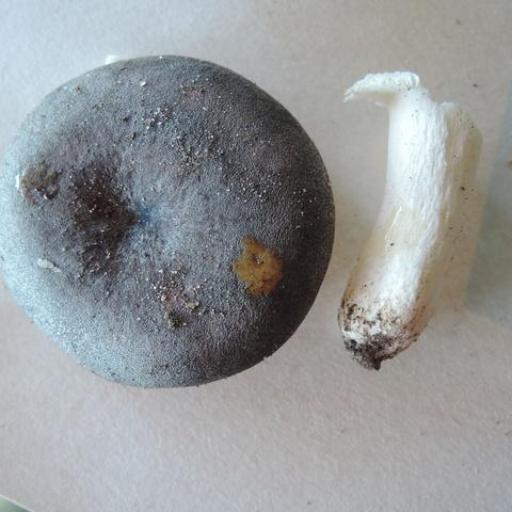
Known as the Powdery Blue Brittlegill, this mushroom looks like a small piece of a stormy sky has fallen onto the forest floor. Its matte, velvet-like cap and dusky blue-green hues make it one of the most aesthetically pleasing members of the Russulaceae family. Like its cousins, it is famous for its "chalky" texture—if you try to bend the stem, it snaps cleanly rather than snapping with fibers.
🔍 How to Identify
- ☁️ The Cap: Usually 4–10 cm wide, the cap features a distinctive "powdery" or frosted matte finish (pruinose). The color ranges from a deep slate blue to a muted grey-green, often darker in the center.
- 🥛 The Gills: The gills are crowded, brittle, and pale cream to white. Unlike some other mushrooms, they do not "milk" when broken.
- 🦴 The Stem: A solid, pure white cylinder that lacks a ring or a bulbous base. It has a characteristic "chalk-like" consistency, snapping easily without splintering.
🌲 Habitat & Ecology
- 🌳 Tree Partners: This fungus is mycorrhizal, meaning it lives in a symbiotic "handshake" with tree roots. It specifically favors broadleaf trees like Oak and Beech, but it is occasionally found near conifers.
- 🏡 Common Locations: You are likely to spot them in woodland clearings, along grassy path edges, or even in large suburban parks during the late summer and autumn months.
⚠️ Safety & Toxicity
- 🚨 WARNING: While Russula parazurea is generally considered edible, extreme caution is required. Many blue or green mushrooms are difficult for beginners to distinguish from toxic relatives.
- 👅 The Taste Test: Mushroom foragers often use a "nibble and spit" test for Russulas (tasting a tiny piece and spitting it out immediately). If it tastes mild/nutty, it is usually safe; if it is acrid or "hot" like chili, it is toxic.
- 🚫 Lookalikes: Never confuse this with the "Death Cap" (Amanita phalloides), which has a ring on the stem and a cup (volva) at the base.
✨ Fun Fact
The species name parazurea literally translates to "near azure," referring to its close resemblance to the Russula azurea, which looks almost identical but prefers to grow specifically under Spruce trees!
More Details