Info
The Primrose Brittlegill is a stunning, jewel-toned resident of the pine forest floor. Known for its deep plum or beet-red cap, it often tricks foragers with its beauty, only to reveal a surprisingly sharp, peppery personality. Its name, sardonia, is a nod to its acrid taste, which can leave a "sardonic" or bitter impression on anyone bold enough to sample it.
🔍 How to Identify
- 🎨 The Cap: Measuring 4–10 cm, the cap is typically a deep purple, magenta, or wine-red, often with a darker, almost blackish center that may slightly depress as it matures.
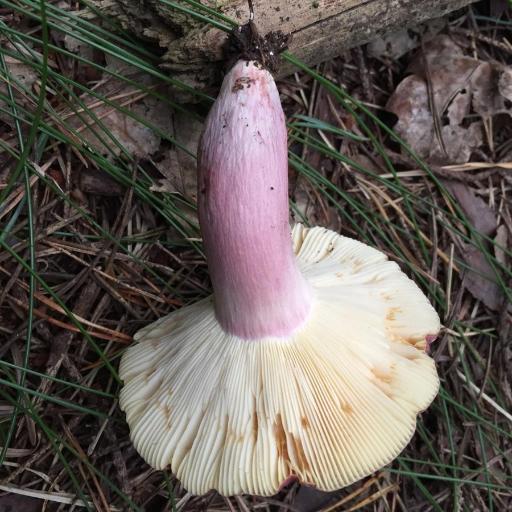
- 🌼 The Gills: A key identifier! Unlike many other Russula species that have white gills, this mushroom features distinctively pale yellow or "primrose" colored gills.
- 🥖 The Stem: The stalk is sturdy and brittle (like chalk), usually flushed with a beautiful purple or rosy-pink wash rather than being pure white.
🌲 Habitat & Ecology
- 🌲 Pine Partners: This fungus is strictly ectomycorrhizal with Pine trees (Pinus). It lives in a symbiotic relationship with the tree's roots, exchanging nutrients for sugars. You will almost never find it far from a pine tree.
- 🍂 Acidic Ground: It thrives in the acidic soil and needle-litter of coniferous woodlands, popping up most frequently during the damp months of late summer and autumn.
⚠️ Safety & Toxicity
- 🚨 STATUS: WARNING! Inedible. While not considered "deadly," it is classified as toxic due to its severe irritant properties.
- 🤢 Gastrointestinal Distress: Consuming this mushroom will lead to "sardonic" misery, including intense nausea, vomiting, and abdominal cramps.
- 🐾 Pets: Keep curious dogs away; the same toxins that affect humans can cause significant distress and dehydration in pets.
✨ Fun Fact
🧪 The Ammonia Test: Mycologists have a secret trick to identify this species: if you drop a tiny bit of household ammonia on the gills or the stem, the flesh will react by turning a vivid, bright pinkish-red!
More Details
| Hymenium Type | Lamella |
| Stipe Character | Bare Stipe |
| Spore Print Color | Cream |
| Mushroom Cap Shape | Convex Mushroom Cap Or Flat Mushroom Cap |
| Hymenium Attachment | Adnexed Hymenium Attachment |
| Mushroom Ecological Type | Mycorrhiza |







