Info
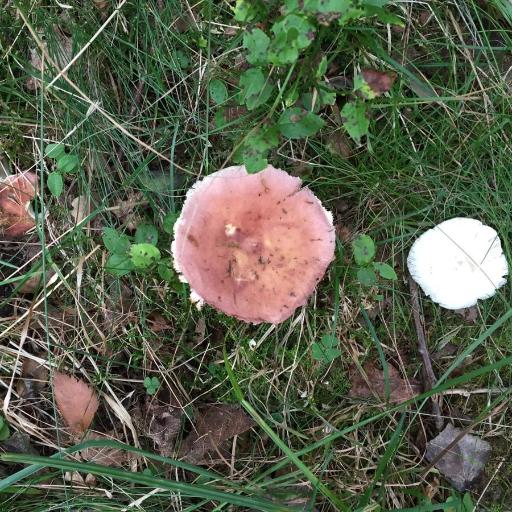
Known as "The Flirt" or the "Bare-toothed Russula," Russula vesca is a charming find for any mushroom hunter. It earned its cheeky nicknames because the colorful skin on its cap often shrinks back as it matures, exposing the white gills underneath like a bashful smile. Highly regarded in European cuisine, this mushroom is famous for its firm texture and delightful nutty flavor.
🔍 How to Identify
- 👒 The "Bare" Edge: The most reliable sign is the pinkish-brown to lilac cap skin that doesn't quite reach the margin, leaving a narrow white border of exposed gills (the "teeth").
- ⚪ Brittle Texture: Like all members of the Russula family, the stem snaps cleanly like a piece of chalk rather than snapping into stringy fibers.
- 🍦 Gills and Stem: The gills are white, crowded, and brittle, while the stem is solid, white, and tapers slightly toward the base.
🌲 Habitat & Ecology
- 🌳 Tree Symbiosis: This fungus is mycorrhizal, forming a vital partnership with the roots of broadleaf trees, particularly Oak and Beech, though it occasionally visits conifer forests.
- 🍂 Summer Arrival: While many mushrooms wait for the deep chill of autumn, the Flirt is an early bird, often appearing in mid-summer through early fall after heavy rains.
⚠️ Safety & Toxicity
- 🍄 Status: Edible, but proceed with EXTREME CAUTION.
- 🚫 The "Sickener" Lookalike: WARNING: Many red-capped mushrooms in the Russula genus are toxic and cause severe gastrointestinal distress (such as Russula emetica). Never consume a wild mushroom unless you are 100% certain of its identity.
- 👅 The Taste Test: Expert foragers often use a "nibble and spit" test—if a tiny piece of the cap tastes mild and nutty, it is likely R. vesca; if it is acrid or peppery, it is toxic. Do not attempt this without professional guidance.
✨ Fun Fact
[🥜] A Nutty Secret: The specific name vesca comes from the Latin word for "wholesome" or "edible." True to its name, many foragers claim that when sautéed in butter, this mushroom tastes remarkably like toasted hazelnuts!
More Details
| Hymenium Type | Lamella |
| Stipe Character | Bare Stipe |
| Spore Print Color | White |
| Mushroom Cap Shape | Convex Mushroom Cap Or Flat Mushroom Cap |
| Hymenium Attachment | Free Hymenium Attachment |
| Mushroom Ecological Type | Mycorrhiza |







