Info
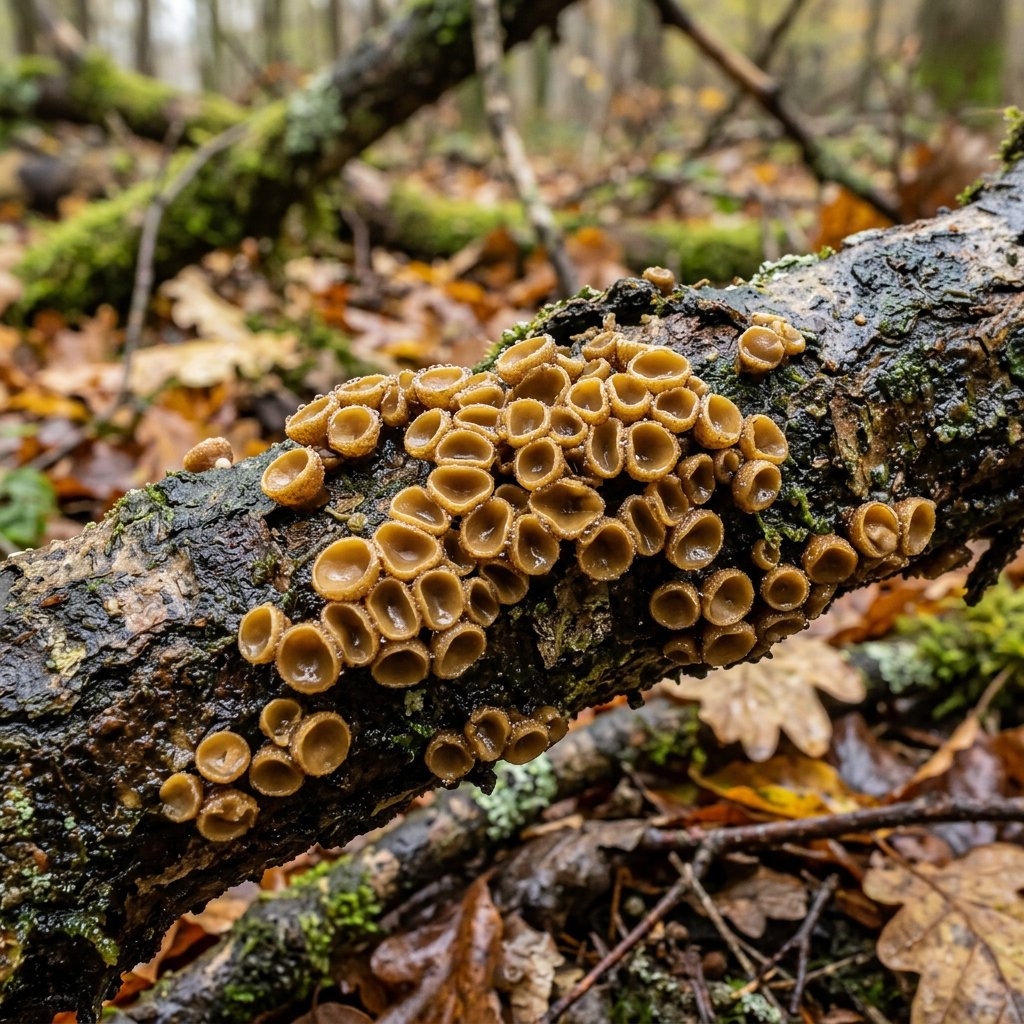
Often called the Brown Oak Cup, Rutstroemia firma looks like a miniature, leathery goblet forgotten on the forest floor. This tiny fungus is a master of the late-season landscape, appearing in the chill of autumn and winter when most other mushrooms have vanished. It plays a quiet but vital role in the forest ecosystem, acting as a specialized recycler of fallen hardwood.
🔍 How to Identify
- 🍄 The Cup: It features a shallow, saucer-like shape that is smooth on the inside. The color ranges from a pale tan to a deep, cinnamon brown, usually measuring only 5 to 15mm across.
- 🪵 The Stipe: Unlike some "disk" fungi that sit flat, this one has a distinct, short stem (stipe) that often turns darker or blackish toward the base.
- 💪 The Texture: True to its Latin name firma, the flesh is remarkably tough, flexible, and leathery, rather than brittle or jelly-like.
🌲 Habitat & Ecology
- 🌳 The Oak Connection: This species is a specialist; it is almost exclusively found growing on the fallen, decaying twigs and small branches of Oak trees (Quercus).
- ❄️ Cold Weather Specialist: It is a "late-season" fungus, often found in late autumn and persisting through the winter months, even during frosty periods when the wood is damp.
⚠️ Safety & Toxicity
- 🚫 WARNING: Never consume any wild mushroom unless it has been identified by a professional in person.
- ⚠️ Status: Rutstroemia firma is considered inedible. Its tiny size and tough, leathery consistency make it impossible to cook, and there is no recorded history of it being safe for human consumption.
- 🐾 Pets & Kids: While not known to be highly toxic, small "Little Brown Mushrooms" (LBMs) are a common cause of upset stomachs in curious pets. It is best to admire them from a distance.
✨ Fun Fact
✨ Built to Last: Most cup fungi are fragile and shatter when touched, but Rutstroemia firma contains a high density of structural hyphae that allow it to survive being frozen and thawed multiple times throughout the winter!
More Details







