Info
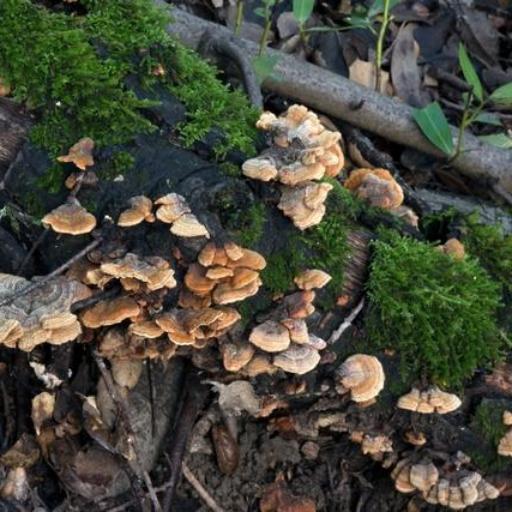
Often called the Hairy Curtain Crust or the False Turkey Tail, this mushroom creates stunning, wavy ripples across fallen logs. Unlike its "true" cousin, it sports a distinctly fuzzy coat that catches the morning dew, making it look like a tiny, velvet blanket for the forest floor. It is a resilient survivor, often found brightening up grey winter woods with its vibrant golden-orange hues.
🔍 How to Identify
- 🍄 The Cap Surface: The top is covered in fine, stiff hairs (hirsute) and is typically zoned with bands of grey, tan, and bright orange.
- 🎨 The Underside: Unlike many shelf fungi, the underside is completely smooth and lacks pores or gills, often showing a brilliant saffron or ochre color.
- 🌊 Shape and Form: These mushrooms grow in overlapping clusters or long, fused tiers that look like ruffled curtains or "brackets" bursting from the wood.
🌲 Habitat & Ecology
- 🌳 Hardwood Specialist: You will almost always find it on dead or dying broadleaf trees, particularly oak and beech, where it plays a vital role in breaking down wood fibers and returning nutrients to the soil.
- 🍂 Year-Round Presence: It is a tough, leathery fungus that can be found in any season. It has a remarkable ability to dry out during droughts and "come back to life" by rehydrating during the next rainfall.
⚠️ Safety & Toxicity
- 🚫 WARNING: While not considered "deadly toxic" to the touch, the Hairy Curtain Crust is strictly non-edible.
- 🦷 Indigestible: Its body is incredibly leathery and cork-like, making it impossible to chew or digest. There are no known culinary uses, and it should not be consumed by humans or pets.
✨ Fun Fact
✨ The Great Imposter: It is frequently mistaken for the medicinal Turkey Tail mushroom (Trametes versicolor). You can easily tell them apart by flipping them over; the True Turkey Tail has thousands of tiny visible pores, while the Hairy Curtain Crust is as smooth as a polished stone on its underside.
More Details







