Info
Often called the "Slippery Jack" due to the thick, glistening slime that covers its cap during rain, Suillus luteus is a favorite for autumn foragers. This mushroom is famous for its symbiotic relationship with pine trees, acting as an underground companion that helps the forest thrive. In many parts of the world, particularly Eastern Europe, it is traditionally gathered in large quantities for pickling and hearty soups.
🔍 How to Identify
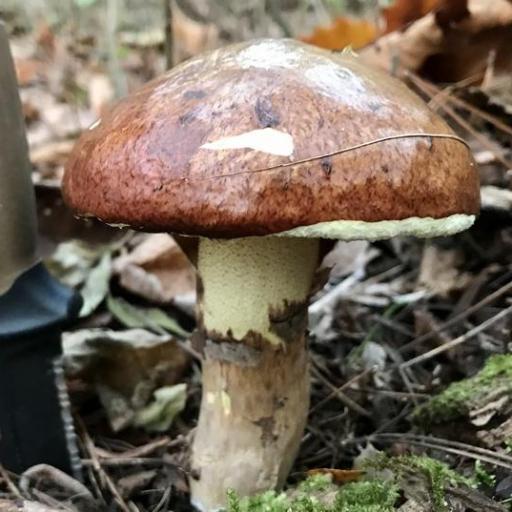
- 💧 The Slimy Cap: The cap is smooth, rounded, and chestnut-to-dark brown. When damp, it is covered in a thick, sticky layer of gluten that makes it incredibly slippery to the touch.
- 🧽 Pore Surface: Instead of gills, the underside features a sponge-like layer of tiny, crowded pores. These start as a bright lemon-yellow and mature into a duller, olive-yellow shade.
- 💍 The Large Ring: The stem is sturdy and features a prominent, skirt-like ring. This ring is unique because it often has a distinct purplish tint on the underside, which helps distinguish it from its cousins.
🌲 Habitat & Ecology
- 🌲 The Pine Partner: This mushroom is "mycorrhizal," meaning it cannot survive without a host tree. It is almost exclusively found growing under pine trees (especially two-needle pines like Scots Pine), where it swaps minerals for sugars from the tree's roots.
- 🍂 Leaf Litter Lover: It prefers the edges of pine plantations, grassy clearings near woods, and the thick carpet of needles found on the forest floor, usually appearing in large groups after heavy autumn rains.
⚠️ Safety & Toxicity
- ⚠️ WARNING: Suillus luteus is considered a good edible mushroom, but it requires specific preparation. It is frequently confused with other Suillus species, most of which are also edible but less tasty.
- 🧤 Peel the Skin: The slimy skin on the cap is known to cause localized allergic reactions or severe digestive upset (laxative effects) in many people. Foragers are strongly advised to peel the skin off the cap and remove the pore layer before cooking.
- 🐕 Pet Safety: While generally non-toxic, the high fat and fiber content in wild mushrooms can cause gastrointestinal distress in dogs if eaten raw in the wild.
✨ Fun Fact
The genus name Suillus comes from the Latin word sus, meaning "pig." This is likely because the mushroom’s plump, fleshy appearance reminded ancient people of little piglets, or perhaps because pigs were known to enjoy snacking on them in the forest!
More Details







