Info
Commonly known as the Beefsteak Mushroom of the African savannah or simply the Umkowaan, this mushroom is a true marvel of the natural world. It doesn't just grow in the wild; it is "farmed" by subterranean termites in a complex symbiotic relationship that has existed for millions of years. In Southern Africa, the sight of these massive caps emerging after heavy summer rains is a celebrated event, signaling a seasonal delicacy is ready for harvest.
🔍 How to Identify
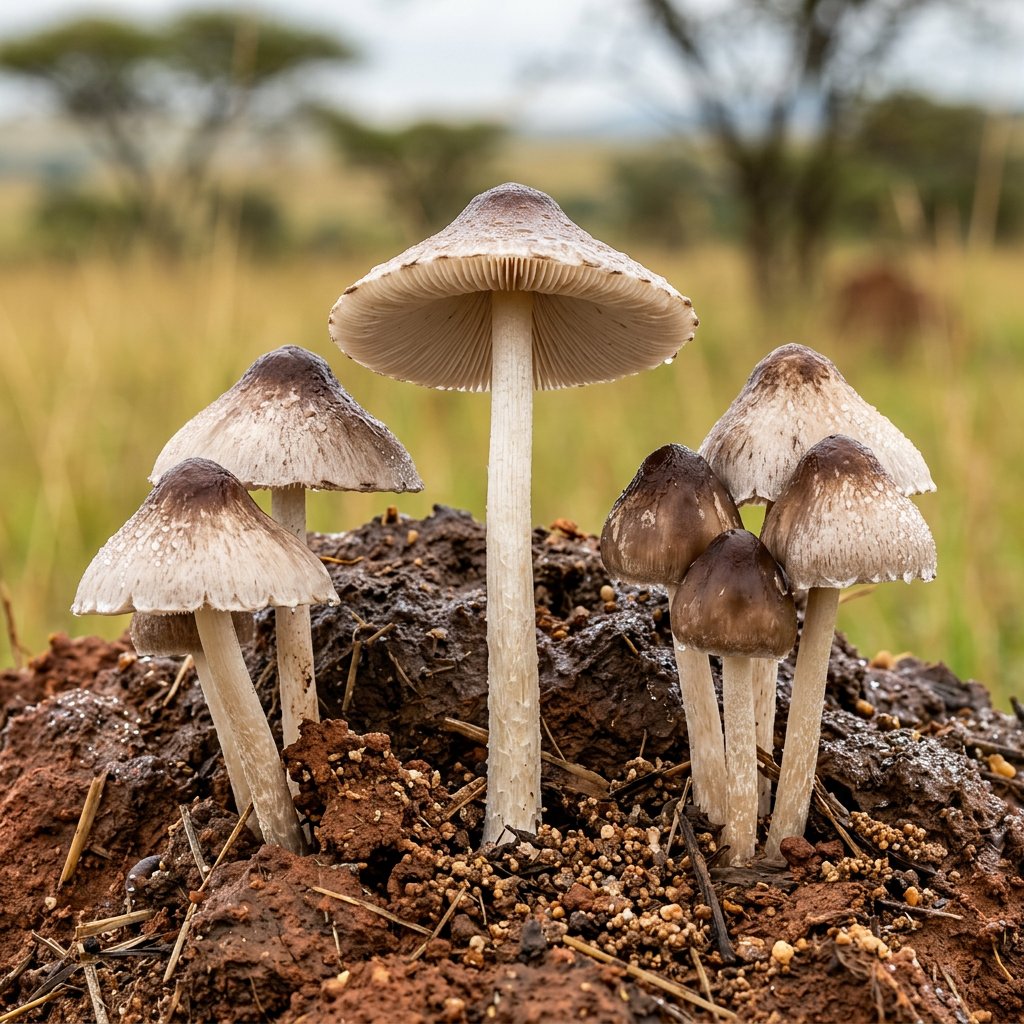
- 🍄 The Cap: Broad and fleshy, it can reach impressive sizes (up to 25cm or more). It is typically creamy white to pale tan, often featuring a distinct, hardened point in the center called a "perforatorium," which helps it push through the tough soil of a termite mound.
- 🕊️ The Gills: Located underneath the cap, the gills are crowded and "free" (not attached to the stem). They start white and may take on a slight pinkish hue as the spores mature.
- 🌱 The Pseudorhiza: This is its most unique feature. The stem extends far underground into a long, root-like structure that connects directly to the termite "fungus garden" deep within the mound.
🌲 Habitat & Ecology
- 🐜 Termite Symbiosis: This mushroom only grows on the mounds of Macrotermes termites. The termites cultivate the fungus's mycelium as their primary food source, and in return, the fungus breaks down the woody material the termites bring into the nest.
- ⛈️ Seasonal Emergence: You will only find the Umkowaan above ground after significant rainfall during the warm summer months. They appear suddenly, often overnight, erupting from the sides or tops of active termite mounds.
⚠️ Safety & Toxicity
- 🛑 WARNING: While Termitomyces umkowaan is a highly prized and delicious edible mushroom, never consume any wild fungi unless identified by a local expert.
- ⚠️ Look-alikes: Many toxic mushrooms, including members of the Amanita family, can grow in similar grassy environments. Mistaking a toxic species for an Umkowaan can be fatal.
- 🐾 Pet Safety: While non-toxic to humans when correctly identified, wild mushrooms can cause digestive upset in pets and should be kept out of reach.
✨ Fun Fact
The relationship between these mushrooms and termites is so specific that neither can survive without the other! The termites actually "weed" their fungus gardens, removing other competing fungi to ensure only the Termitomyces thrives.
More Details







