Info
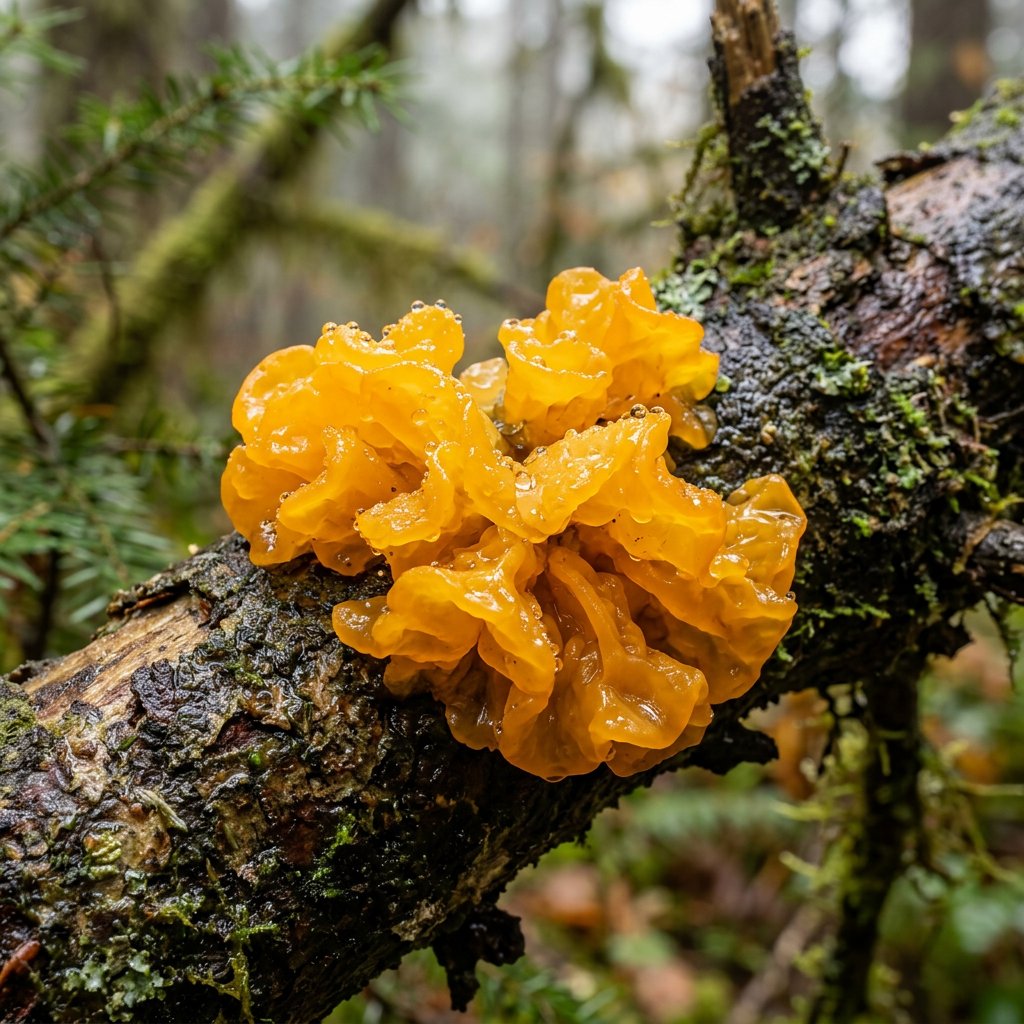
Often called the Golden Ear, this vibrant fungus looks like a splash of liquid sunshine frozen onto a decaying log. While it shares the "Witch's Butter" nickname with its close relatives, its bright orange, brain-like folds make it a favorite for woodland photographers. In European folklore, finding these bright jellies on your firewood was sometimes thought to be a sign of a "witch's hex," though today we see them as a sign of a fascinating, hidden battle taking place beneath the bark.
🔍 How to Identify
- 🧠 The Body: Deeply lobed and wavy, resembling a miniature orange brain or a cluster of crumpled ears. It lacks a traditional cap or stem.
- ✨ Texture: Firmly gelatinous and rubbery when hydrated. If you poke it, it feels like a heavy-duty gummy candy.
- 🎨 Color: A brilliant, opaque orange to golden-yellow. Unlike its translucent cousins, Tremella aurantia remains quite "solid" in color even when saturated with rain.
🌲 Habitat & Ecology
- 🍄 The Secret Hunter: This fungus is a "mycoparasite." It doesn't actually eat the wood it sits on; instead, it "hunts" and feeds on the mycelium of another fungus, the False Turkey Tail (Stereum hirsutum), which is hidden inside the log.
- 🪵 Favorite Haunts: You will almost always find it on fallen hardwood logs (especially Oak and Beech) in temperate forests during the damp months of autumn and winter.
⚠️ Safety & Toxicity
- 🛑 WARNING: While Tremella aurantia is generally considered non-toxic and is even eaten in some regions for its unique texture, never consume wild mushrooms without 100% certain identification from a local expert.
- 🤢 The Risk: It can be easily confused with other orange jellies or toxic fungi growing nearby. Furthermore, because it grows on decaying wood, it can harbor bacteria or heavy metals from its environment.
- 🐾 Pets: It is not known to be poisonous to dogs or cats, but its rubbery consistency can cause digestive blockages if swallowed in large clumps.
✨ Fun Fact
This mushroom is a master of disguise! During dry weather, it shrivels up into a tiny, crusty, blackened smear on the bark, becoming almost invisible. As soon as it rains, it "resurrects," soaking up water and swelling back to its full, golden size in just a few hours.
More Details







