Info
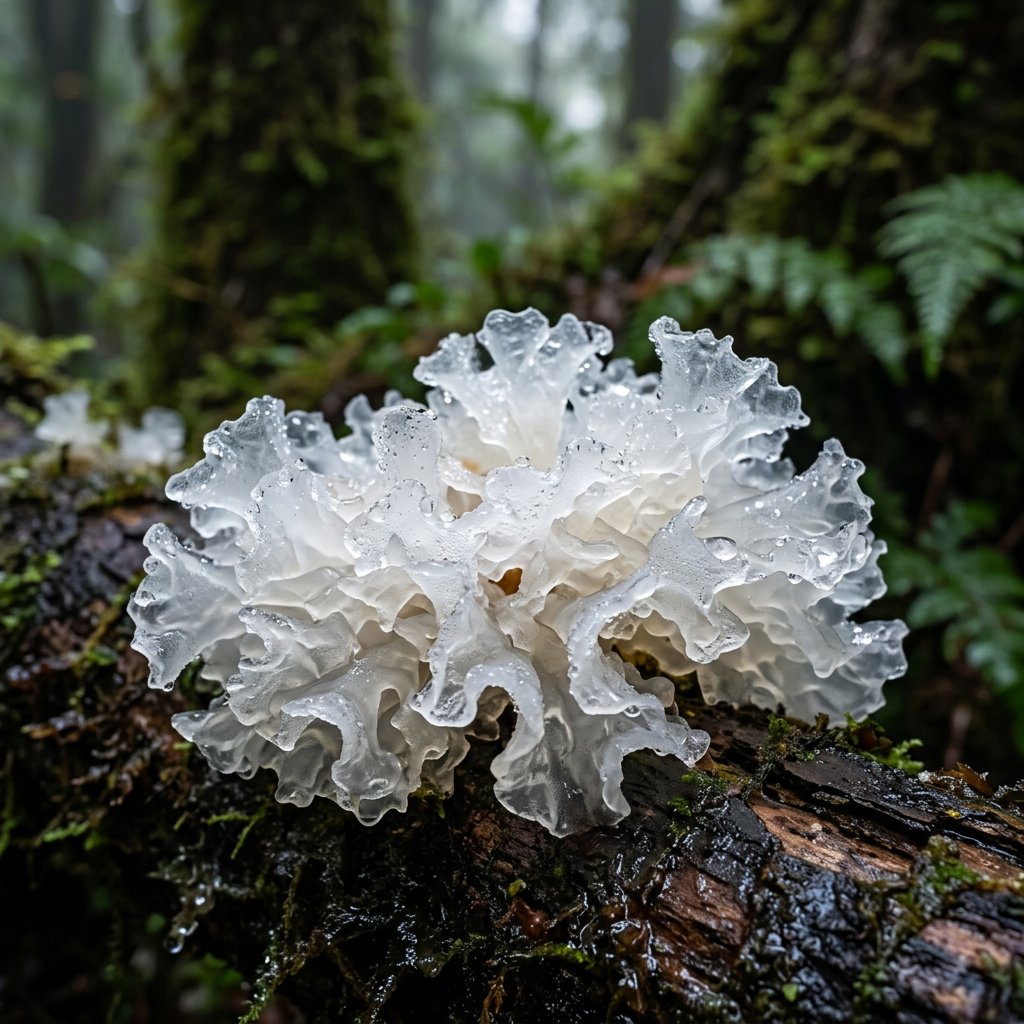
Often called the "Snow Fungus" or "Silver Ear," Tremella fuciformis is the crown jewel of the jelly fungi world. For centuries, it has been whispered about in the halls of ancient Chinese palaces as a secret to eternal youth and beauty. This ghostly, translucent mushroom looks less like a typical toadstool and more like a delicate, submerged coral reef frozen in mid-air.
🔍 How to Identify
- ❄️ The Body: It forms a gelatinous, "leafy" cluster of ruffled, translucent white lobes. It lacks a traditional cap and stem.
- 💧 Texture: When fresh, it is soft, rubbery, and slippery to the touch, resembling wet seaweed or a loofah.
- ✨ Color: It is strikingly pure white to watery-clear, though it can turn a pale yellowish tint as it dries out and becomes brittle.
🌲 Habitat & Ecology
- 🍄 The Hidden Hunter: Interestingly, this mushroom is a parasite. It doesn't eat wood directly; instead, it "hunts" and feeds on another fungus (species of Annulohypoxylon) that is already breaking down hardwood logs.
- 🌳 Preferred Trees: It is most commonly found in subtropical and tropical regions, growing on the fallen branches of broadleaf trees like Oak and Mango after heavy rains.
⚠️ Safety & Toxicity
- ✅ Status: Edible and highly prized. It is a staple in Asian "Tong Sui" (sweet dessert soups) and is valued more for its unique crunchy-yet-gelatinous texture than its mild flavor.
- 🧴 Cosmetic Safety: It is considered non-irritating and is a superstar ingredient in modern "clean beauty" serums and moisturizers.
- 🛑 Foraging Warning: While there are few dangerous lookalikes for this specific white jelly fungus, always ensure you are not harvesting from wood treated with chemicals or near industrial runoff, as fungi absorb toxins from their environment.
✨ Fun Fact
Scientific studies have shown that Tremella fuciformis can hold up to 500 times its own weight in water. This makes it a natural rival to Hyaluronic Acid, earning it the nickname "The Nature’s Moisturizer" in the skincare world.
More Details