Info
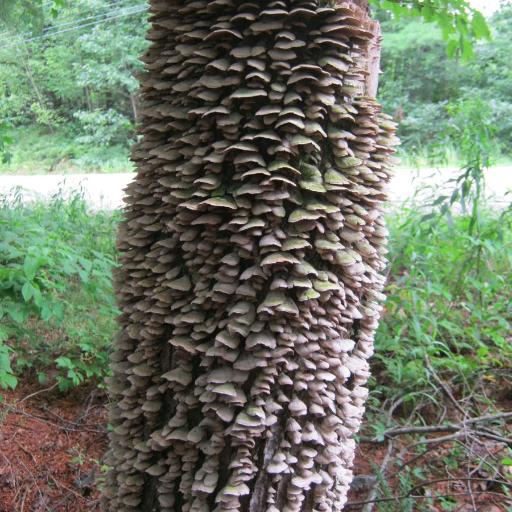
The Violet-toothed Polypore is a delicate but hardy decorator of the forest floor, often found in shingled clusters along fallen hardwood logs. While it may look like a common shelf fungus at first glance, a quick peek underneath reveals a stunning splash of royal purple. This fungus plays a vital role in the woodland ecosystem, acting as a master recycler that breaks down tough wood fibers to return nutrients to the soil.
🔍 How to Identify
- 💜 The Underside: The most striking feature is the lavender to deep violet pore surface. As the mushroom matures, these pores break apart into tiny, jagged "teeth."
- ⬜ The Cap: The top is dry and velvety, usually featuring concentric zones of white, gray, and tan. The very edge often retains a bright purple tint.
- 🥐 The Shape: These grow in thin, fan-shaped brackets (shelves). They are often found in large, overlapping colonies that can cover an entire log.
🌲 Habitat & Ecology
- 🪵 Hardwood Specialist: You will almost exclusively find this mushroom on dead or dying hardwood trees, particularly oak, birch, and cherry. It causes "white rot," breaking down the lignin in the wood.
- 🍂 Year-Round Presence: While the vibrant purple color is most intense in late summer and autumn, the leathery brackets persist through the winter, though they may fade to a dull brownish-tan over time.
⚠️ Safety & Toxicity
- 🚫 Status: Inedible. While not known to be dangerously poisonous, the Violet-toothed Polypore is far too tough and leathery for human consumption.
- 🧤 Skin Safety: It is generally safe to touch for identification purposes, but it provides no nutritional value and may cause stomach upset if accidentally ingested by curious pets or children.
✨ Fun Fact
The Violet-toothed Polypore has a nearly identical "twin" called Trichaptum abietinum. The only way to tell them apart in the field is by looking at the tree they are growing on—T. biforme loves hardwoods (like Oak), while its twin strictly prefers conifers (like Pine and Spruce)!
More Details