Info
Known by mycologists as a silent guardian of the soil, Trichoderma aureoviride is a vibrant, mold-like fungus that looks more like a velvet carpet than a traditional mushroom. Often referred to as a "Green Mold" of the forest floor, it is celebrated by organic gardeners as a "knight in shining armor" because of its aggressive ability to protect plants from harmful diseases. It is a fascinating example of how nature uses one fungus to police another.
🔍 How to Identify
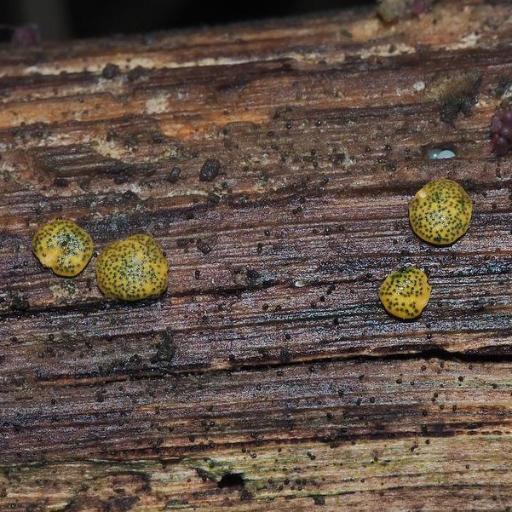
- 🟢 Coloration: It typically displays a striking color transition, starting as a white, fluffy growth before turning a deep forest green or yellowish-gold as it matures and produces spores.
- ☁️ Growth Form: Rather than having a cap and stem, this species appears as a thin, velvety "crust" or granular patch spreading across its substrate.
- 🪵 Texture: The surface often looks dusty or powdery; these are actually millions of microscopic spores (conidia) ready to be caught by the wind.
🌲 Habitat & Ecology
- 🍂 Nature’s Recycler: You will most often find it on decaying wood, fallen logs, or moist soil rich in organic matter. It plays a vital role in breaking down complex plant fibers back into the earth.
- 🛡️ The Root Bodyguard: In the garden, this fungus is a hero. It colonizes the area around plant roots, creating a physical shield and secreting chemicals that prevent "bad" molds—like those that cause root rot—from attacking the plant.
- 🍴 Fungal Hunter: It is a "mycoparasite," meaning it actually hunts and "eats" other fungi by secreting enzymes that dissolve their cell walls, effectively clearing the neighborhood of competitors.
⚠️ Safety & Toxicity
- 🚫 WARNING: STRICTLY NOT FOR CONSUMPTION. While Trichoderma aureoviride is not a "death cap" mushroom, it is a micro-fungus and is not considered edible in any capacity.
- 🌬️ Respiratory Irritant: Like many molds, its fine spores can be an irritant to people with allergies, hay fever, or asthma. If you find a large patch on a log, avoid disturbing it to prevent inhaling the dust.
- 🐾 Pet Safety: It is generally not dangerous to pets unless they ingest a large amount of moldy wood, which can cause digestive distress.
✨ Fun Fact
Trichoderma species are so efficient at breaking down tough plant fibers that they are used in the textile industry to create the "stone-washed" look in denim jeans! They soften the fabric and "eat" away some of the indigo dye to give your pants that perfectly worn-in feel.
More Details







