Info
Often called the "Invisible Bodyguard" of the plant world, Trichoderma viride is a fascinating green mold that plays a dual role in our ecosystem. While it is the sworn enemy of mushroom farmers—where it is known as "Green Mold" disease—it is a hero to gardeners because it hunts down and destroys harmful soil pathogens that cause root rot.
🔍 How to Identify
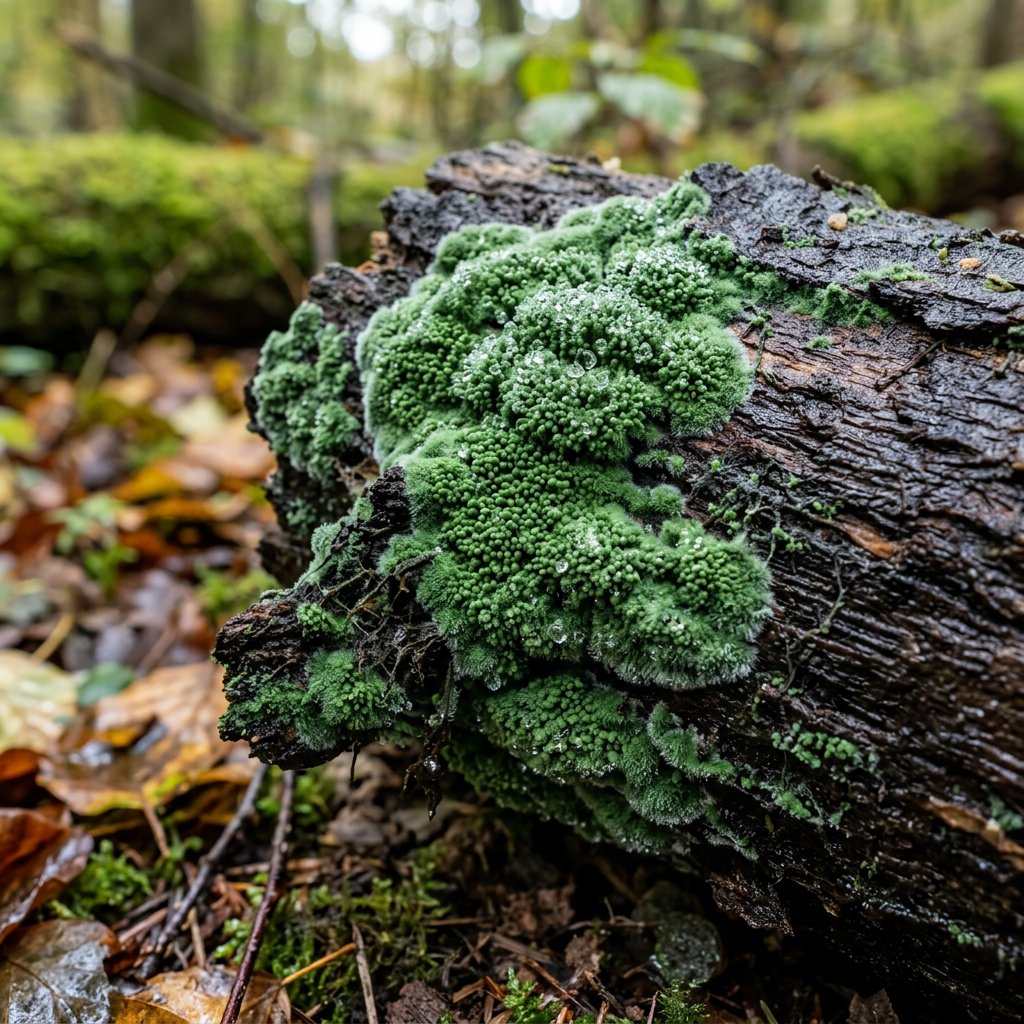
- 🎨 The Color Shift: It begins its life as a fuzzy, brilliant white mycelium. As it matures and prepares to release spores, it transforms into a deep, forest-green crust or powdery coating.
- ☁️ Texture: Unlike fleshy mushrooms, this fungus appears as a velvety or granular "dusting" over its host. It lacks a stem, cap, or gills, looking more like a spilled patch of green spice.
- ⚡ Aggressive Growth: One of its most identifying features is its speed; it can take over a petri dish or a piece of damp wood in just a few days, outcompeting almost any other fungus in its path.
🌲 Habitat & Ecology
- 🍂 The Wood Scavenger: In the wild, you will most often find it on fallen logs, decaying tree bark, and within the top layers of moist, organic soil where it breaks down cellulose.
- 🛡️ Biological Warrior: This fungus is a "mycoparasite," meaning it eats other fungi. It wraps itself around the "bad" fungi that attack garden vegetables, effectively acting as a natural, eco-friendly pesticide.
- 🍄 The Cultivator's Nightmare: For those growing Oyster or Button mushrooms, Trichoderma viride is a dreaded intruder that can ruin an entire crop by suffocating the edible mushroom's mycelium.
⚠️ Safety & Toxicity
- 🚫 WARNING: Trichoderma viride is not edible. It does not produce a "mushroom" body that can be eaten, and it should never be ingested.
- 💨 Respiratory Irritant: While generally safe to handle in small amounts, the dry green spores can become airborne. Inhaling large quantities of these spores can cause respiratory irritation, coughing, or allergic reactions, particularly for individuals with asthma or mold sensitivities.
- 🐾 Pet Safety: While not specifically listed as a high-risk toxin for pets, it is best to keep curious dogs away from heavily molded wood to prevent them from inhaling the spores.
✨ Fun Fact
Trichoderma viride is a secret star in the fashion industry! It produces an enzyme called cellulase, which is used in the textile industry to give denim that soft, "stone-washed" look and feel without actually using heavy stones.
More Details







