Info
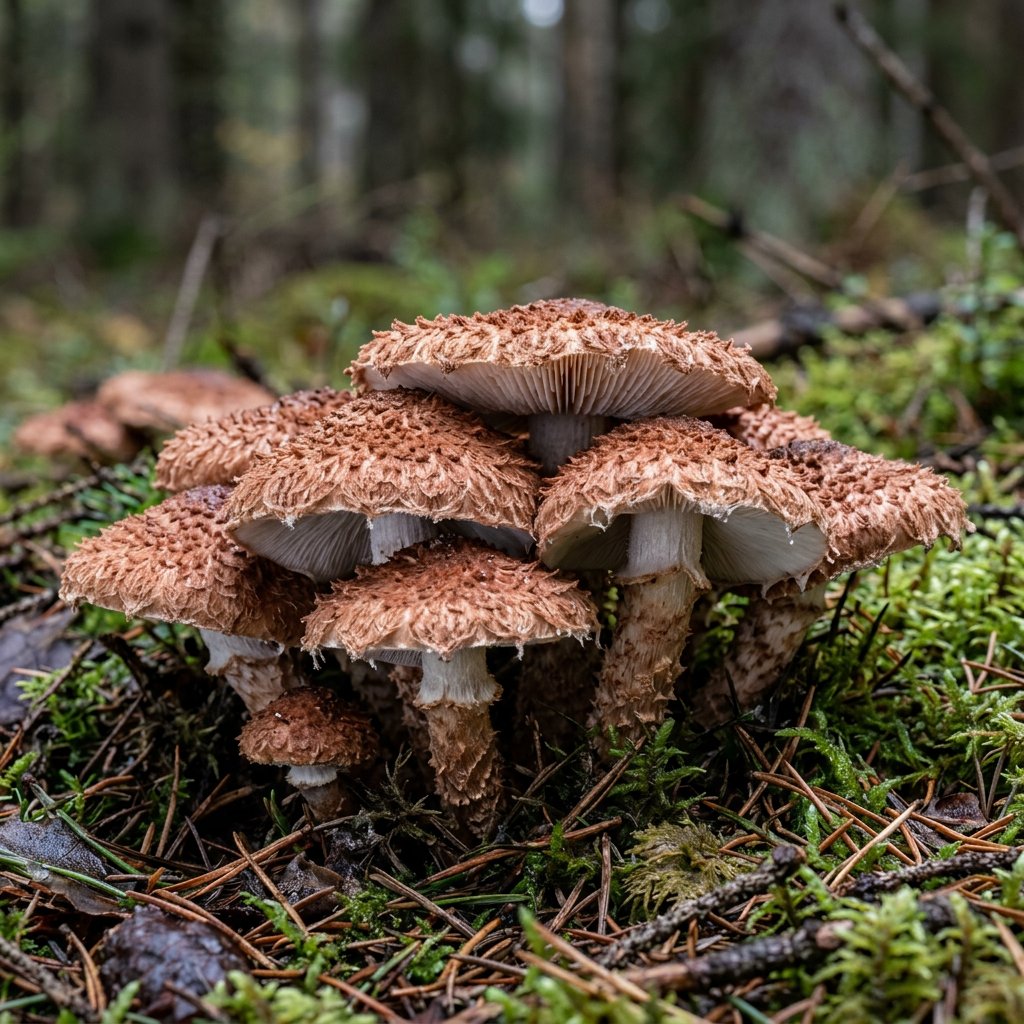
Often called the Russet Scaly Knight or the "Fuzztop," this mushroom looks like it skipped its morning grooming session. Found primarily in the cool, damp shadows of coniferous forests, it is easily recognized by its distinctively "hairy" appearance. While it doesn't have a starring role in folklore like the Fly Agaric, it is a vital partner to the evergreen trees it grows beneath.
🔍 How to Identify
- 🧶 The Shaggy Cap: The cap is a warm russet or reddish-brown, covered in fine, woolly scales that give it a "frizzled" or hairy texture, especially near the edges.
- 🍦 The Gills: Underneath, the gills are crowded and start off creamy white, but they often develop reddish-brown spots or stains as the mushroom matures.
- 🧣 The Stem: The stalk is quite fibrous and hollows out as it ages; it usually matches the color of the cap but is paler near the top where it meets the gills.
🌲 Habitat & Ecology
- 🌲 The Spruce Specialist: This mushroom is "ectomycorrhizal," meaning it forms a symbiotic relationship with trees. It is almost exclusively found growing under Spruce trees, helping the tree absorb nutrients in exchange for sugars.
- 🍂 Autumn Explorer: You are most likely to spot the Russet Scaly Knight during the late summer and throughout the autumn, often popping up in small groups among moss and fallen needles.
⚠️ Safety & Toxicity
- 🚫 Status: WARNING: INEDIBLE. While not considered deadly, this mushroom is generally classified as inedible or mildly toxic.
- 🤢 Details: Consuming this mushroom is known to cause significant gastrointestinal distress, including nausea, cramping, and vomiting. It also possesses a bitter, unpleasant taste that serves as a natural deterrent.
✨ Fun Fact
The species name vaccinum is derived from the Latin word vacca, meaning "cow." This is a nod to the mushroom's specific shade of reddish-brown, which early mycologists thought resembled the hide of a russet-colored cow!
More Details







