Info
Known as the Reddish-brown Bitter Bolete, this mushroom is a master of disguise. Often mistaken by hopeful foragers for the prized Porcini, it quickly reveals its true nature with a flavor so bitter it can ruin an entire pot of soup. It stands as a stoic, purplish-brown sentinel in the summer forests of North America, playing a vital role in the health of the trees it grows beneath.
🔍 How to Identify
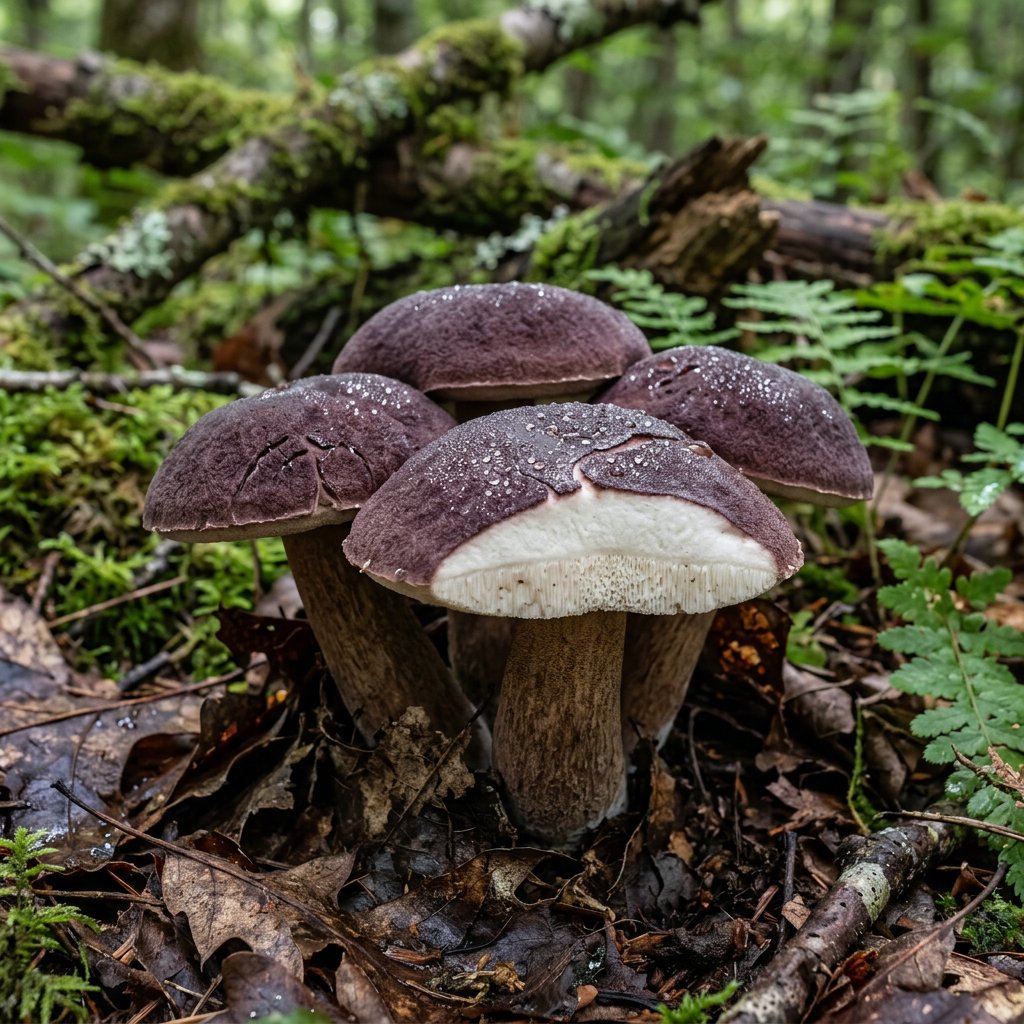
- 🍄 The Cap: Broad and velvety, the cap ranges from a deep reddish-brown to a dark chocolate purple. It can grow quite large, often feeling slightly tacky or sticky after a rain.
- 🧽 The Pores: Unlike many mushrooms with gills, this species has a sponge-like underside. These pores start out snowy white but turn a distinct pinkish-buff as the spores mature.
- 🍗 The Stem: The stalk is thick, solid, and "club-shaped." It is usually a lighter shade of brown than the cap and lacks the heavy raised "netting" (reticulation) found on its delicious cousins.
🌲 Habitat & Ecology
- 🌳 Tree Partners: This fungus is mycorrhizal, meaning it lives in a symbiotic "handshake" with the roots of hardwood trees, particularly Oaks and Beeches. It helps the tree drink water while the tree feeds it sugars.
- 📅 Seasonal Appearance: You are most likely to spot these "bitter beauties" during the humid months of mid-summer through early autumn, especially after heavy thunderstorms.
⚠️ Safety & Toxicity
- 🚫 WARNING: While not categorized as a deadly poisonous mushroom, the Reddish-brown Bitter Bolete is considered inedible.
- 👅 The Taste Factor: Its flesh is intensely bitter. Even a small piece cooked into a meal will permeate the entire dish with a medicinal, acrid flavor.
- 🤢 Digestive Warning: Consuming large amounts may cause mild gastrointestinal distress in sensitive individuals or pets, though the bitter taste usually prevents anyone from eating enough to get sick.
✨ Fun Fact
Mycologists often use a "nibble and spit" test to identify this mushroom. They take a tiny piece of the cap, touch it to their tongue to confirm the bitterness, and then immediately spit it out. It is one of the few mushrooms where your sense of taste is a primary tool for scientific identification!
More Details







