Info
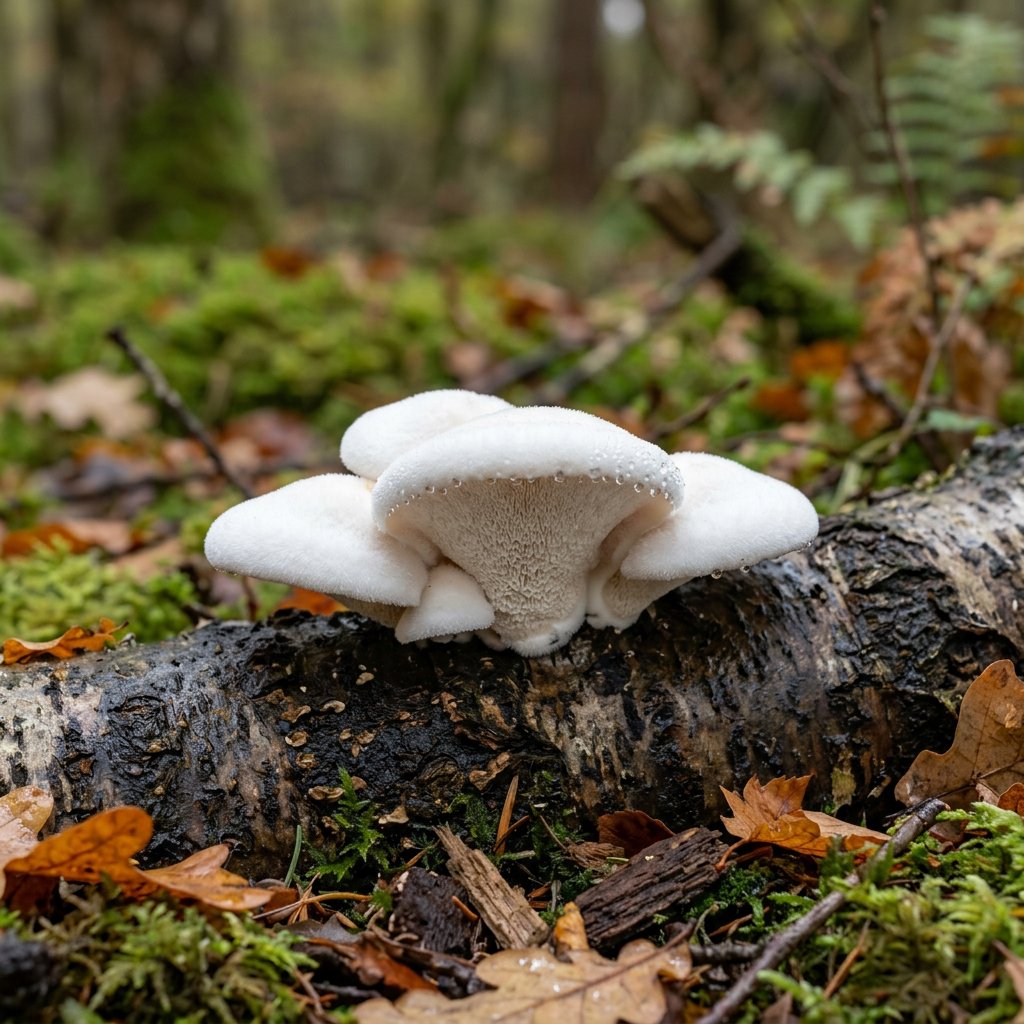
Known as the White Cheese Polypore, this mushroom earns its name from its soft, moist, and remarkably cheese-like texture when young. Often found clinging to fallen hardwood logs, it looks like a fresh wedge of mozzarella or a small, snowy cushion decorating the forest floor. While it lacks the vibrant colors of some fungi, its pristine white appearance makes it a favorite for woodland photographers.
🔍 How to Identify
- ☁️ The Cap: A pure white, kidney-shaped or semi-circular bracket. When fresh, the surface is slightly hairy or velvety and feels soft and watery to the touch.
- 🧽 The Flesh: True to its name, the interior is white and succulent like a soft cheese. As the mushroom ages or dries out, it transforms from spongy to hard, brittle, and slightly yellowish.
- 🕳️ The Underside: Instead of gills, you will find tiny, circular white pores. If you press on them when the mushroom is fresh, they may slowly bruise a pale yellowish-brown.
- 👃 The Scent: It possesses a distinct, pleasant fragrance that many describe as "acidic" or "sweetly fungal," reminiscent of fresh dough or mild cheese.
🌲 Habitat & Ecology
- 🪵 The Wood Recycler: This fungus is a "saprobic" species, meaning it feeds on dead matter. It specifically targets fallen deciduous trees (hardwoods like Birch, Beech, and Oak), causing a "white rot" by breaking down the tough lignin in the wood.
- 🍂 Seasonal Sightings: While it can be found year-round in its dried, hardened state, it is most vibrant and "cheesy" during the late summer and autumn after heavy rains.
⚠️ Safety & Toxicity
- 🚫 Status: Inedible. While not known to be dangerously toxic, the White Cheese Polypore is not considered food.
- 🦷 Details: As the mushroom matures, it becomes incredibly tough and cork-like. It is completely unpalatable and offers no culinary value. As with all wild fungi, never consume any mushroom unless identified with 100% certainty by a professional, as many white mushrooms have toxic look-alikes.
✨ Fun Fact
The specific epithet chioneus is derived from the Greek word chion, which means "snow." This perfectly describes its brilliant, snowy-white appearance when it first emerges from a log!
More Details







