Info
Commonly known as the Cumberland Rock Shield, this lichen looks like a splash of ancient, minty-green paint across sun-drenched stones. While it is classified under the fungal kingdom, it is actually a "composite organism"—a brilliant biological partnership where a fungus provides the home and algae provide the food through photosynthesis. In many cultures, these resilient "rock-clinging" lichens are seen as symbols of endurance and the slow, steady passage of time.
🔍 How to Identify
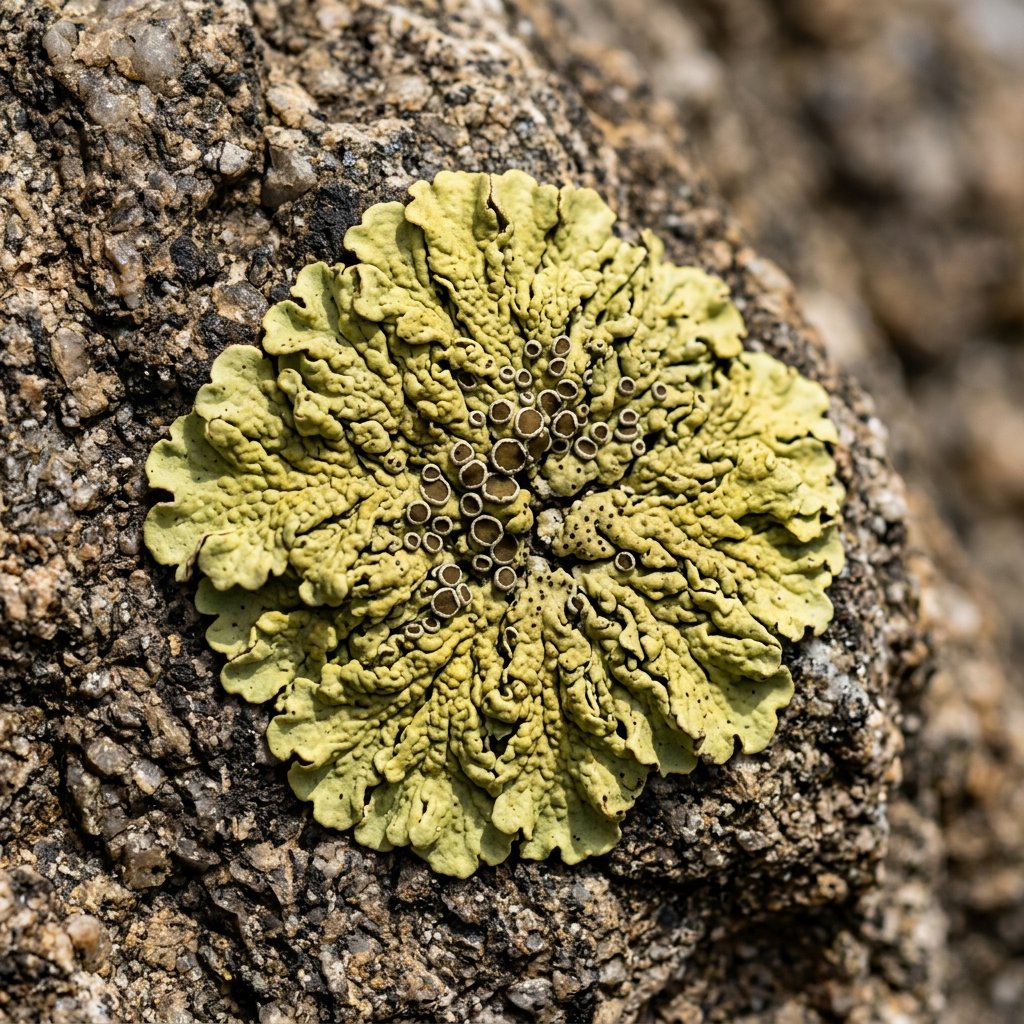
- 🟢 The Thallus: The main body is "foliose" (leaf-like), featuring narrow, flattened lobes that grow in a radiating, circular pattern, often hugging the rock surface tightly.
- 🎨 Distinct Coloring: It typically displays a pale yellow-green or "chartreuse" hue when dry, which can brighten significantly after a rainstorm. The underside is usually a pale tan to light brown.
- ☕ Tiny Cups: Look closely for "apothecia"—these are the lichen's reproductive structures that look like tiny, brownish-orange saucers or "donuts" scattered across the center of the plant.
🌲 Habitat & Ecology
- 🪨 The Granite Hugger: Unlike traditional mushrooms that sprout from soil, this species is "saxicolous," meaning it grows exclusively on rocks. It prefers acidic stones like granite and sandstone in open, sunny areas.
- 🌤️ Pioneer Spirit: This lichen is a pioneer species; it is often one of the first life forms to colonize bare rock, slowly breaking the mineral surface down into soil over decades to pave the way for other plants.
⚠️ Safety & Toxicity
- 🚫 Status: NOT EDIBLE. While lichens are not "poisonous" in the same way as a Death Cap mushroom, they are tough, woody, and entirely indigestible for humans.
- 🧪 Chemical Defense: Members of the Xanthoparmelia genus produce secondary metabolites like usnic acid to protect themselves from UV rays and hungry slugs. These compounds can cause mild skin irritation or digestive upset if handled excessively or accidentally ingested by pets.
✨ Fun Fact
Lichens are nature’s high-tech sensors! Because Xanthoparmelia cumberlandia absorbs all its nutrients directly from the atmosphere rather than the rock, its presence is a reliable sign of good air quality—it simply cannot survive in areas with heavy industrial pollution.
More Details







